
Makassar, Indonesia, 17 September 2026/Cores/ – Indonesia plants more coral than any other country on Earth. Broken fragments get tied to frames, glued to concrete blocks, or wedged into steel structures across hundreds of sites, all in hope of nursing dying reefs back to life. But does more projects mean better results? A team of researchers set out to answer a simpler, harder question: are these projects actually being planned well enough to work?
The study, “Coral reef restoration in Indonesia: lessons learnt from the world’s largest coral restoration nation,” was published in Biodiversity and Conservation by Springer on 26 June 2024. Researchers from Universitas Hasanuddin and collaborating institutions surveyed 45 active restoration projects across the country and measured each against internationally recognised standards for ecological restoration.
The country has plenty to work with. Indonesia holds 16 percent of the world’s coral reef area, and around 60 million people live within 30 kilometres of a reef. But more than 90 percent of that reef has already been damaged by local pressures, and in a recent national survey, fewer than 7 percent of sites were rated in excellent condition.
The planning review found real strengths. Most projects had a clear, sensible goal to “rebuild a self-sustaining reef ecosystem” and 89 percent carried out some kind of structured site-selection process. Coral fragments of opportunity, meaning pieces already broken off naturally, were the most common source of material, which is good practice since it avoids damaging healthy colonies.
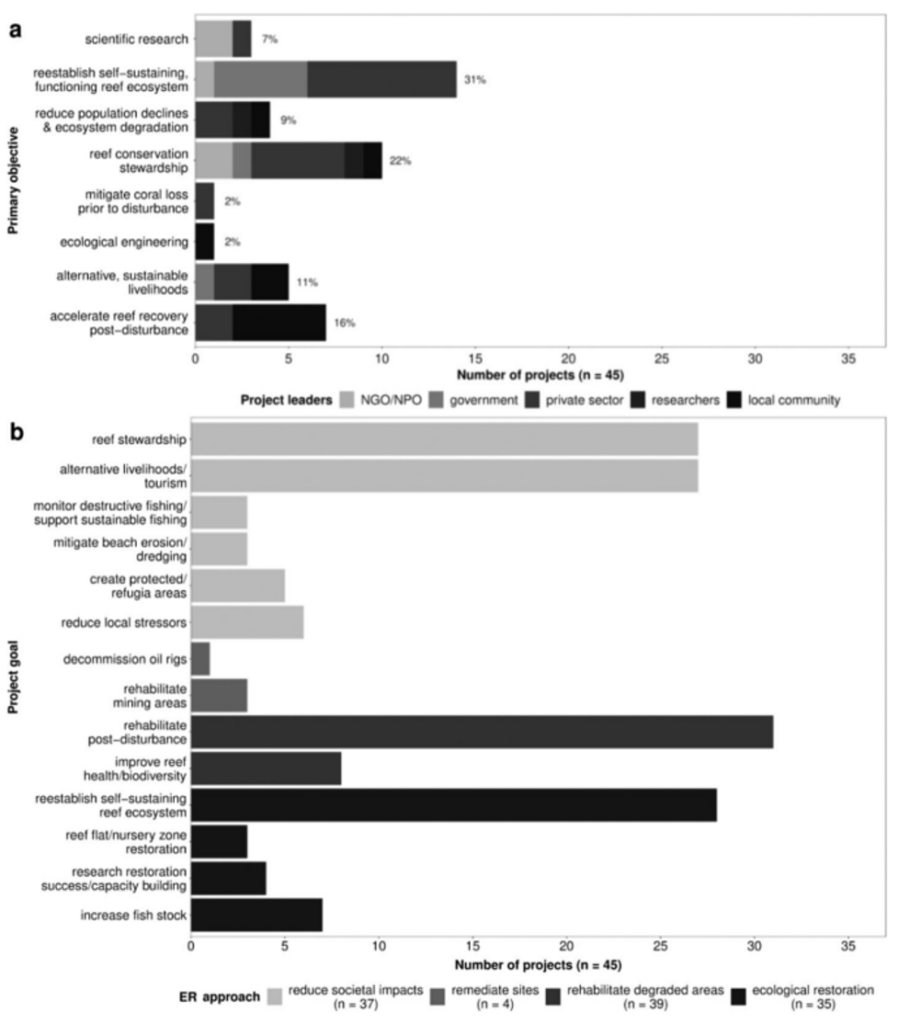
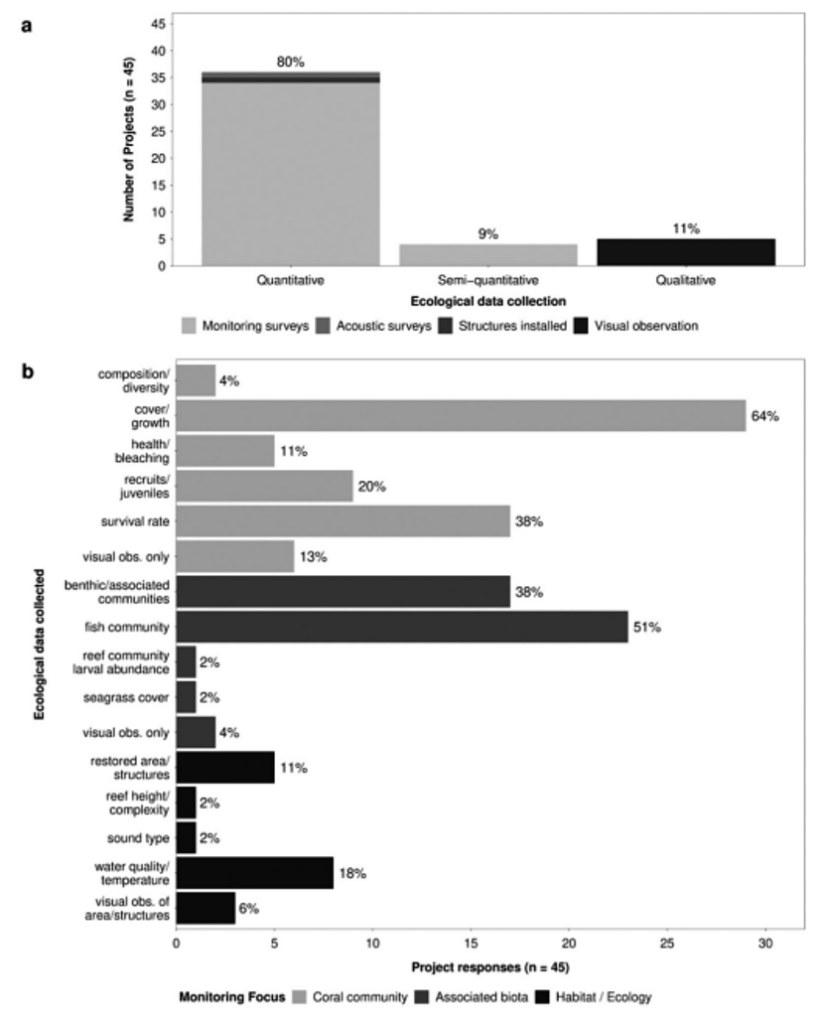
The gaps were just as clear. Only 36 percent of projects set a specific, measurable target during planning, a defined area to restore, a coral survival rate to hit, a deadline. Just 16 percent quantified anything about coral bleaching or heat tolerance, even though warming seas are the biggest long-term threat these reefs face. Monitoring data on basic ecological metrics such as coral diversity, coral health, the wider community of reef life was missing from the majority of projects. Without that data, nobody, including the people running the projects, can really say what’s working.
Why does careful planning matter beyond Indonesia’s shoreline? Restoring reefs at this scale speaks directly to SDG 14 (Life Below Water), but the paper’s socioeconomic thread matters just as much: it links restoration goals to alternative livelihoods and tourism income for coastal communities, tying the work to SDG 1 (No Poverty). Sharing best practice, the authors argue, requires building a proper knowledge network among practitioners that touches on SDG 4 (Quality Education) and Indonesia’s restoration boom itself only exists because of collaboration across government, universities, NGOs, and coastal communities, the living example of SDG 17 (Partnerships for the Goals).
The authors don’t propose fewer projects. They propose a national roadmap: shared monitoring protocols, agreed metrics, and a formal network so that hundreds of scattered efforts can finally learn from each other instead of working in isolation. Indonesia has already proven it can plant coral at a scale no other nation matches. The next challenge is proving, with real data, that it’s growing back.
Referencesd:
DOI: https://doi.org/10.3897/zookeys.1208.113603
Contact:
Prof. Dr. Ir. Jamaluddin Jompa, M.Sc.
j.jompa@unhas.ac.id