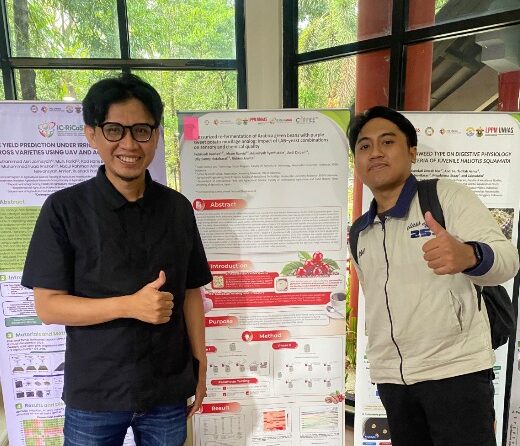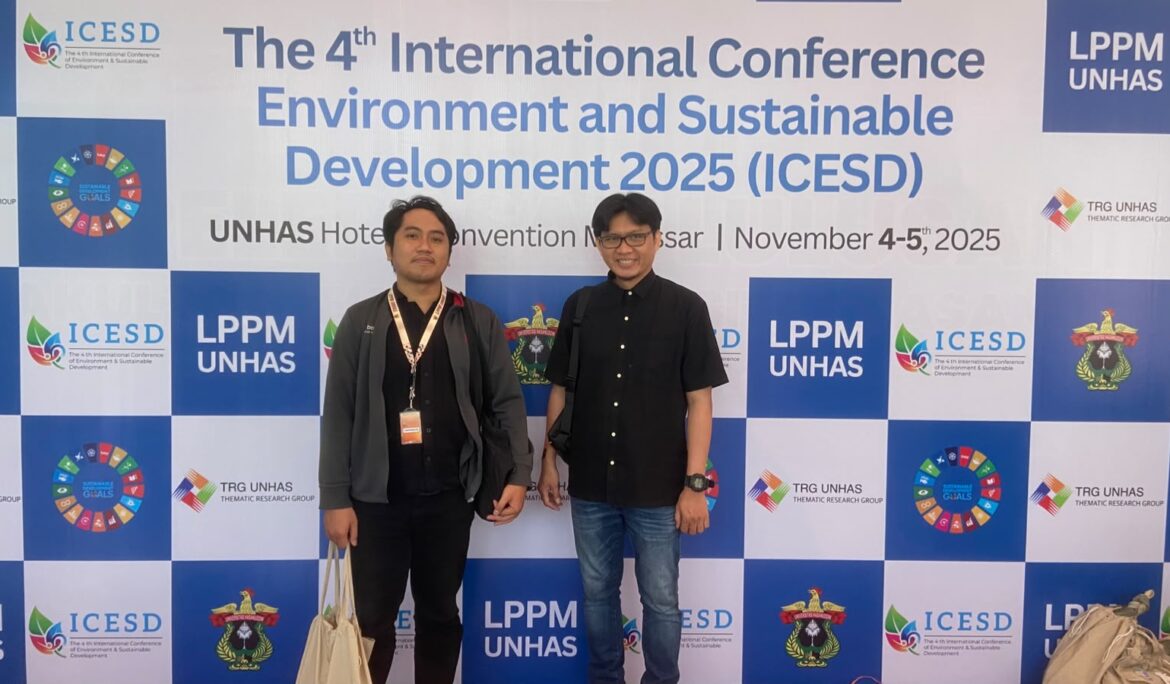
Scientific research plays an important role in advancing agricultural innovation and improving the quality of local agricultural products. However, research findings become more meaningful when they are shared with the wider academic community and transformed into knowledge that can support future innovations. As part of this commitment, the TRG Coffee team participated in a scientific poster presentation to disseminate research findings from TRG Coffee Batch 1, held at the Hasanuddin University Hotel in Makassar, Indonesia.
Activity Title: TRG Coffee Poster PresentationDate: 3–4 November 2025Location: Hasanuddin University Hotel, Makassar, IndonesiaParticipants: All members of the TRG (Thematic Research Group) at Hasanuddin University, with two representatives from TRG Coffee: Dr. Februadi Bastian, S.TP., M.Si., and Irham Rasyid, S.TP.
During this event, the TRG Coffee representatives presented their research entitled “Isolation and Characterization of Microorganisms in the Full Wash Process of Arabica Coffee as Microbial Fermentation Starters to Enhance Coffee Flavor.” The research focused on identifying and characterizing indigenous microorganisms associated with the full wash processing of Arabica coffee and exploring their potential applications as microbial starters for controlled coffee fermentation.
Coffee fermentation is a crucial stage in post-harvest processing because microbial activities contribute to the transformation of various compounds that influence the final flavor and aroma of coffee. Naturally occurring microorganisms, including lactic acid bacteria and yeasts, can produce metabolites that contribute to desirable sensory characteristics. By isolating and characterizing these microorganisms, the research seeks to identify promising microbial candidates that can be further developed as fermentation starters. This approach offers opportunities to improve fermentation consistency, enhance coffee quality, and support the development of distinctive Indonesian specialty coffee.
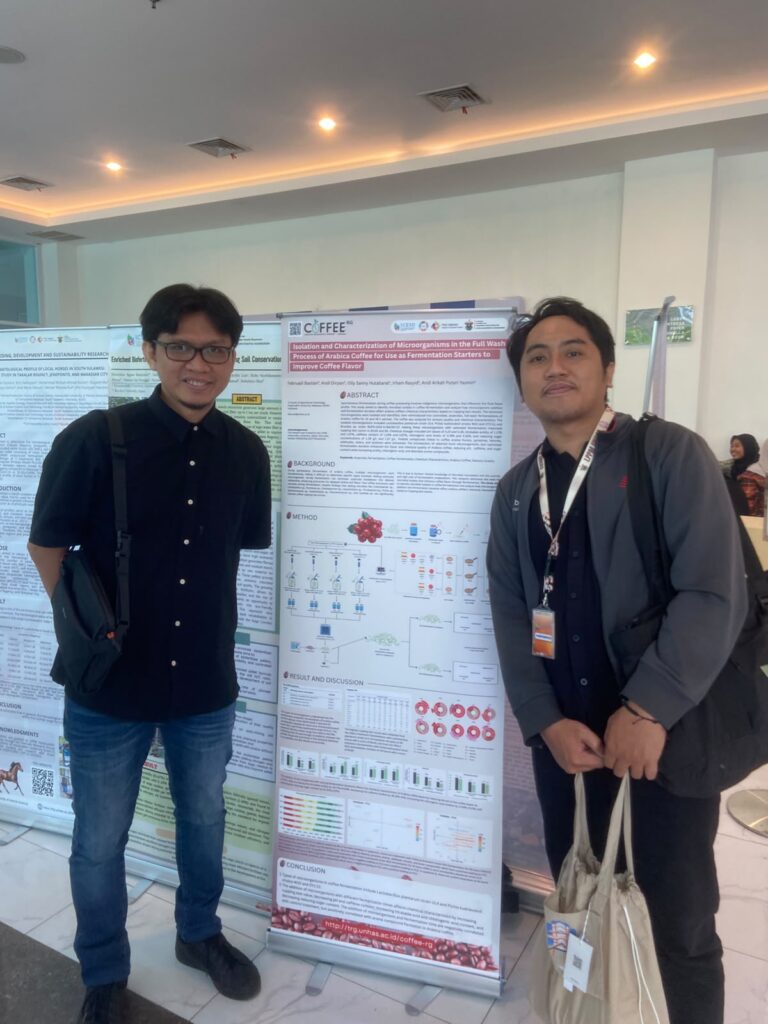
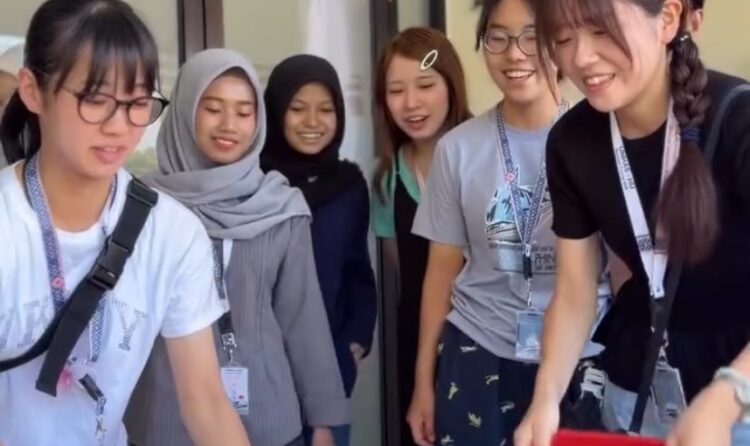
The poster presentation provided an opportunity for the research team to communicate scientific findings through a visual and accessible format. Participants could explore the research background, methodology, findings, and potential applications while engaging in academic discussions and exchanging perspectives with other researchers and members of the TRG community. This interaction also encouraged constructive feedback that could contribute to the improvement and further development of the research.
The activity aligns with Sustainable Development Goal (SDG) 4: Quality Education, particularly through the promotion of research-based learning, scientific communication, and knowledge dissemination. Presenting research findings allows students and researchers to strengthen their academic competencies while encouraging the exchange of knowledge across disciplines.
Furthermore, the activity supports SDG 17: Partnerships for the Goals by strengthening collaboration among researchers, academics, and research groups within Hasanuddin University. Such partnerships are essential for building a supportive research ecosystem and accelerating the development of science-based innovations.
Overall, the TRG Coffee poster presentation represents an important step in disseminating research outcomes and strengthening the academic contribution of the TRG Coffee team. Through scientific communication and collaborative engagement, the research is expected to provide a foundation for developing locally sourced microbial fermentation starters and promoting higher-quality Indonesian coffee