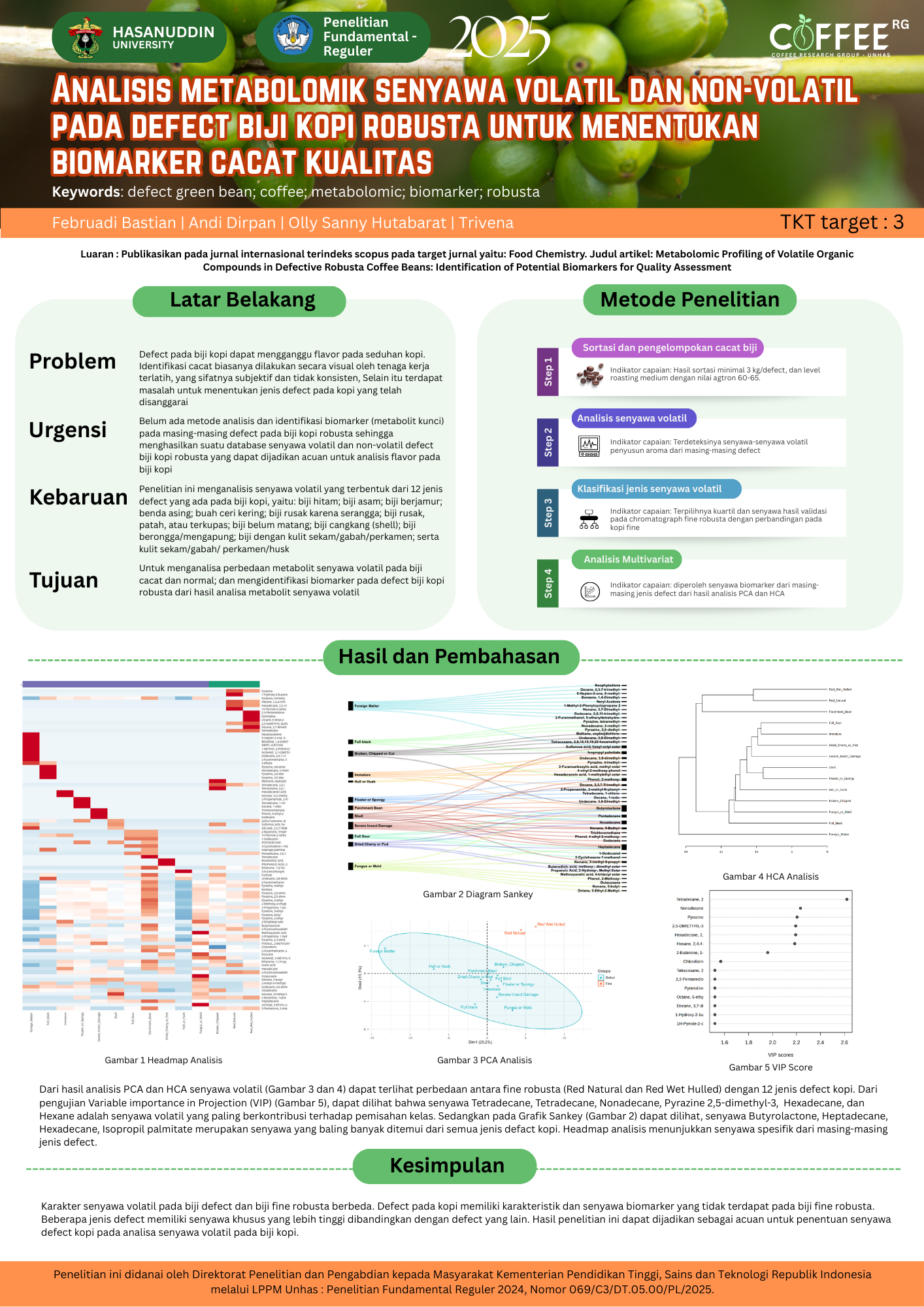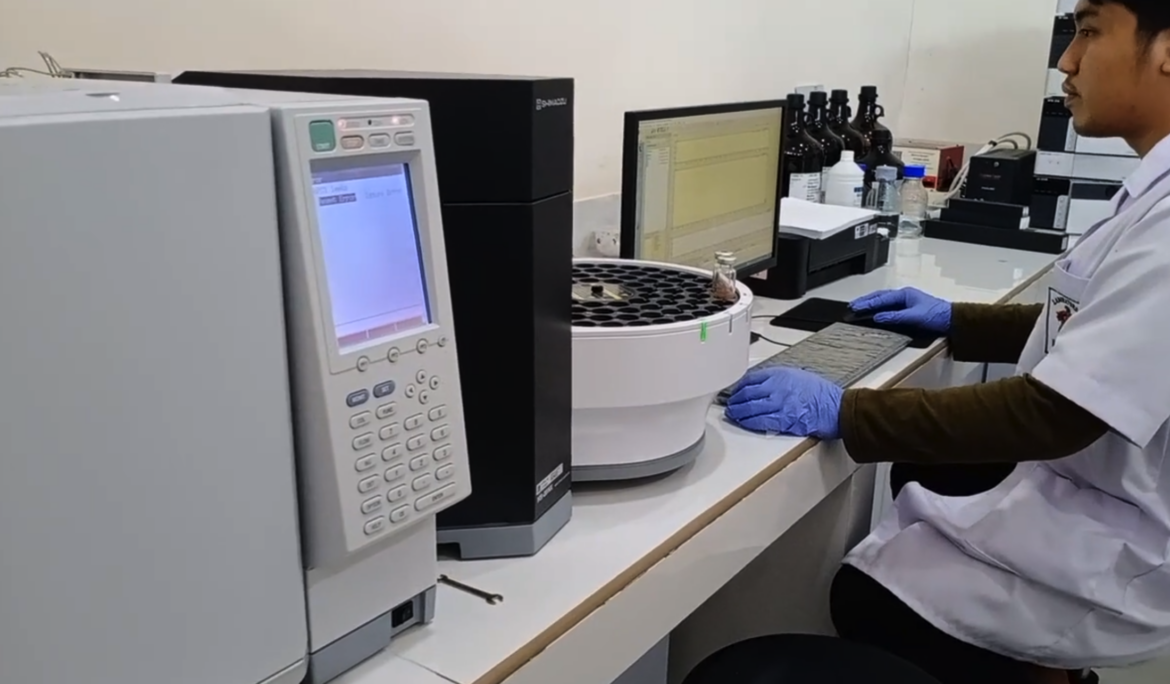
Defective coffee beans were sorted according to the Fine Robusta Standards and Protocols, and each defect type was analysed separately. The defects studied included foreign matter, full black beans, broken or chipped beans, immature beans, floater or spongy beans, severe insect damaged beans, shell beans, sour beans, parchment bean, dried cherries, husk or hull, and fungus or mold. The volatile compounds were extracted using the Monolithic Material Sorptive Extraction (MMSE) technique and then analysed by GC-MS. The results revealed that each type of defect was associated with a specific flavour compound. Foreign matter defects contained dodecane, 4,6-dimethyl-; full black bean defects had pyrazine, 2,3-dimethyl-, 3-hydroxy-3-methylbutanohydrazide, and 2-ethylhexyl salicylate; broken or chipped bean defects included 2-propanone, 1-hydroxy-, furfural, and ethanone, 1-(1H-pyrrol-2-yl)-; immature bean defects contained 2-ethylhexyl salicylate; floater or spongy bean defects had butylsemithiocarbazide; severe insect damaged bean defects included 2-propanone, 1-hydroxy- and pentanal; sour bean defects contained 2-propanone, 1-hydroxy- and ethanone, 1-(1H-pyrrol-2-yl)-; parchment bean defects had furfural and ethanone, 1-(1H-pyrrol-2-yl)-; dried cherries defects included 2-furancarboxaldehyde; hus kor hull defects contained furfural and 6-methylhept-5-en-1-nitrile; and fungus or mold bean defects had phenol, 2-methoxy- (guaiacol). No specific compounds were detected in the shell bean defect samples. These findings provide valuable insights into the flavour profiles associated with various defects in Robusta coffee beans, which can aid in quality control and the development of improved processing methods for coffee beans.