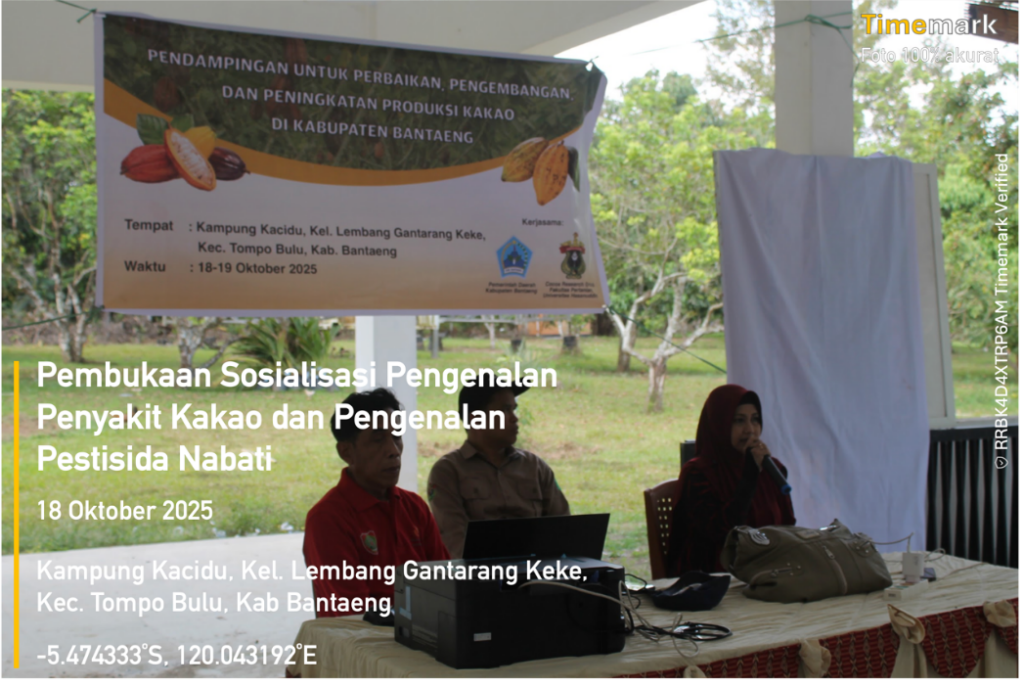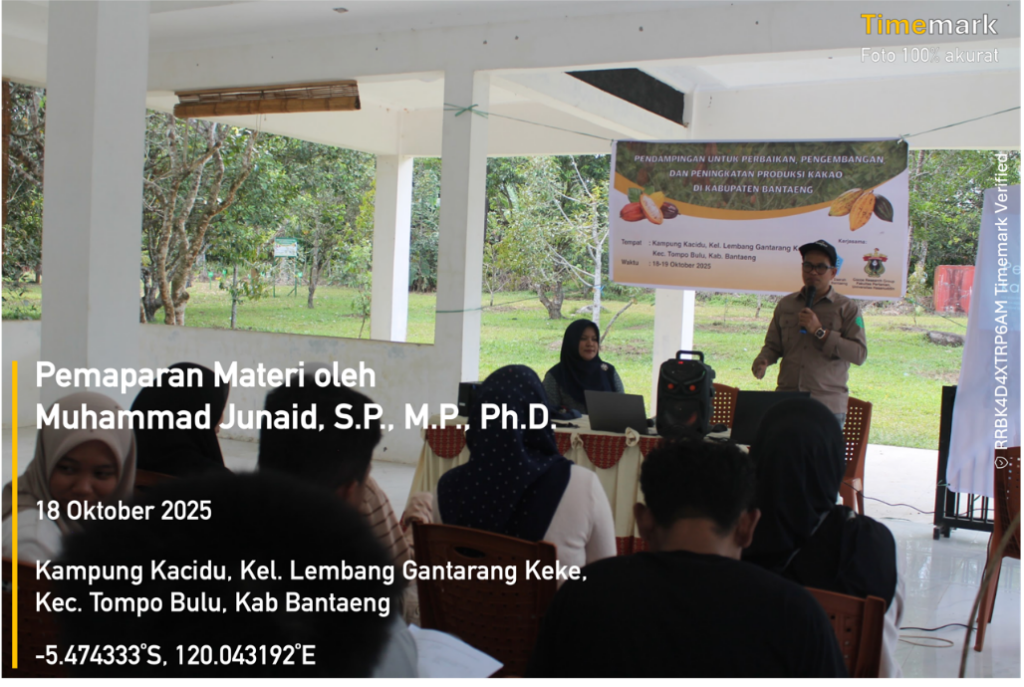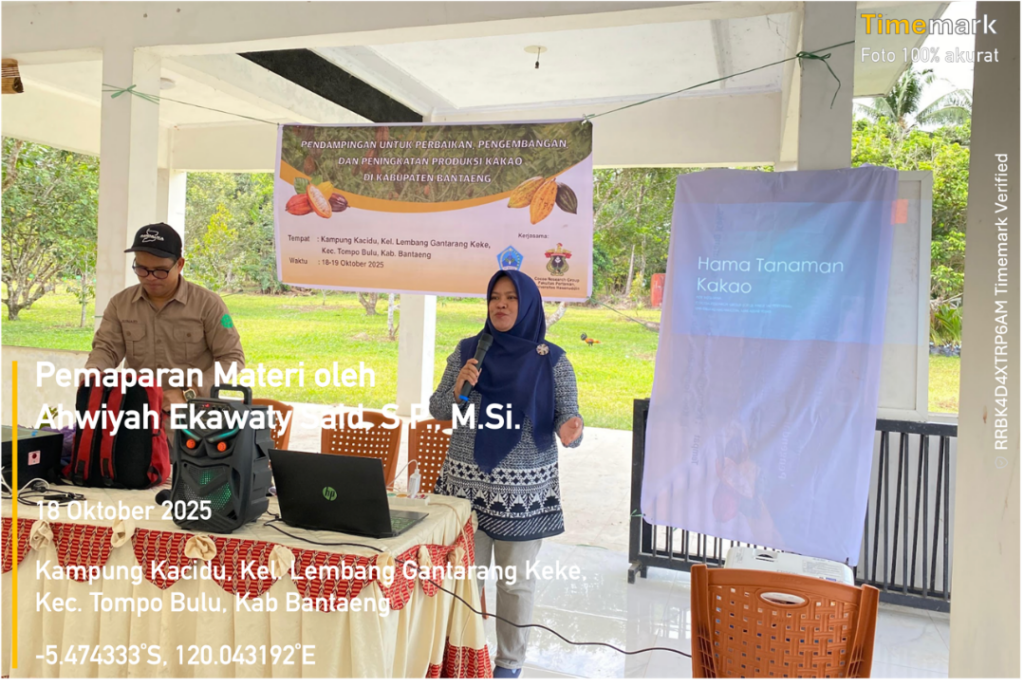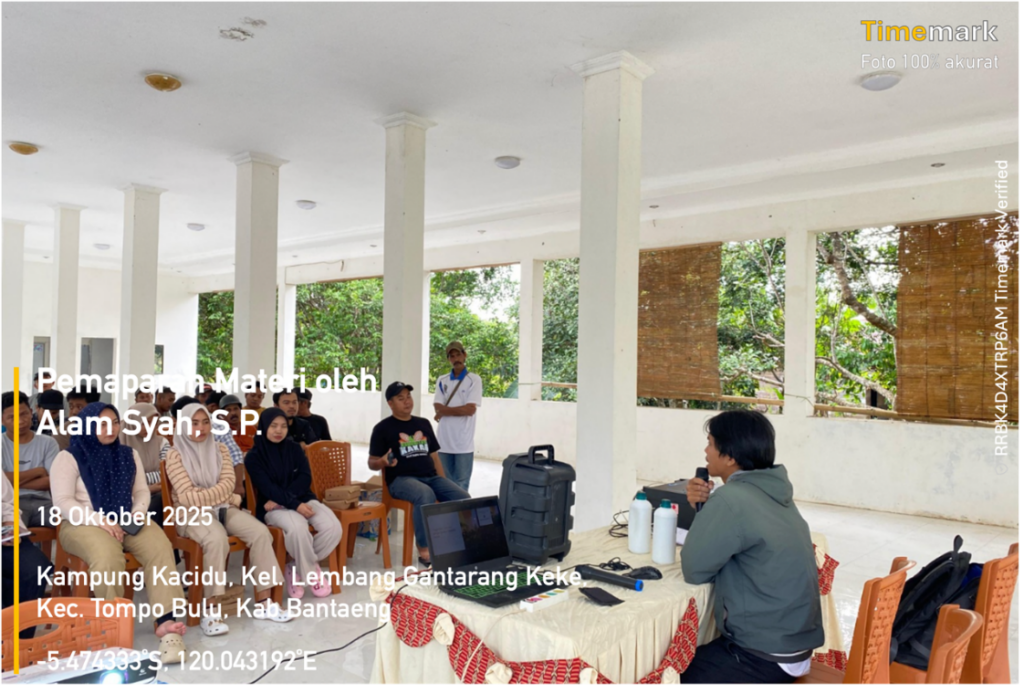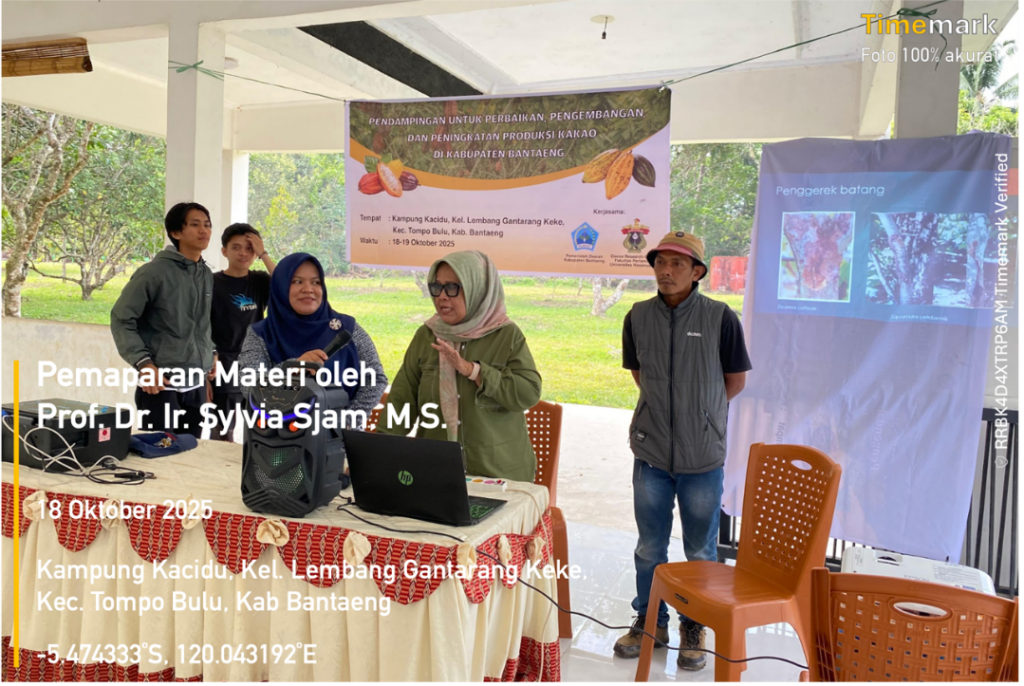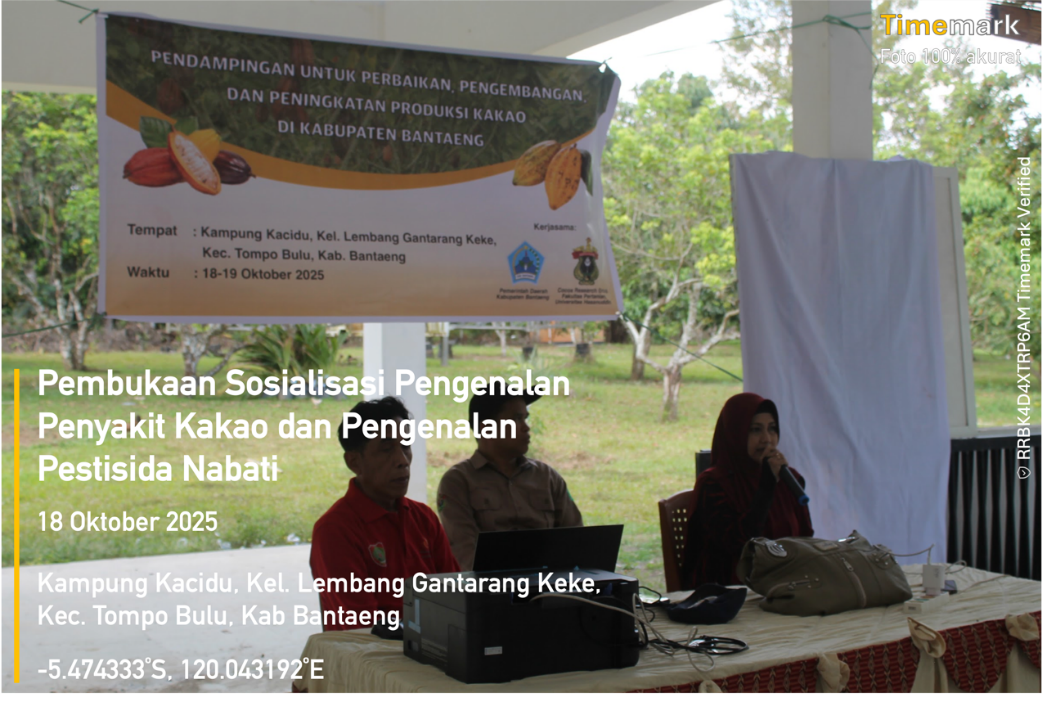

On October 18, 2025, a community-based training and assistance program titled “Introduction to Cocoa Disease and Plant Pesticides” was successfully conducted in Kampung Kacidu, Kelurahan Lembang Gantarang Keke, Kecamatan Tompo Bulu, Kabupaten Bantaeng. This activity involved 50 participants, consisting of cocoa farmers, farmer groups, and students, and was organized as part of a collaborative initiative between the Cocoa Research Group of Hasanuddin University and the local government of Bantaeng Regency. The program was designed with a clear objective: to increase cocoa productivity and production up to twofold through land expansion, rejuvenation of aging plants, diversification of superior clones, and improvement of the cocoa growing environment.
The implementation of this activity responded to the pressing challenges faced by cocoa farmers, including declining productivity due to plant aging, soil nutrient depletion, climate change, and the increasing incidence of pests and diseases. Through a series of structured sessions, participants were introduced to key knowledge on identifying major cocoa diseases such as vascular streak dieback and dieback symptoms, as well as important pests like cocoa pod borers and stem borers. In addition, special emphasis was placed on the use of plant-based pesticides (botanical pesticides) as an environmentally friendly alternative to chemical control methods. This approach not only promotes sustainable agriculture but also reduces ecological risks.
The training was delivered using a participatory and interactive approach, beginning with opening remarks from local stakeholders and followed by expert-led presentations, discussions, and knowledge-sharing sessions. Participants actively engaged in discussions, reflecting their strong interest in improving their farming practices. The activity concluded with evaluation and informal interactions, reinforcing both knowledge transfer and community bonding.
This initiative is closely aligned with several Sustainable Development Goals (SDGs), particularly SDG 1 (No Poverty), SDG 4 (Quality Education), and SDG 17 (Partnerships for the Goals). By enhancing farmers’ knowledge and skills, the program contributes to increasing agricultural productivity and income, thereby supporting poverty reduction (SDG 1). The educational aspect of the training, which emphasizes practical and scientific knowledge dissemination, directly supports lifelong learning opportunities (SDG 4). Furthermore, the collaboration between academic institutions, local government, and farming communities reflects a strong partnership model that is essential for sustainable development (SDG 17). In addition, the program also indirectly contributes to SDG 3 (Good Health and Well-being) through the promotion of safer agricultural practices, as well as SDG 15 (Life on Land) by encouraging environmentally friendly pest management strategies.