

On 14 May 2026, an online meeting was conducted to prepare the proposal for the PAIR International Collaborative Research Program. The activity was held through Zoom Meeting and served as an important platform to strengthen international academic cooperation and develop high-quality research initiatives that address global challenges. The meeting reflected a shared commitment to expanding scientific collaboration and fostering innovation through cross-border partnerships.
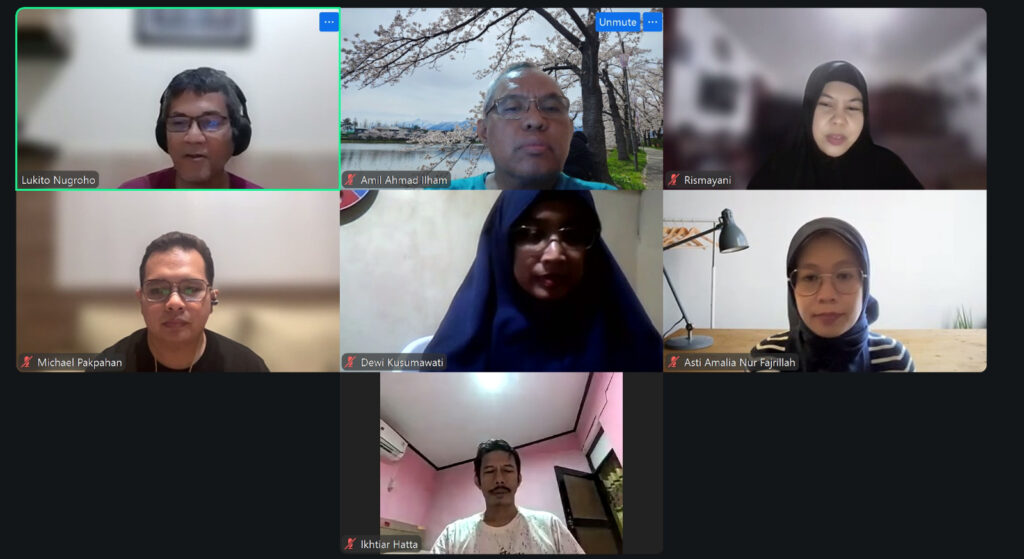
The activity aimed to support international collaborative research, enabling researchers and students to exchange knowledge, discuss research priorities, and formulate strategic plans for future joint projects. Through constructive discussions, participants explored potential research themes, identified opportunities for interdisciplinary cooperation, and established a common understanding regarding the objectives and expected outcomes of the proposed research.
A major highlight of the meeting was the strong collaboration among six Indonesian institutions and one international university, bringing together expertise from academia and the disaster management sector. The domestic collaborators included the Computing and Data Mining Research Group, Universitas Hasanuddin, Universitas Gadjah Mada (UGM), Universitas Tadulako, Universitas Dipa Makassar, STMIK Bina Mulia Palu, and the Muhammadiyah Disaster Management Center (MDMC) of Muhammadiyah Regional Board of Central Sulawesi. The international collaboration was represented by Monash University, Melbourne, Australia, which played a strategic role in strengthening the global perspective and research quality of the proposed project. This multidisciplinary consortium reflects a shared commitment to developing innovative and impactful research with both regional and international relevance.
The program involved 7 participants, consisting of academic representatives and student contributors who actively participated in the proposal development process. Among the student participants were Rismayani and Dewi Kusumawati, whose involvement demonstrated the importance of engaging young researchers in international scientific activities. Their participation provided valuable opportunities to enhance research capacity, broaden academic perspectives, and gain experience in global collaboration.
A significant aspect of this activity was the collaboration with Monash University as the international partner. The partnership highlighted the importance of building strong networks among higher education institutions to promote knowledge exchange, improve research quality, and generate meaningful impacts for society. Such collaboration also contributes to strengthening institutional capacities and creating opportunities for sustainable academic partnerships in the future.
This activity aligns with several Sustainable Development Goals (SDGs), particularly SDG 1: No Poverty, SDG 4: Quality Education, and SDG 17: Partnerships for the Goals. Through research collaboration and knowledge sharing, the initiative supports the generation of evidence-based solutions that can contribute to reducing socioeconomic disparities, thereby supporting SDG 1: No Poverty. Furthermore, by involving students and promoting academic capacity development, the activity directly contributes to SDG 4: Quality Education, which emphasizes inclusive and quality learning opportunities for all.
Most importantly, the collaboration established between institutions from different countries embodies SDG 17: Partnerships for the Goals, emphasizing the necessity of global partnerships in addressing complex challenges through science, innovation, and shared expertise. The PAIR proposal preparation meeting represents a concrete step toward strengthening international cooperation and creating research initiatives that can provide long-term benefits for both the academic community and society at large.
Overall, this activity demonstrated that international collaboration is a key element in advancing research excellence, empowering future researchers, and fostering sustainable partnerships that contribute to global development.