


MAKASSAR, Indonesia, Apr 2026 – What if fallen leaves could help clean polluted water? In forests and mining areas, leaves are often treated as waste. But a recent study shows that teak leaves may have a second life—as biochar that helps restore water affected by acid mine drainage. A recent study titled “Application of Teak Leaf Biomass-Derived Biochar into Constructed Wetlands for Sulfate Reduction and pH Improvement in Acid Mine Drainage-Affected Aquatic Environments,” published in the Egyptian Journal of Aquatic Biology & Fisheries by the Egyptian Society for the Development of Fisheries and Human Health on March 23, 2026, investigated how teak-leaf biochar could improve water quality in a mining-affected environment in Bone Regency, South Sulawesi.
Why Is Acid Mine Drainage Dangerous?
Mining can leave behind acidic water known as acid mine drainage (AMD). This water can have very low pH and high sulfate concentrations, creating harsh conditions for aquatic life and increasing environmental risks. AMD can also affect surrounding ecosystems, agriculture, and fisheries. The study began with a simple question: Can a material made from locally available biomass help solve the problem?
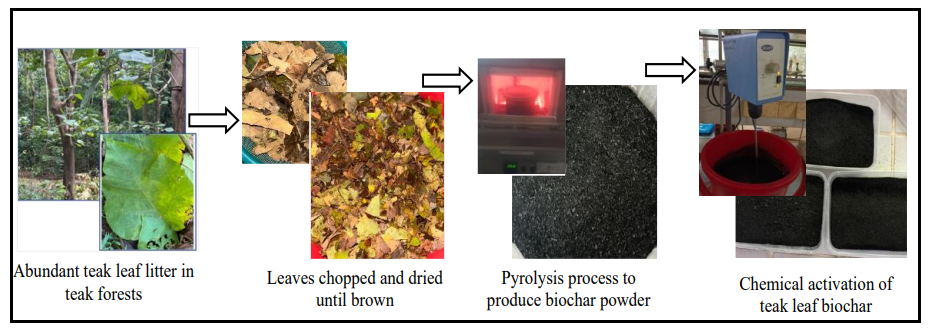
How Can Leaves Become a Water Treatment Material? The researchers converted teak leaves into biochar through pyrolysis at 300°C for four hours. The biochar was then chemically activated to increase its pores and surface functional groups, making it more capable of interacting with pollutants. The biochar was introduced into constructed wetland systems containing AMD-contaminated water and mangrove sediment. Constructed wetlands imitate some of the natural functions of wetlands, allowing physical, chemical, and biological processes to work together. The biochar can help adsorb pollutants, while wetland sediment provides a favorable habitat for sulfate-reducing bacteria. Together, these processes can accelerate sulfate removal and improve water conditions.
What Did the Researchers Find?
The results were encouraging. The AMD initially had a pH of about 3.02 and a sulfate concentration of 74.61 mg/L. The most effective treatment reduced sulfate by up to 66.9%, lowering the concentration to 24.73 mg/L within 12 days. At the same time, the pH increased from around 3.0 to 6.85, moving the water much closer to neutral conditions.
Supporting SDG 6: Clean Water and Sanitation
This research directly supports Sustainable Development Goal (SDG) 6 – Clean Water and Sanitation, which promotes better water quality and sustainable water management. More importantly, the study demonstrates a circular approach: instead of allowing fallen teak leaves to remain underutilized, they can be transformed into a value-added material for environmental restoration. The researchers describe this approach as a promising, low-cost option for improving AMD-affected water.
A Small Leaf, A Bigger Environmental Opportunity
The findings offer a promising example of how local resources and ecological processes can work together. While further research is needed before large-scale application, teak-leaf biochar shows potential as a sustainable material for improving water affected by acid mine drainage. Sometimes, environmental solutions do not need to begin with complicated materials. They may begin with something as ordinary as a fallen leaf.
Reference
DOI:
https://doi.org/10.21608/ejabf.2026.454819.7272
Contact:
Prof. Fahruddin
+62 853-4264-9190
fahruddin_science@unhas.ac.id