


MAKASSAR, Indonesia, Apr 2025 – When we visit a community health center, we expect it to be a place that protects our health. But behind the medical services, another challenge quietly emerges every day: wastewater. Wastewater generated by healthcare facilities can contain organic pollutants, nutrients, chemicals, suspended solids, and microorganisms. If it is not properly treated, these contaminants can enter the environment and potentially threaten water quality, ecosystems, and human health. A recent study titled “Optimizing Community Health Center Effluent Treatment with Moving Bed Biofilm Reactor Technology Combined with Activated Carbon and Chlorine,” published in the Nature Environment and Pollution Technology by Technoscience Publications on March 1, 2025, explores a promising approach to address this challenge.
What Makes Healthcare Wastewater a Concern?
Unlike ordinary domestic wastewater, wastewater from healthcare facilities may contain a mixture of pollutants originating from medical activities, sanitation, and daily operations. Organic matter, ammonia, suspended solids, and microorganisms are among the parameters that need to be controlled before wastewater is discharged. The challenge is particularly important for community health centers, which provide essential healthcare services but may have limited wastewater treatment infrastructure. The study therefore examined a treatment system that combines Moving Bed Biofilm Reactor (MBBR), activated carbon, and chlorine.
How Does the Treatment System Work?
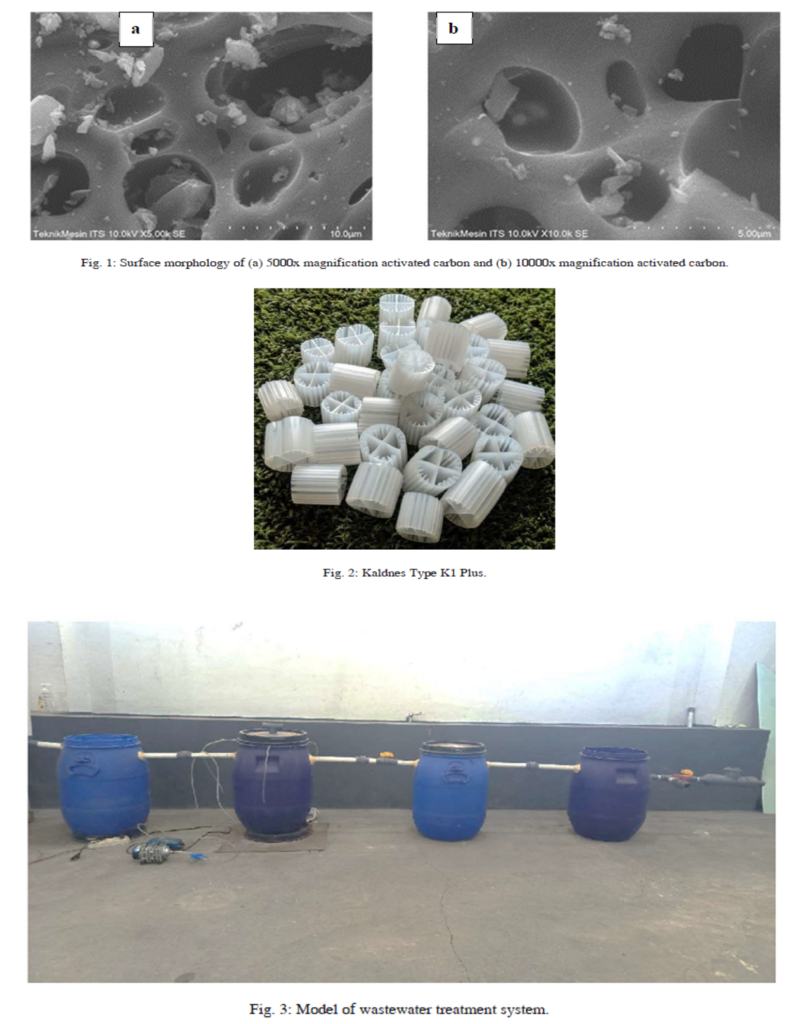
The technology combines several treatment processes. In the MBBR system, microorganisms grow on specially designed media and form a biofilm. These microorganisms help break down organic pollutants in wastewater. The process is then supported by activated carbon, which can adsorb certain pollutants from the water. The final treatment uses chlorine as a disinfection step to reduce microorganisms that remain after the previous processes. Rather than relying on a single treatment mechanism, this combined approach brings biological treatment, adsorption, and disinfection together.
What Did the Researchers Find?
The researchers tested the system using wastewater from three community health center services with a four-hour treatment period. The results showed substantial improvements in several important water-quality parameters. BOD₅ decreased by up to 89%, COD by up to 87%, and total suspended solids (TSS) by up to 94%. The treatment also achieved 100% ammonia removal, while total coliform bacteria decreased by up to 98%. These findings demonstrate the potential of combining MBBR, activated carbon, and chlorine to improve the quality of community health center effluent.
Why This Matters for Sustainable Development
The research directly supports SDG 6: Clean Water and Sanitation, which promotes improved water quality and sustainable wastewater management. Properly treating healthcare wastewater is not only a technical issue. It is part of a broader responsibility to protect water resources, public health, and the environment. Cleaner effluent means fewer pollutants are released into surrounding ecosystems.
A Healthier Future Starts Beyond the Treatment Room
Healthcare facilities play an essential role in protecting human health. But that responsibility should not stop at the treatment room. Effective wastewater management can help ensure that healthcare activities do not create new environmental risks. The combination of biological treatment, activated carbon, and disinfection demonstrated in this study offers one potential pathway toward safer and more sustainable wastewater management. As communities continue to expand and healthcare services become increasingly important, technologies that protect both people and the environment will become even more valuable. Because a healthy community needs more than healthy people—it also needs clean water and a healthy environment.
Reference
DOI:
hhttps://doi.org/10.46488/NEPT.2025.v24i01.D1700
Contact:
Prof. Fahruddin
+62 853-4264-9190