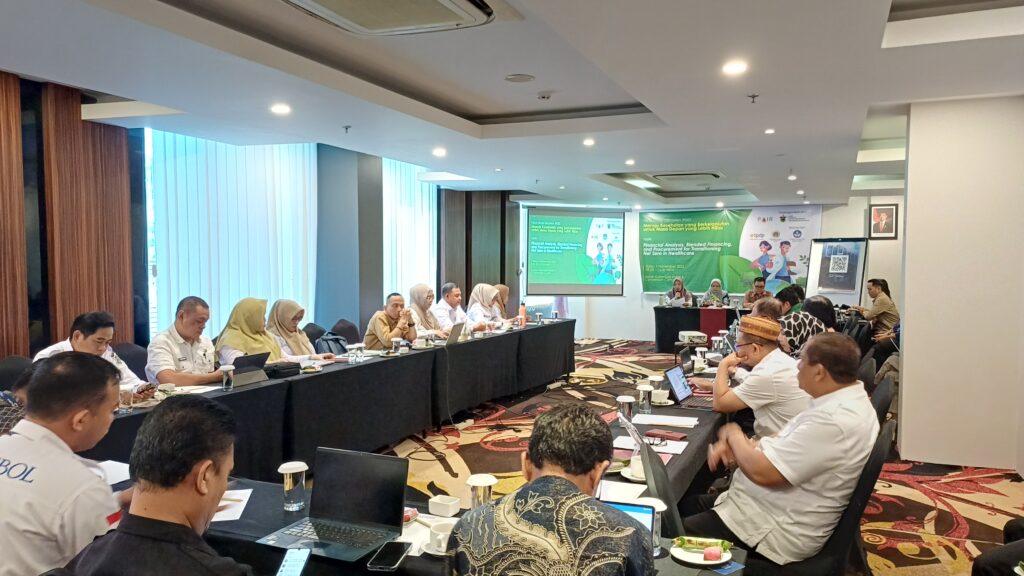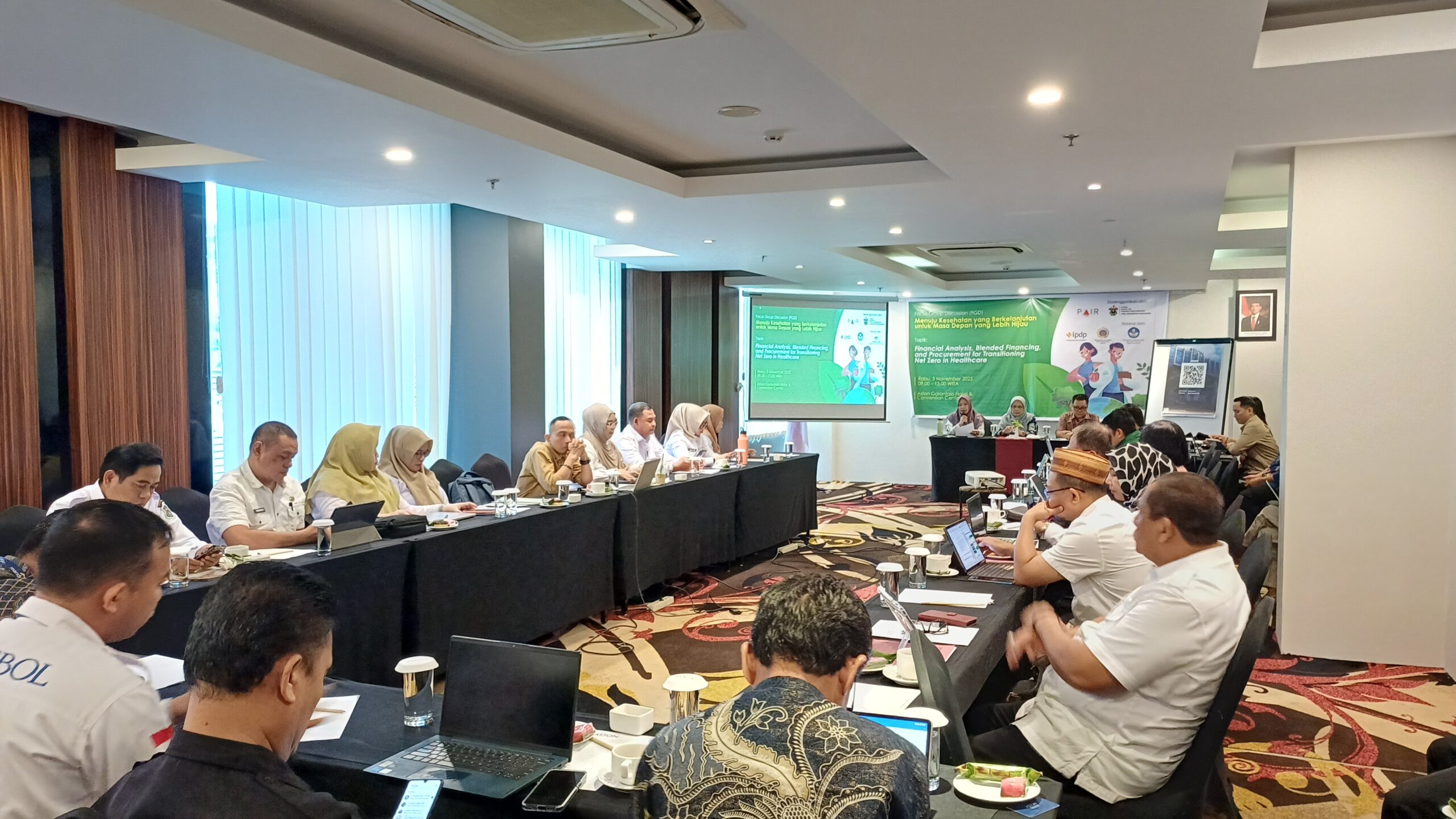

Gorontalo, Indonesia, November 5th, 2025/asds/. On 5 November 2025, a Focus Group Discussion (FGD) entitled “Toward Sustainable Healthcare for a Greener Future” was successfully held at the Aston Gorontalo Hotel & Convention Center. The forum brought together 50 participants representing healthcare facilities, local and regional government institutions, academic researchers, financial actors, and civil society organizations. Centered on the theme Financial Analysis, Blended Financing, and Procurement for Transitioning Net Zero in Healthcare, the FGD provided a timely and strategic space to address the growing environmental footprint of the health sector while safeguarding service quality and equity.
The FGD was organized by the Institute for Research and Community Service (LPPM) of Hasanuddin University through the Partnership for Australia–Indonesia Research (PAIR) program and supported by the PAIR–LPDP research grant. The activity formed part of a collaborative international research initiative involving Hasanuddin University, Ichsan University Gorontalo, Sam Ratulangi University Manado, Khairun University Ternate, and the University of Melbourne, reflecting a strong commitment to cross-border academic partnerships and policy-oriented research.
The primary objective of the activity was to explore challenges and opportunities in implementing sustainable practices within healthcare facilities, particularly to support the transition toward net zero emissions. Healthcare systems play a critical role in protecting human well-being, yet they are also energy-intensive and resource-dependent. Recognizing this dual role, participants engaged in constructive dialogue on how financial innovation and sustainable procurement can enable healthcare institutions to reduce emissions without exacerbating operational costs or service gaps.
Discussions emphasized the importance of financial analysis as a decision-making tool to assess long-term costs and benefits of green investments, such as renewable energy adoption, energy-efficient infrastructure, and environmentally responsible waste management. Participants also highlighted blended financing as a promising approach, combining public funding, private investment, and philanthropic resources to share risks and attract capital for sustainability-oriented health projects. This approach was viewed as particularly relevant for local health facilities that face budget limitations yet bear increasing pressure to align with climate and environmental commitments.
In addition, the FGD underlined the strategic role of sustainable procurement, shifting from short-term cost considerations to life-cycle costing and environmental value. By adopting greener procurement standards, healthcare providers can contribute to emission reduction across supply chains while enhancing system resilience. Capacity building for health managers and policymakers was identified as a key enabling factor to ensure that sustainable procurement and financing strategies are effectively planned, implemented, and monitored.
The forum aimed to explore key challenges and opportunities in applying sustainable practices within healthcare facilities, particularly to support the transition toward net zero emissions. Participants representing BAPPEDA of Gorontalo Province, Gorontalo City Health Office, RSUD Aloei Saboe, RSUD dr. Hasri Ainun Habibie, Biluhu Community Health Center, environmental organizations, and philanthropic institutions discussed practical barriers such as limited financing access, regulatory complexity, and data constraints. These challenges were juxtaposed with emerging opportunities for green financing and blended financing models that combine public funding, private investment, and philanthropic resources.
The FGD was officially opened by the Head of BAPPEDA of Gorontalo Province, represented by the Head of Research and Innovation Division, who emphasized the importance of inter-sectoral collaboration in strengthening climate-resilient and efficient health systems. The discussion was facilitated by the research team from Hasanuddin University, led by Prof. Sri Astuti Thamrin, Ph.D., who highlighted that sustainable healthcare transformation must be grounded in solid financial analysis, adaptive procurement policies, and inclusive stakeholder engagement.
This FGD also strengthened collaboration among stakeholders in Gorontalo, reinforcing dialogue between policymakers, practitioners, and researchers on financing models for the health sector’s net zero transition. Such multi-stakeholder engagement is essential for translating policy aspirations into practical, locally grounded solutions.
This activity directly contributes to the Sustainable Development Goals (SDGs), particularly SDG 1 (No Poverty) by promoting cost-efficient and inclusive healthcare systems that reduce long-term financial burdens; SDG 4 (Quality Education) through knowledge exchange, learning, and capacity development among stakeholders; and SDG 17 (Partnerships for the Goals) by fostering cross-sector collaboration to address complex sustainability challenges. Overall, the FGD marked an important step toward building a resilient, equitable, and low-carbon healthcare system, ensuring that environmental responsibility and public health advancement move forward together for a greener future.