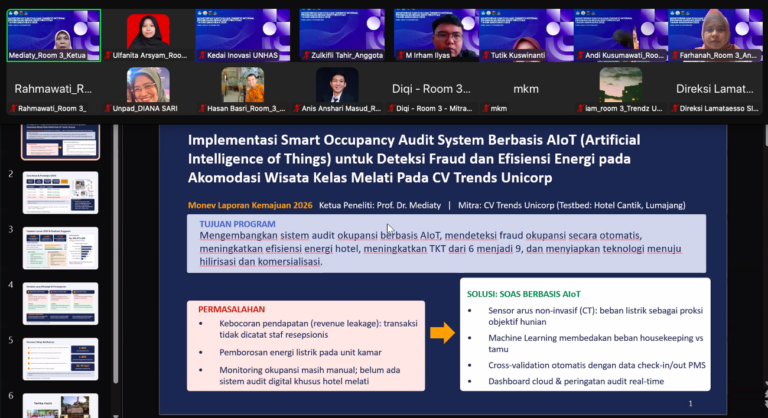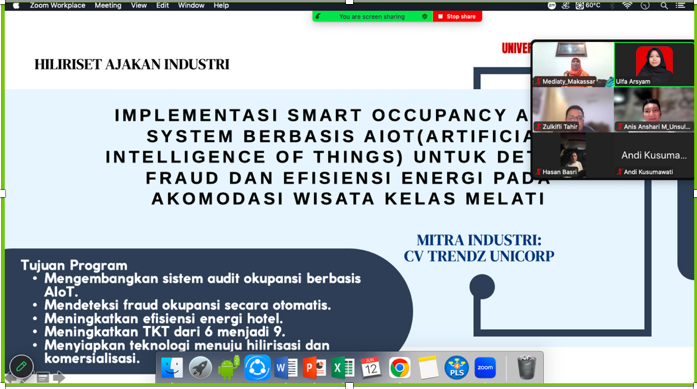

Makassar, Indonesia/12 May 2026. In a notable stride toward research-driven industrial innovation, a research team successfully secured a 2026 Downstreaming of Priority Research Grant for Industry Collaboration, culminating in the implementation of a project titled “Implementation of a Smart Occupancy Audit System (SOAS) Based on AIoT for Fraud Detection and Energy Efficiency in Budget-Class Tourist Accommodation at CV Trendz Unicorp.” The activity was carried out at Hotel Cantik, Lumajang, East Java, in direct partnership with the hotel’s management as the industry collaborator for this downstreaming initiative.
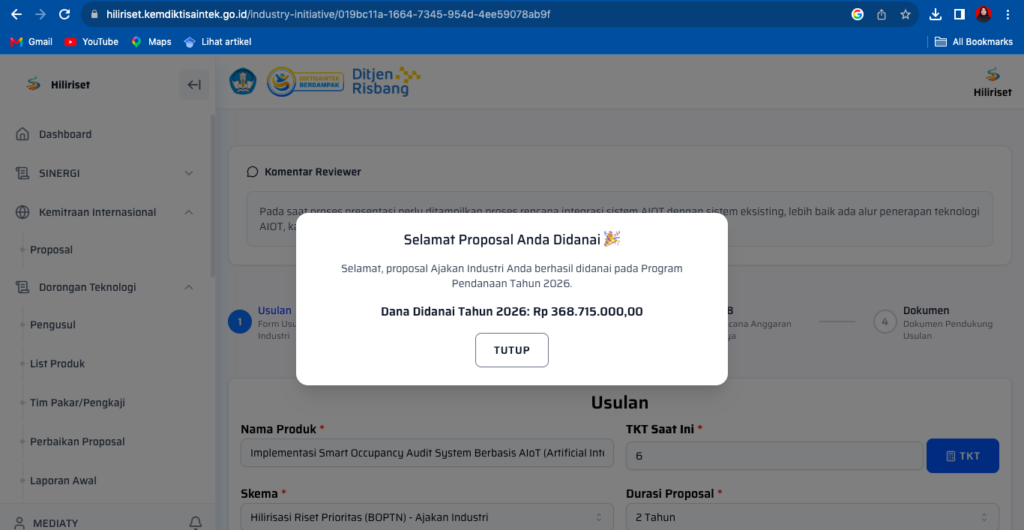
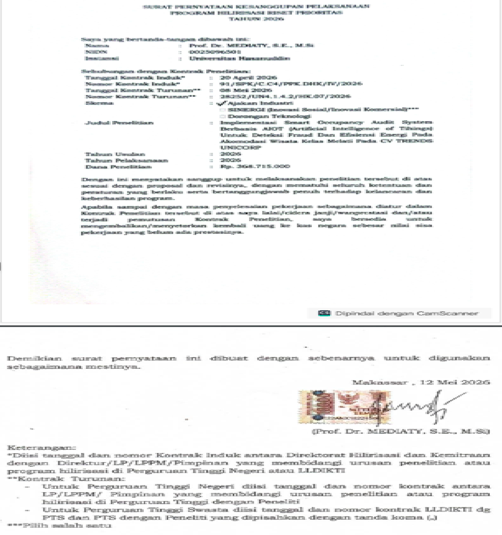
The core objective of this activity was to implement the Smart Occupancy Audit System (SOAS), an Artificial Intelligence of Things (AIoT)-based technology designed to simultaneously detect fraudulent practices and enhance energy efficiency within budget-class tourist accommodations, commonly known in Indonesia as “hotel melati.” Such accommodations often face operational challenges, including undocumented room usage, revenue leakage, and inefficient energy consumption, all of which affect both profitability and sustainability. Through the integration of sensor-based occupancy detection and intelligent data analytics, SOAS offers a real-time, automated solution capable of monitoring room occupancy accurately while optimizing electricity and utility usage according to actual guest activity.
The implementation activity took place on 12 May 2026, involving approximately 10 participants, including members of the research team and representatives from CV Trendz Unicorp as the industry mitra (partner). Despite its modest scale, the activity carried substantial strategic value, as it marked the direct translation of academic research into a tangible, field-tested technological solution ready for real-world application within the hospitality industry.
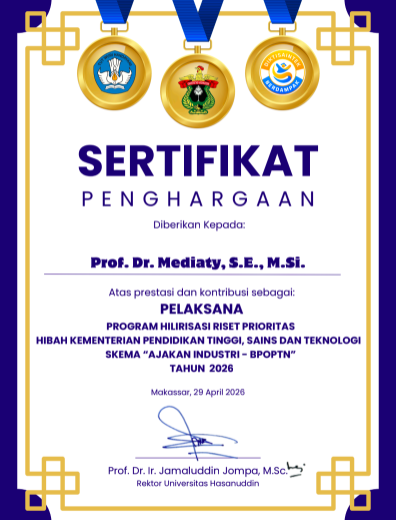
This research downstreaming initiative aligns meaningfully with several Sustainable Development Goals (SDGs). Foremost, the project supports SDG 1 (No Poverty), as improved fraud detection and operational efficiency directly strengthen the financial sustainability of small and budget-class accommodation businesses, protecting the livelihoods of their owners and employees. The activity also reflects SDG 4 (Quality Education), as it demonstrates the practical application of higher-order academic research, engineering knowledge, and technological innovation to solve real industry problems, while simultaneously providing a valuable learning experience for the research team involved. Furthermore, the collaboration between academic researchers and CV Trendz Unicorp exemplifies SDG 17 (Partnerships for the Goals), underscoring how strong research-industry partnerships can accelerate the translation of scientific innovation into meaningful societal and economic impact.
In addition, the energy efficiency component embedded within the SOAS system contributes to broader environmental sustainability goals, resonating with the spirit of SDG 15 (Life on Land) through more responsible and efficient use of natural resources, while the emphasis on fair and transparent business operations touches upon the well-being dimension central to SDG 3 (Good Health and Well-Being), by fostering healthier, more trustworthy working environments for hospitality staff and management alike.
This achievement reflects a broader commitment to research that does not merely stop at theoretical findings but actively transforms into applicable, industry-ready innovations. By successfully implementing the AIoT-based Smart Occupancy Audit System at Hotel Cantik, the research team has demonstrated how technology, when thoughtfully downstreamed, can simultaneously safeguard business integrity, promote energy conservation, and empower small and medium accommodation enterprises to compete sustainably in Indonesia’s growing tourism sector.
Contact:
Mediaty
+6285242070144
mediaty@unhas.ac.id