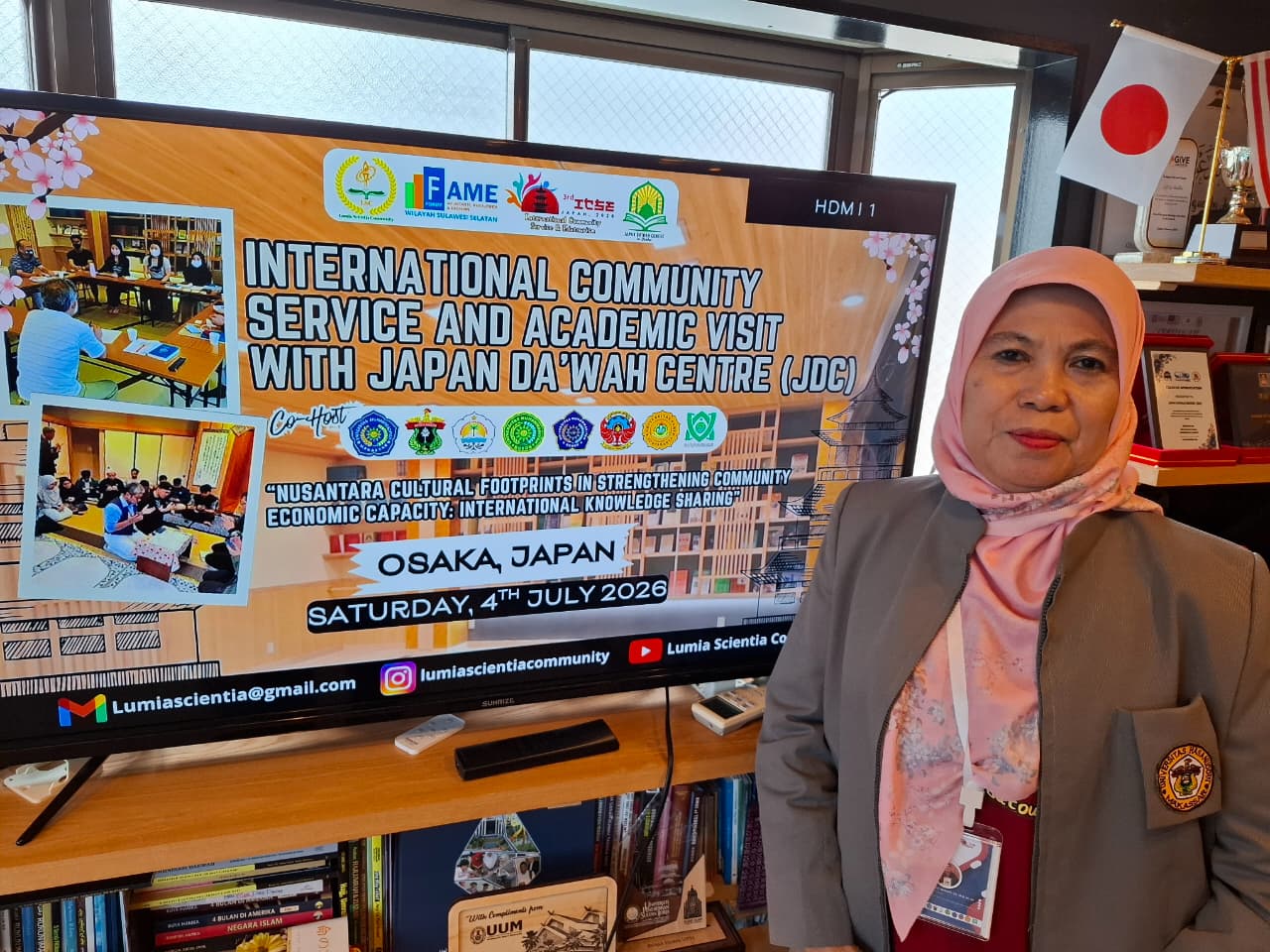

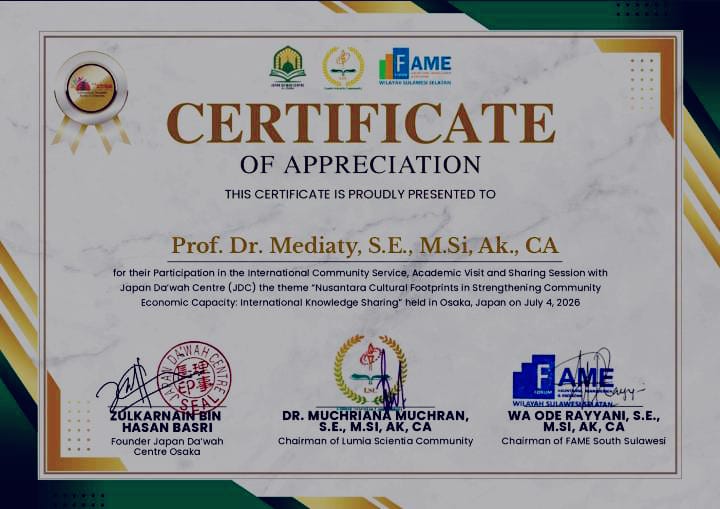
Osaka, Japan/4 July 2026. In a meaningful demonstration of cross-border academic collaboration and social contribution, a team of educators and scholars carried out an International Community Service and Academic Visit with Japan Da’wah Centre (JDC). This initiative, framed as a form of community service (pengabdian masyarakat), brought together academics, community leaders, and members of the Indonesian diaspora to exchange knowledge, strengthen ties, and explore pathways toward inclusive and sustainable development.
The core objective of the activity was to deliver an international knowledge-sharing session themed “Nusantara Cultural Footprints in Strengthening Community Economic Capacity.” Through this presentation, the delegation introduced the richness of Indonesian cultural heritage as a living resource that can be transformed into tangible economic opportunities for communities abroad, particularly for Indonesian citizens residing in Japan. Beyond the academic presentation, the visit also served as a courtesy call and silaturahmi (friendship-strengthening gathering) with the Ikatan Cendekiawan Muslim Indonesia (ICMI), reinforcing solidarity among Indonesian intellectuals within the global diaspora network.
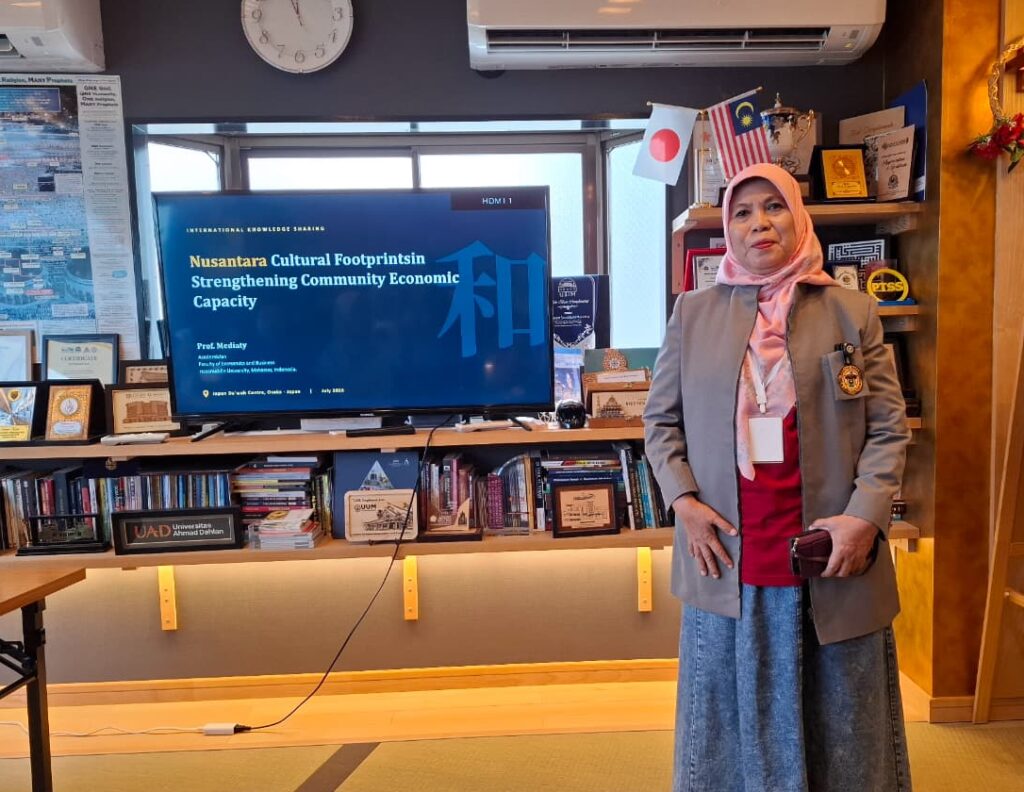
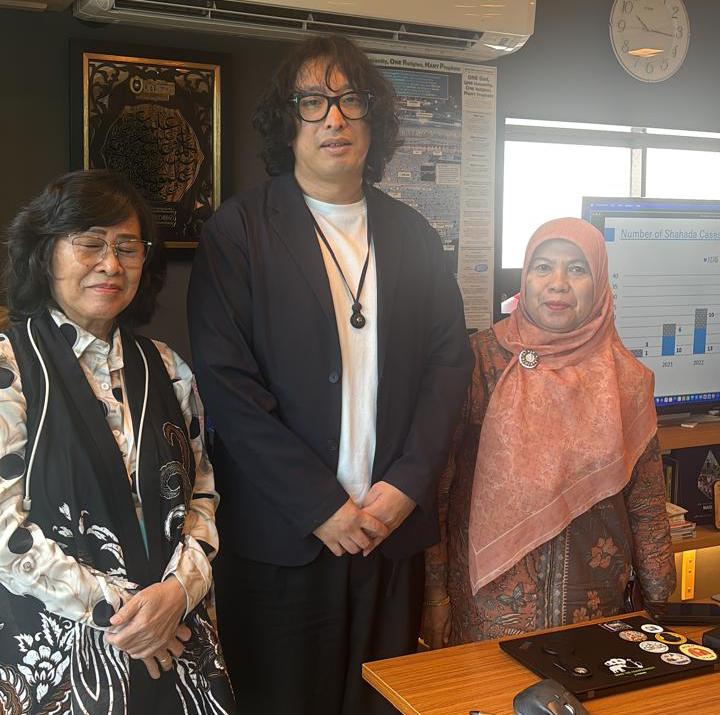
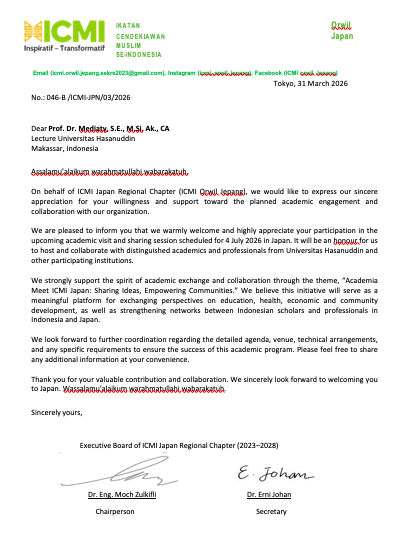
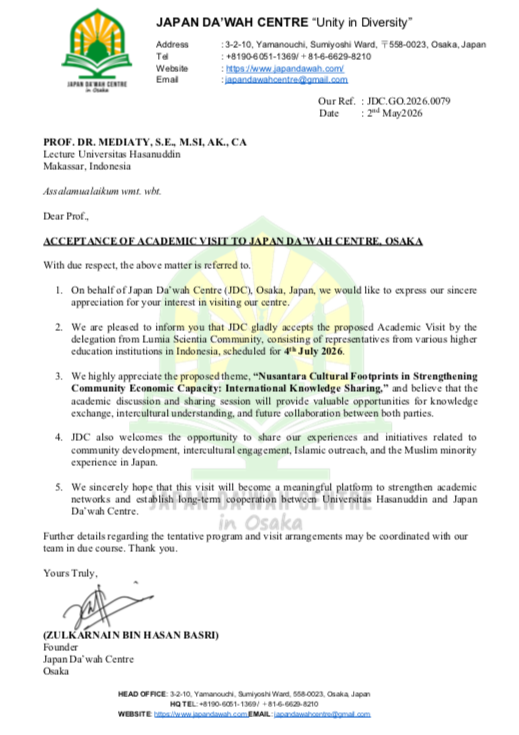
The event drew considerable engagement, with approximately 200 participants joining both online and offline, reflecting the strong interest in the topics discussed and the enduring spirit of collaboration between Indonesian and Japanese communities. Participants engaged in interactive dialogue, cultural exchange, and discussions on how traditional wisdom and cultural identity can be harnessed to support economic resilience within diaspora communities.
This activity is closely aligned with several Sustainable Development Goals (SDGs) that underpin the mission of higher education institutions in contributing to global welfare. Most notably, the program directly supports SDG 1 (No Poverty) by promoting economic empowerment strategies rooted in cultural assets, helping communities generate sustainable livelihoods. It further reflects SDG 4 (Quality Education) through the exchange of academic knowledge and cross-cultural learning that broadens participants’ understanding of both local wisdom and global economic practices. Equally central to this initiative is SDG 17 (Partnerships for the Goals), as the collaboration between academic institutions, Japan Da’wah Centre, and ICMI exemplifies the power of international partnerships in achieving shared developmental objectives.
In addition, the discussions touched upon themes relevant to SDG 3 (Good Health and Well-Being), given the emphasis on community welfare and social cohesion among diaspora members, as well as broader environmental stewardship connected to SDG 14 (Life Below Water) and SDG 15 (Life on Land), particularly through discourse on sustainable resource management inspired by Nusantara’s ecological wisdom.
This community service and academic visit stands as a testament to the university’s commitment to fostering global engagement, nurturing intellectual exchange, and empowering communities through the strategic integration of culture, education, and international partnership. It is hoped that this collaboration with Japan Da’wah Centre and ICMI in Osaka will continue to flourish, opening further avenues for joint programs that benefit both Indonesian and Japanese societies in the spirit of sustainable, shared prosperity.
Contact:
Mediaty
+6285242070144
mediaty@unhas.ac.id