
Smart Decisions or Ethical Risks? How AI Is Reshaping Business Sustainability
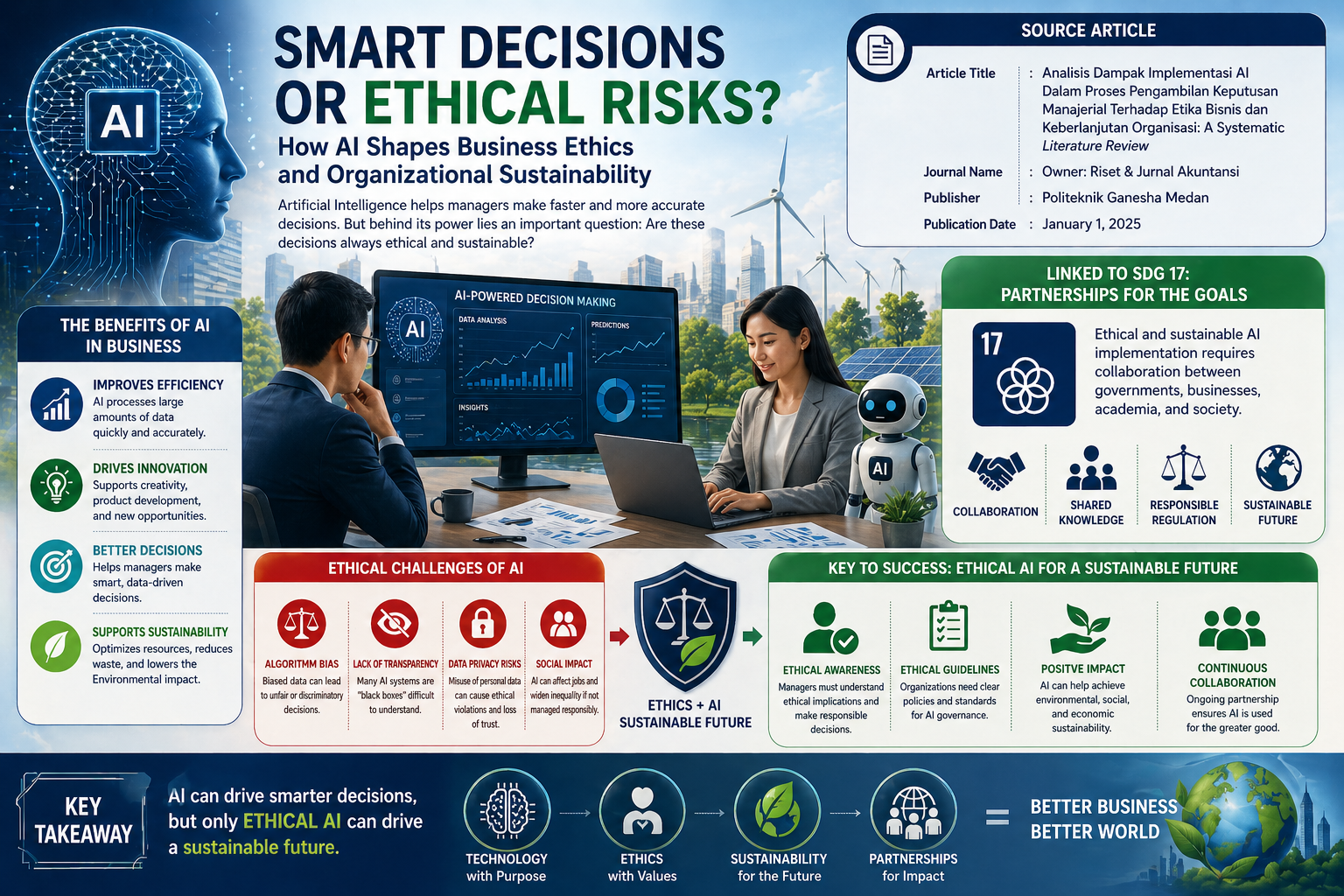
Indonesia, January 1, 2025. In today’s digital age, artificial intelligence (AI) is no longer just a futuristic concept it is a powerful tool shaping how businesses make decisions. From predicting market trends to optimizing operations, AI helps managers make faster and more accurate choices. But behind this technological advantage lies an important question: are these decisions always ethical and sustainable?
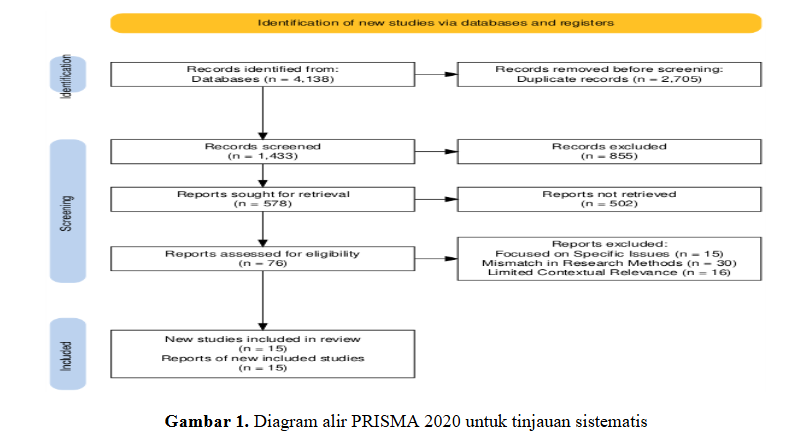
A study published in Owner: Riset & Jurnal Akuntansi by Politeknik Ganesha Medan, titled “Analisis Dampak Implementasi AI Dalam Proses Pengambilan Keputusan Manajerial Terhadap Etika Bisnis dan Keberlanjutan Organisasi: A Systematic Literature Review”, and released on January 1, 2025, provides valuable insights into this issue. The research systematically reviews studies from 2021 to 2024, exploring how AI influences managerial decision-making, business ethics, and organizational sustainability.
AI offers significant benefits. It can process massive amounts of data in seconds, helping organizations improve efficiency, reduce costs, and drive innovation. In sectors like finance, healthcare, and retail, AI supports better forecasting, smarter resource allocation, and personalized services. These capabilities allow companies to stay competitive in an increasingly digital world.
However, the study highlights that AI is not without risks. One major concern is algorithmic bias. If the data used to train AI systems is incomplete or biased, the decisions generated may be unfair or even discriminatory. This can harm certain groups and damage a company’s reputation. Another challenge is the lack of transparency. Many AI systems operate as “black boxes,” making it difficult to understand how decisions are made. This raises concerns about accountability and trust.
Data privacy is another critical issue. AI often relies on large volumes of personal data, and misuse of this data can lead to serious ethical violations. Without proper safeguards, organizations risk not only legal consequences but also loss of public trust.
This discussion is closely linked to SDG 17: Partnerships for the Goals. Achieving ethical and sustainable AI implementation requires collaboration between businesses, governments, researchers, and society. No single organization can address these challenges alone. Strong partnerships are essential to develop regulations, share knowledge, and ensure responsible AI use.
The study also emphasizes the importance of ethical awareness among managers. Leaders who understand the ethical implications of AI are more likely to make decisions that consider social and environmental impacts. They can balance technological efficiency with human values, ensuring that innovation does not come at the cost of fairness or sustainability.
Moreover, AI has the potential to support sustainability goals. It can optimize energy use, reduce waste, and improve supply chain efficiency. In agriculture, AI helps predict weather patterns and improve crop yields. In transportation, it reduces emissions through smarter route planning. These contributions show that AI, when used responsibly, can be a powerful tool for positive change.
Ultimately, the future of AI in business depends on how it is used. Technology alone is not enough ethical thinking must guide its implementation.
The key message is clear: AI can drive smarter decisions, but only ethical AI can drive a sustainable future.
Reference
Contact:
Mediaty
+6285242070144
mediaty@unhas.ac.id