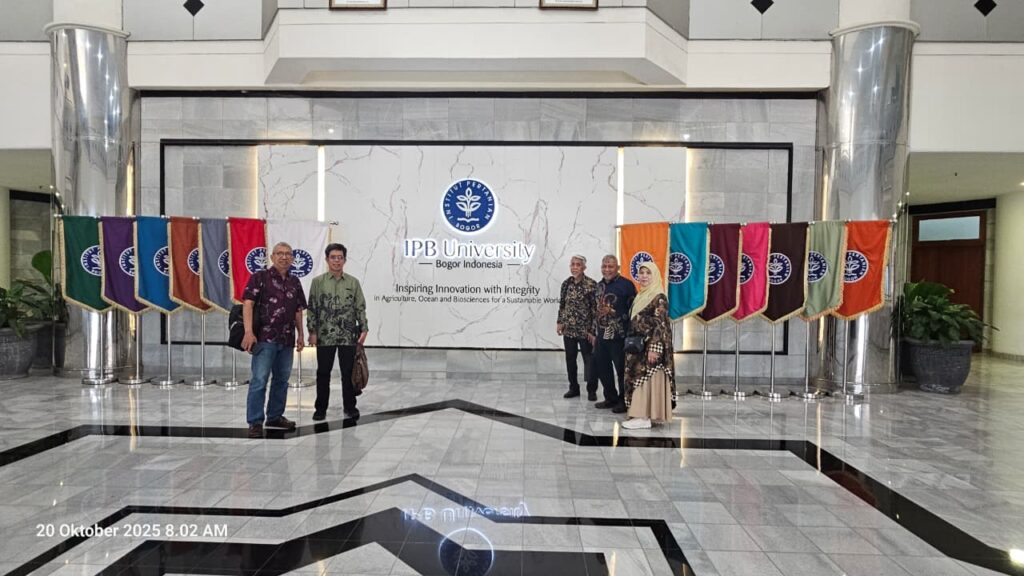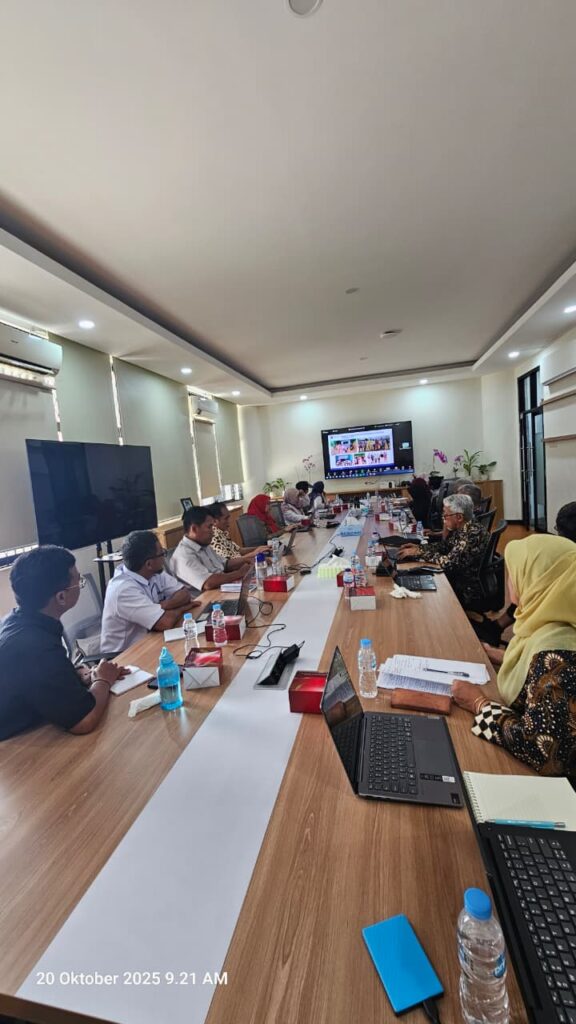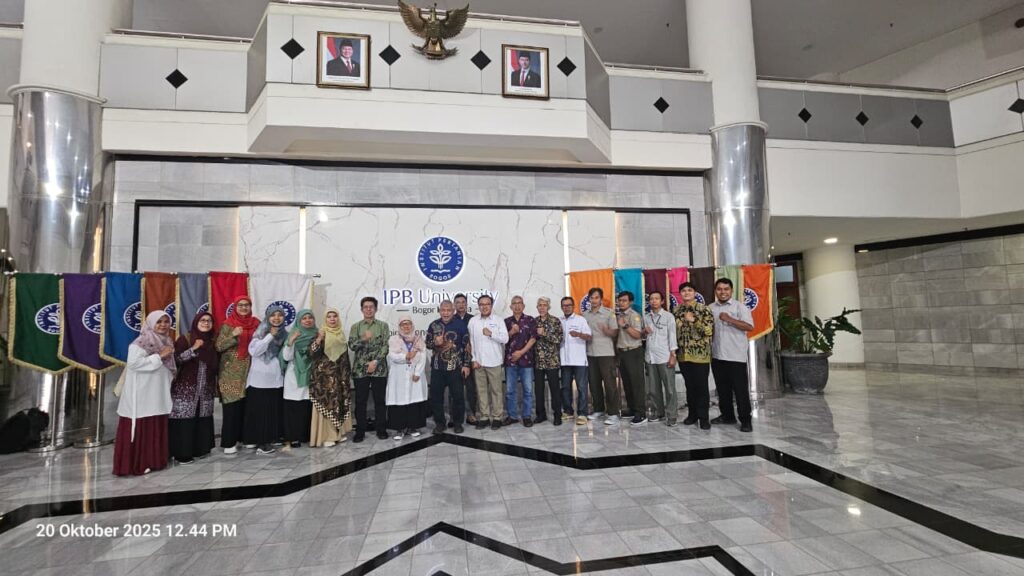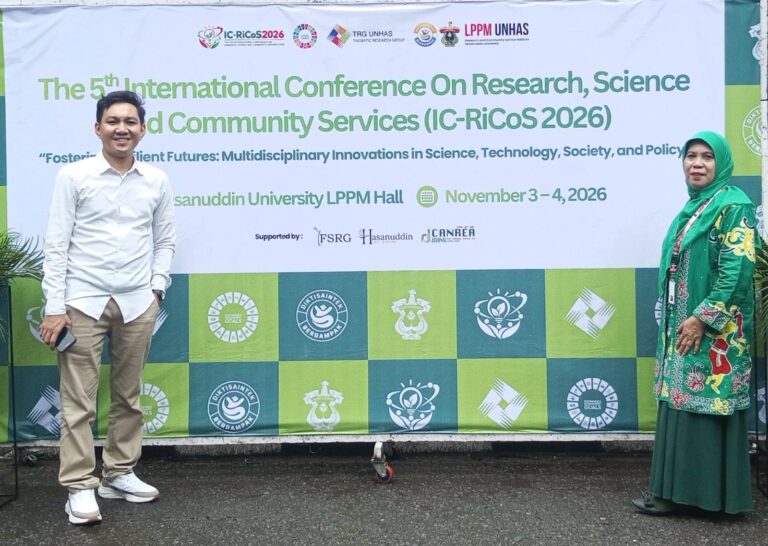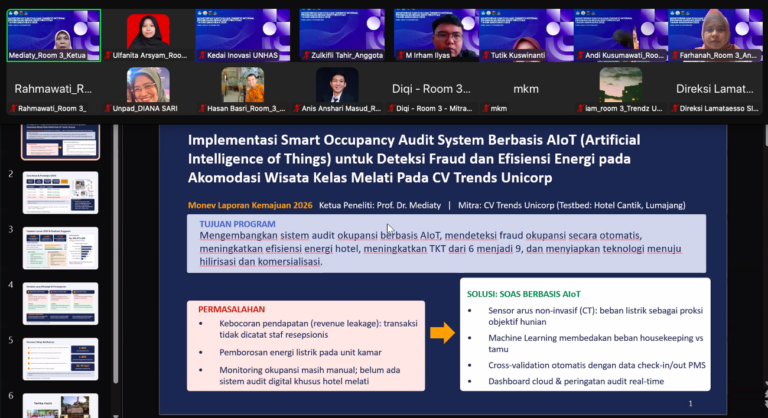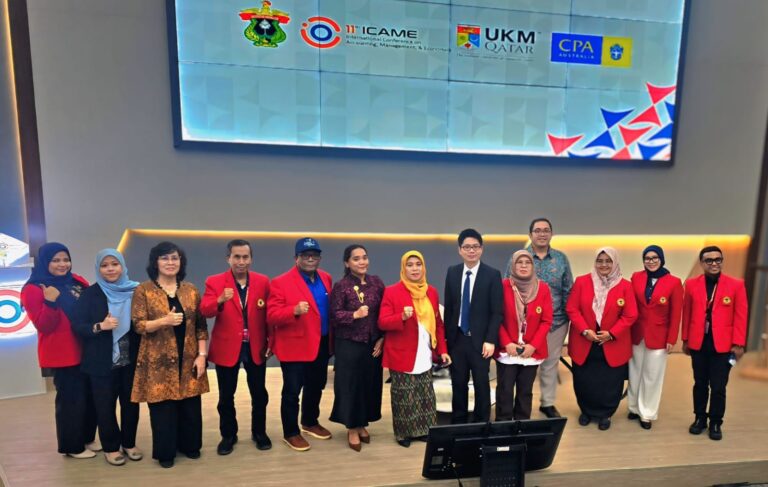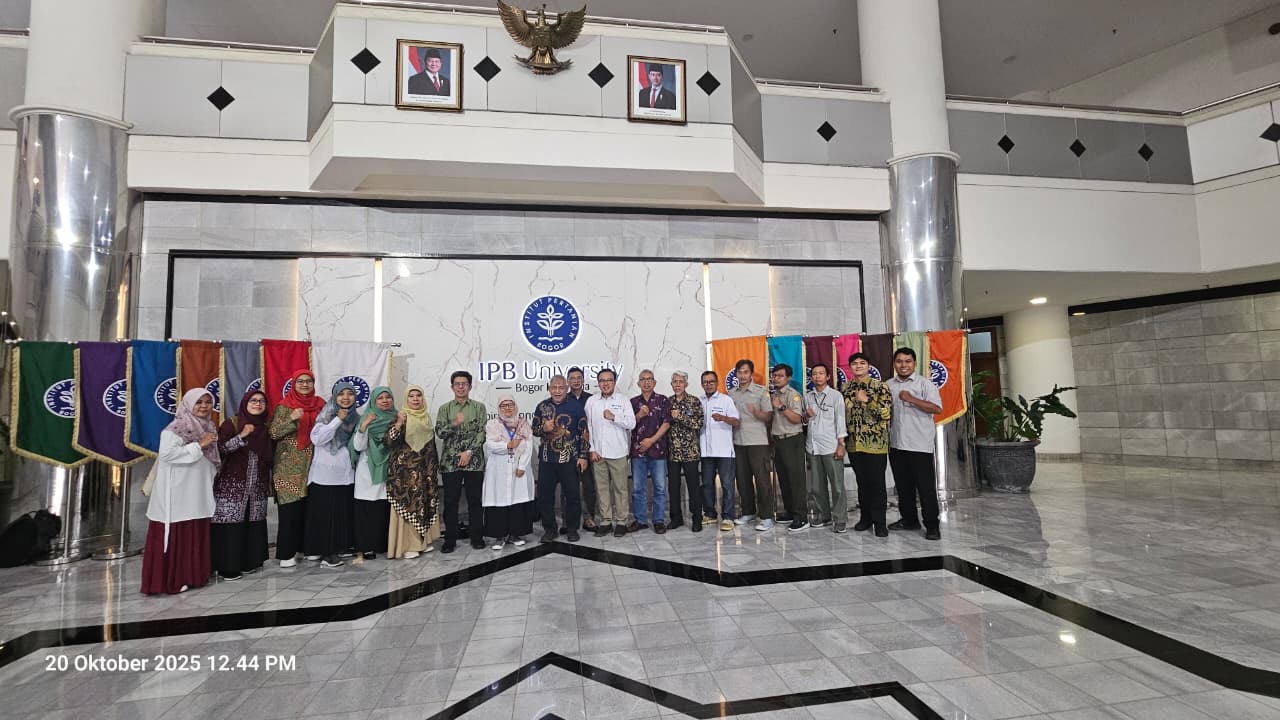

Bandung, on October 20, 2025, the Thematic Research Group (TRG) officially initiated a national research collaboration with several leading universities in Indonesia, namely Institut Pertanian Bogor (IPB), Universitas Diponegoro (UNDIP), Universitas Terbuka (UT), and Universitas Borneo Tarakan. This collaboration is part of the Indonesia Collaborative Research Program (Riset Kolaboratif Indonesia/RKI) for the 2025 implementation year, with Bandung serving as the central location for the activity. The initiative marks a significant step toward strengthening inter-institutional research partnerships aimed at addressing complex and multidisciplinary national challenges.
The collaborative research activity is designed to integrate knowledge, expertise, and resources from various academic institutions to produce high-impact research outcomes. By bringing together diverse academic perspectives, the program seeks to enhance research quality, accelerate innovation, and contribute to evidence-based policy-making. This initiative reflects a shared commitment among participating institutions to advance scientific development and foster sustainable solutions for Indonesia’s future.
In a broader context, this activity aligns closely with several Sustainable Development Goals (SDGs), particularly SDG 1: No Poverty, SDG 4: Quality Education, and SDG 17: Partnerships for the Goals. Through collaborative research, TRG and its partner universities aim to generate knowledge and innovations that can help reduce poverty by improving economic opportunities and supporting inclusive development (SDG 1). Additionally, the program promotes the advancement of quality education (SDG 4) by encouraging academic collaboration, strengthening research capacity, and providing opportunities for knowledge exchange among researchers and students.
Furthermore, the essence of this initiative lies in its strong emphasis on partnership and collaboration, which directly supports SDG 17: Partnerships for the Goals. The synergy established between these prominent universities demonstrates the importance of cross-institutional cooperation in addressing global and national development challenges. By leveraging collective expertise and resources, the collaboration fosters a more integrated and impactful approach to research and innovation.
The Bandung meeting also served as a platform for strategic discussions, research planning, and the establishment of long-term cooperation frameworks. Participants engaged in in-depth dialogues on research themes, methodological approaches, and expected outputs, ensuring that the collaboration remains relevant, measurable, and aligned with national development priorities.
Overall, this collaborative effort represents a milestone in strengthening Indonesia’s research ecosystem. It highlights the vital role of academic partnerships in driving innovation, enhancing research quality, and contributing to sustainable development. Through this initiative, TRG and its partner institutions reaffirm their commitment to producing impactful research that not only advances scientific knowledge but also delivers tangible benefits to society.