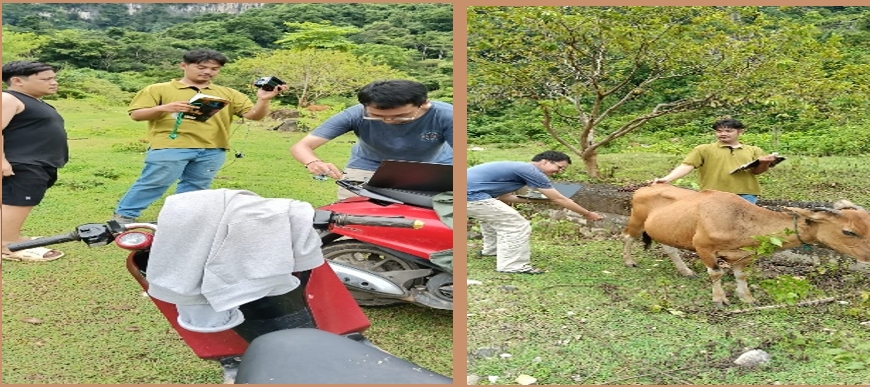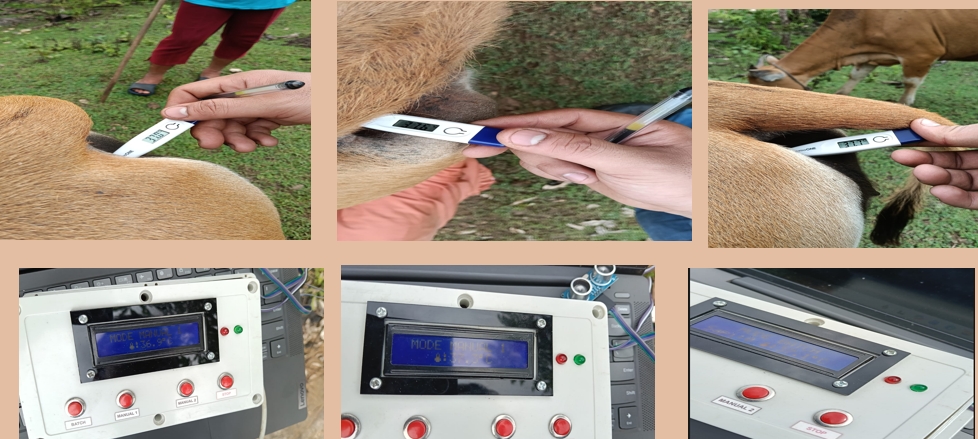
On 11 December 2025, a community-based innovation program entitled “Development of an Internet of Things (IoT)-Based Early Health Detection Device for Cattle to Improve Livestock Productivity” was conducted in Balocci, Pangkep, South Sulawesi. The activity represented a collaborative effort to introduce research-based technological innovation from Hasanuddin University into the livestock sector, particularly for small-scale cattle farmers who require practical and affordable digital solutions for animal health management.
The program aimed to develop and commercialize an IoT-based cattle health monitoring device capable of assisting farmers in detecting early signs of health problems in livestock. Through real-time monitoring systems, the technology enables farmers to observe important physiological conditions of cattle, allowing preventive measures and rapid responses to disease risks. This innovation is expected to reduce livestock mortality, improve productivity, and support sustainable livestock management practices in rural communities.
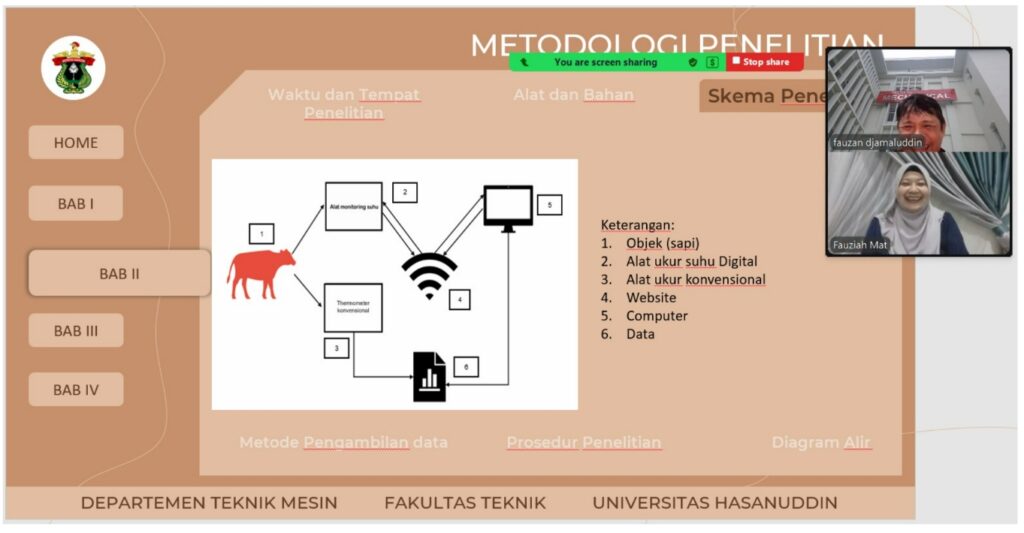
The implementation of this activity involved 20 participants, consisting of local cattle farmers, researchers, university representatives, and students. The program also strengthened international academic collaboration through the participation of International Partner: PROFESOR MADYA FAUZIAH BINTI MAT from UNIVERSITI MALAYSIA PERLIS, MALAYSIA whose contribution enriched the discussion on digital agriculture and smart farming technologies from a global perspective. In addition, the activity actively involved university students as part of experiential learning and community engagement initiatives. The participating students were JUANFRAND BANGAPADANG SIKKU and INDRATNO TIRTA KURNIAWAN, who contributed to field implementation, technical assistance, and community interaction during the program.
The activities conducted included technology introduction sessions, demonstrations of the IoT-based monitoring prototype, technical training for farmers, and discussions regarding the future development of smart livestock farming systems. Farmers were introduced to the importance of digital transformation in agriculture and livestock sectors, particularly in improving efficiency, productivity, and data-driven decision-making. The program also emphasized the importance of integrating local livestock practices with modern technological approaches to create more resilient rural economies.
This initiative strongly supports several Sustainable Development Goals (SDGs). First, it contributes to SDG 1: No Poverty by improving livestock productivity and increasing the economic resilience of cattle farmers through technology-based management systems. Second, the program supports SDG 4: Quality Education by providing practical training, technological literacy, and knowledge transfer to local communities and students involved in the project. Third, the activity reflects the principles of SDG 17: Partnerships for the Goals through collaboration among universities, local communities, students, and international academic partners in advancing sustainable innovation for rural development.
Overall, the program demonstrated how research-based technological innovation can directly address challenges faced by rural farming communities. The IoT-based cattle health monitoring system not only represents a technological advancement but also serves as a strategic step toward sustainable smart livestock farming in Indonesia. Through continuous collaboration, capacity building, and innovation dissemination, this initiative is expected to create long-term positive impacts on livestock productivity, community welfare, and sustainable agricultural development.