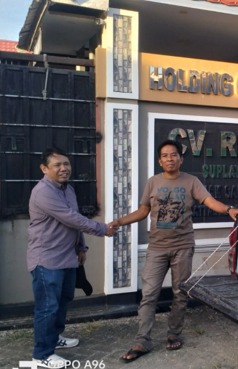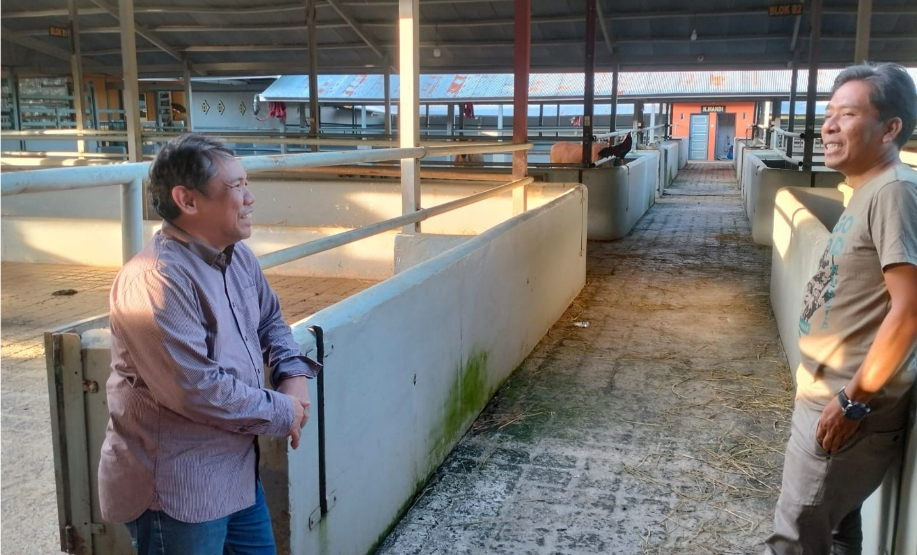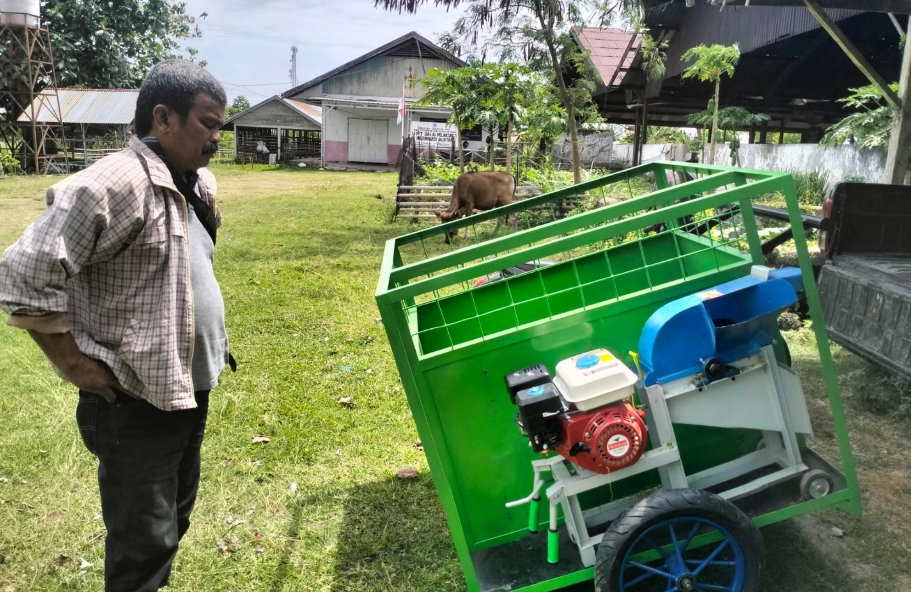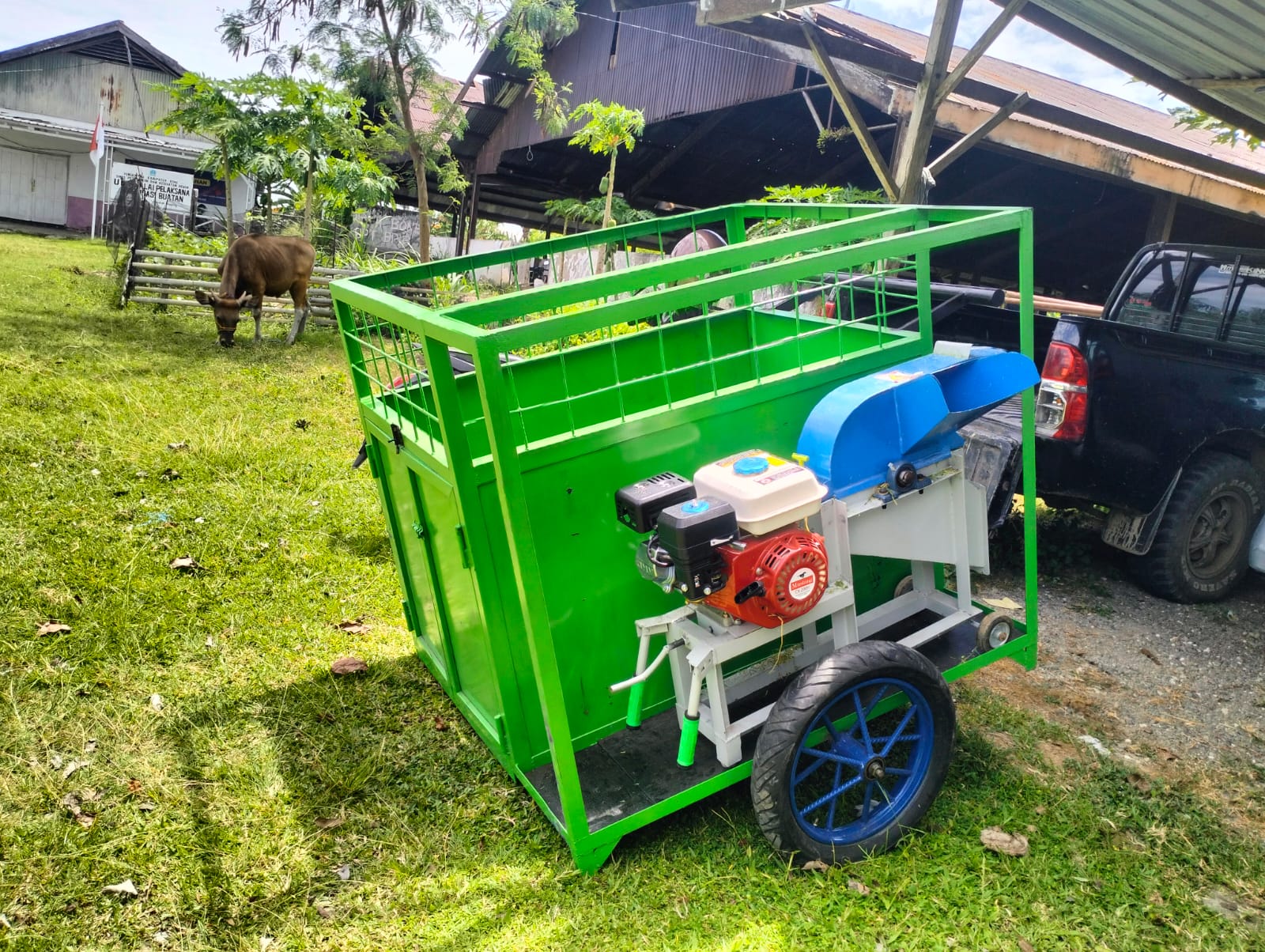

As part of our commitment to the Tri Dharma of Higher Education—education, research, and community service—TRG Applied Mechanics and Mechanical Design Research Group conducted a community-based innovation initiative was successfully conducted in Sanrego Village, Kahu District, Bone Regency. This activity focused on the redesign of an integrated mobile chopping machine combined with a fermentation tank, specifically developed to support local cattle farmers in improving feed management practices. A total of 20 participants, consisting of local farmers and community members, actively engaged in this program.
The primary objective of this initiative was to enhance livestock productivity among cattle farmers in Bone Regency. One of the major challenges faced by farmers in rural areas is the inefficiency in processing animal feed, which often leads to suboptimal nutrition intake and affects overall livestock performance. By introducing a redesigned, mobile, and integrated system, farmers are enabled to process feed more efficiently while simultaneously fermenting it to improve its nutritional value.
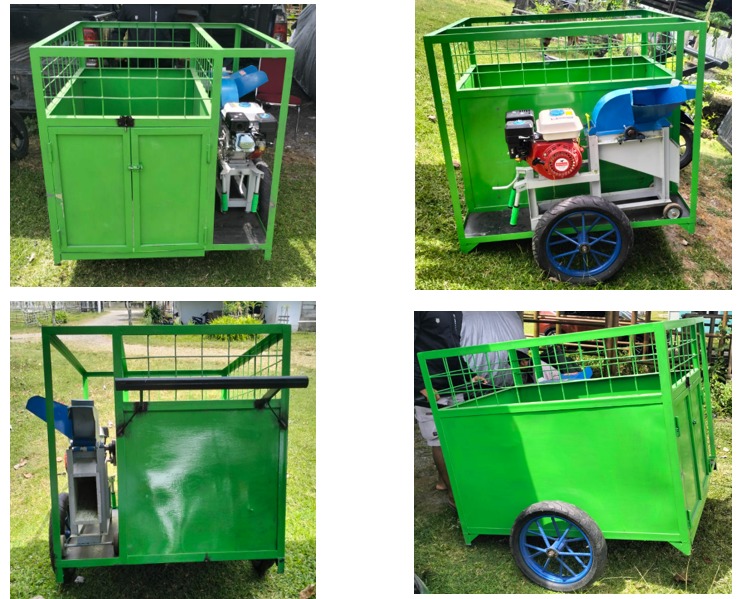
This innovation emphasizes practicality and adaptability. The mobile design allows the machine to be easily transported and utilized across different farming locations, making it highly suitable for rural environments with limited infrastructure. The integration of chopping and fermentation processes not only reduces time and labor but also promotes sustainable agricultural practices by minimizing feed waste and enhancing resource utilization.
From a broader perspective, this activity aligns closely with several Sustainable Development Goals (SDGs). First, it contributes to SDG 1: No Poverty, by improving farmers’ productivity and potentially increasing their income through better livestock yields. Second, it supports SDG 4: Quality Education, as the program includes knowledge transfer and hands-on training for participants, equipping them with practical skills and technological understanding. Third, it reinforces SDG 17: Partnerships for the Goals, as the initiative reflects collaboration between stakeholders, including researchers, local communities, and institutional partners, to achieve sustainable development outcomes.
In addition, the program indirectly supports environmental sustainability by encouraging the use of fermented feed, which can reduce methane emissions from livestock and improve digestion efficiency. This demonstrates a commitment to balancing economic growth with environmental responsibility.
The enthusiasm and active participation of the 20 attendees highlighted the strong interest of the community in adopting innovative solutions. Participants not only gained technical knowledge but also developed a deeper awareness of the importance of sustainable farming practices. This initiative is expected to serve as a model for similar programs in other rural areas, promoting the integration of appropriate technology in agriculture.
Overall, the activity represents a meaningful step toward empowering local farmers, strengthening community resilience, and advancing sustainable development in rural Indonesia.