
Punaga Hamlet, Punaga Village, Takalar Regency, South Sulawesi, Indonesia – July 16, 2026
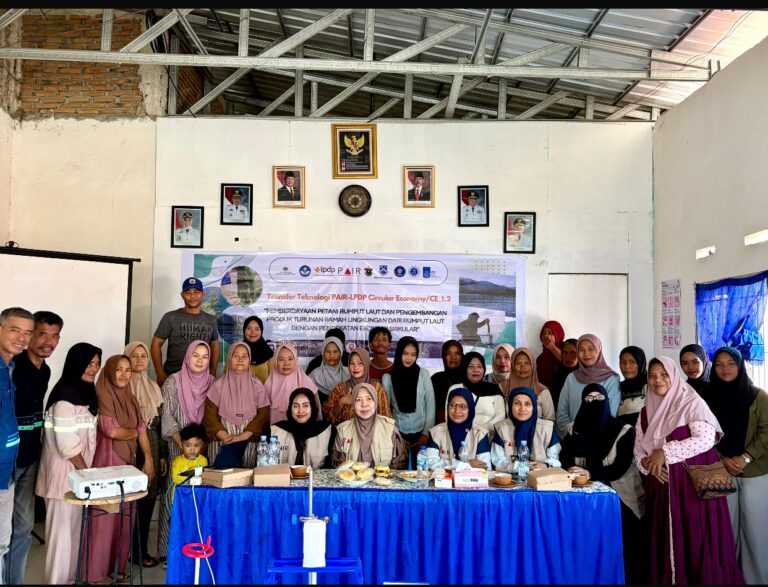
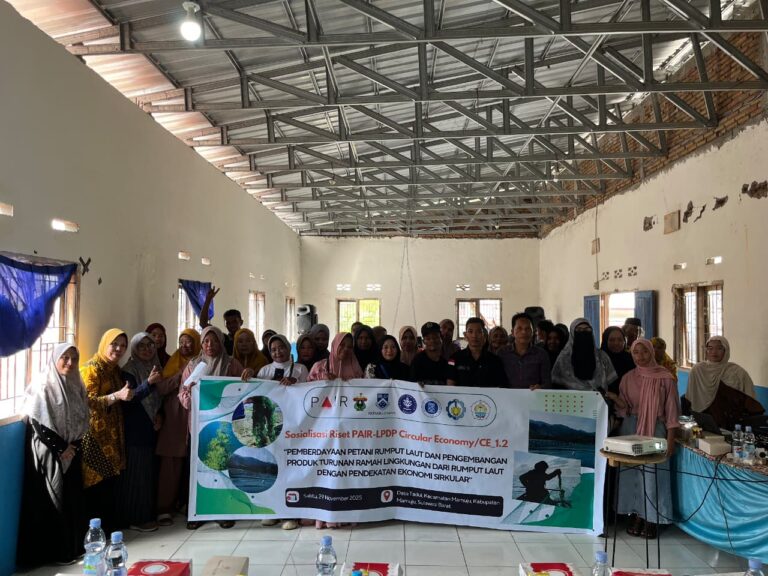
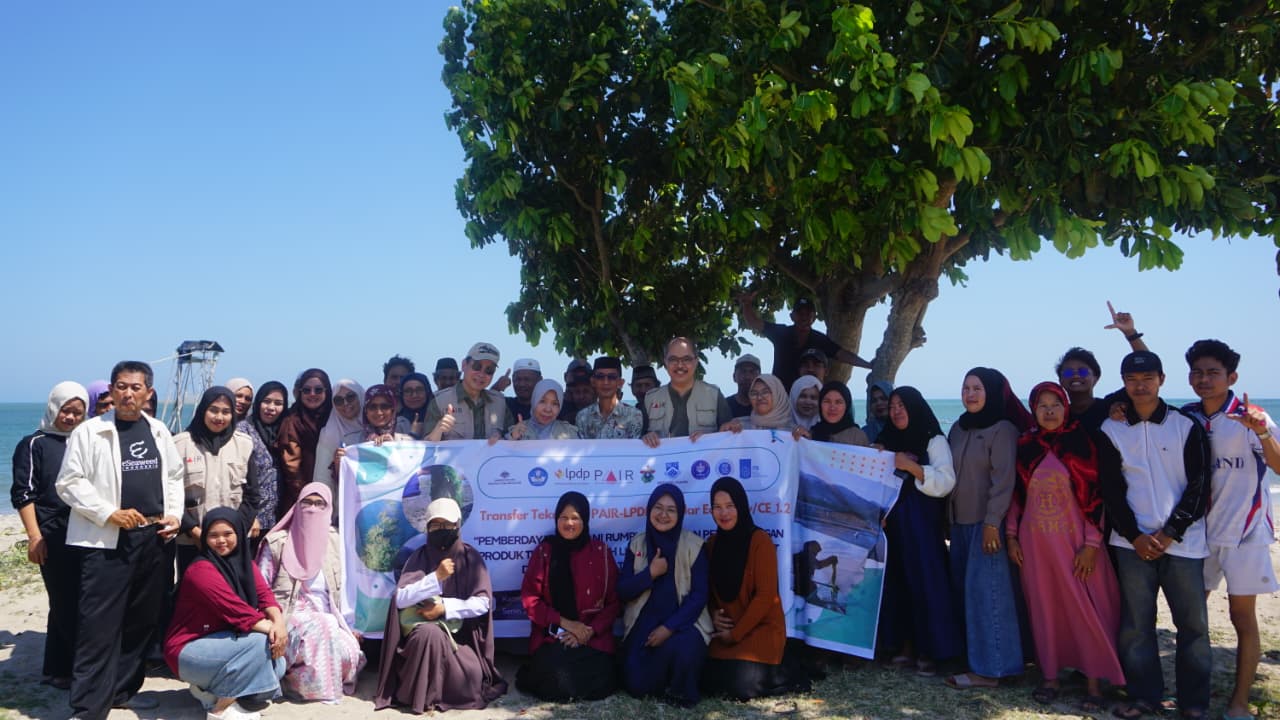
A research and community service activity entitled “Empowering Seaweed Farmers and Developing Environmentally Friendly Derivative Products of Seaweed with a Circular Economy Approach” was conducted on Thursday, July 16, 2026, in Punaga Hamlet, Punaga Village, Takalar Regency, South Sulawesi, Indonesia. The activity involved 25 participants and aimed to strengthen the knowledge and skills of local seaweed farmers while exploring opportunities to develop environmentally friendly derivative products through a circular economy approach.
Seaweed is one of Indonesia’s important marine resources, particularly for coastal communities whose livelihoods depend on marine and fisheries activities. In addition to its role as an agricultural commodity, seaweed contains valuable natural compounds that can be utilized as raw materials for various derivative products. Its potential extends to food, agriculture, cosmetics, and other industrial applications. However, the economic benefits of seaweed farming can be further enhanced through product diversification, appropriate processing technologies, and improved understanding of sustainable resource management.
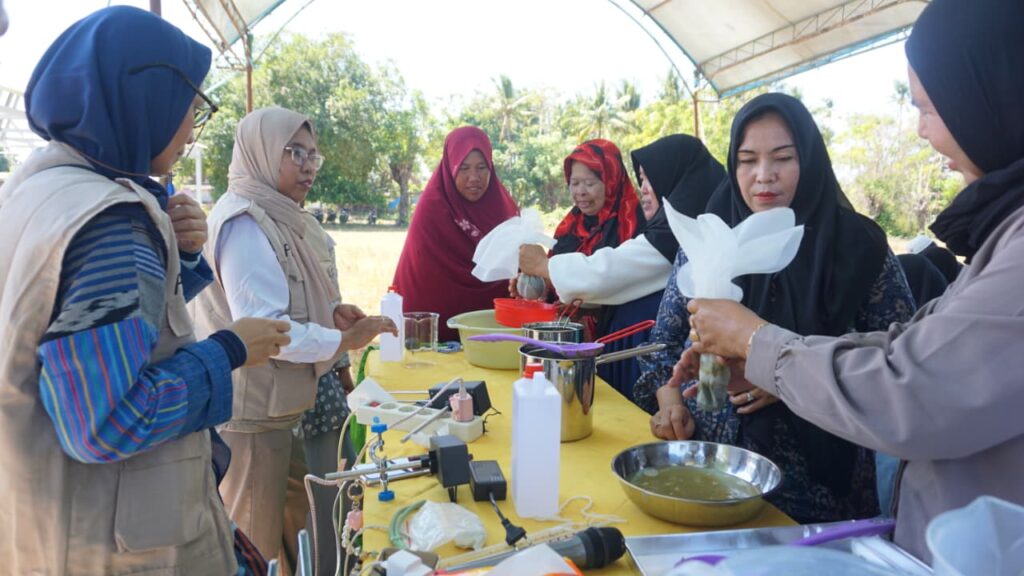
This activity was designed to connect scientific research with community empowerment by introducing the potential of seaweed as a resource with added economic value. Through knowledge sharing and community engagement, participants were encouraged to recognize the importance of developing innovative products rather than relying solely on the sale of raw seaweed. Such efforts can create new economic opportunities, strengthen local entrepreneurship, and contribute to improving the welfare of coastal communities.
An important focus of the program was the application of circular economy principles in seaweed utilization. A circular economy promotes the efficient use of resources, waste reduction, and the responsible utilization of materials throughout the production process. In the context of seaweed processing, this approach encourages the exploration of opportunities to transform underutilized materials and processing by-products into useful products, where technically feasible. By adopting these principles, seaweed-based economic activities can become more resource-efficient while reducing unnecessary environmental impacts.
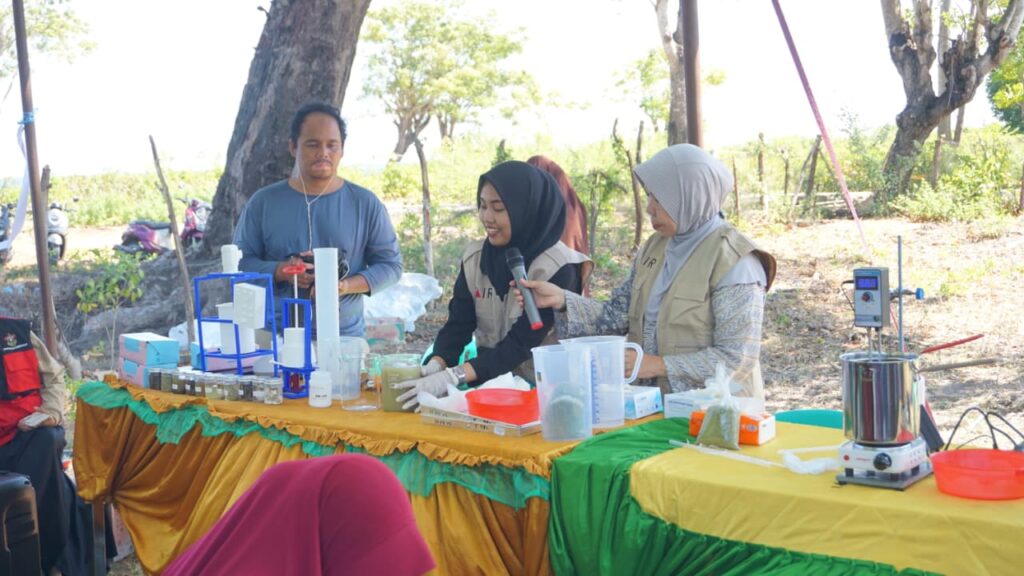
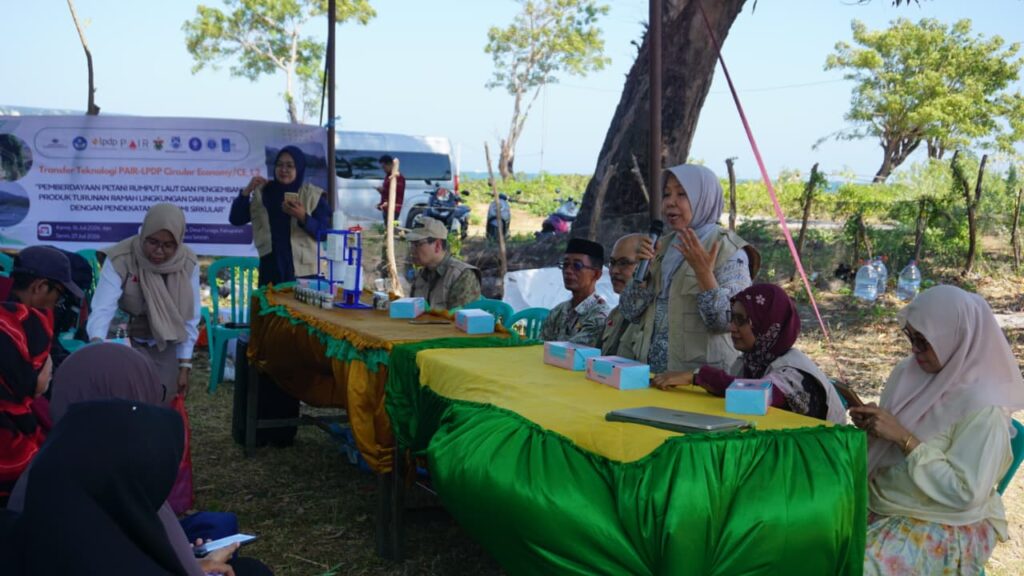
The initiative also supports the achievement of the United Nations Sustainable Development Goals (SDGs). SDG 1: No Poverty is addressed through efforts to strengthen the economic potential of seaweed farmers and encourage opportunities for improved livelihoods. SDG 4: Quality Education is reflected in the transfer of scientific knowledge, learning opportunities, and capacity building for local communities. SDG 14: Life Below Water is supported by promoting responsible marine resource utilization and greater awareness of marine environmental sustainability. Furthermore, SDG 17: Partnerships for the Goals is demonstrated through collaboration between researchers and community members in developing sustainable solutions to local challenges.
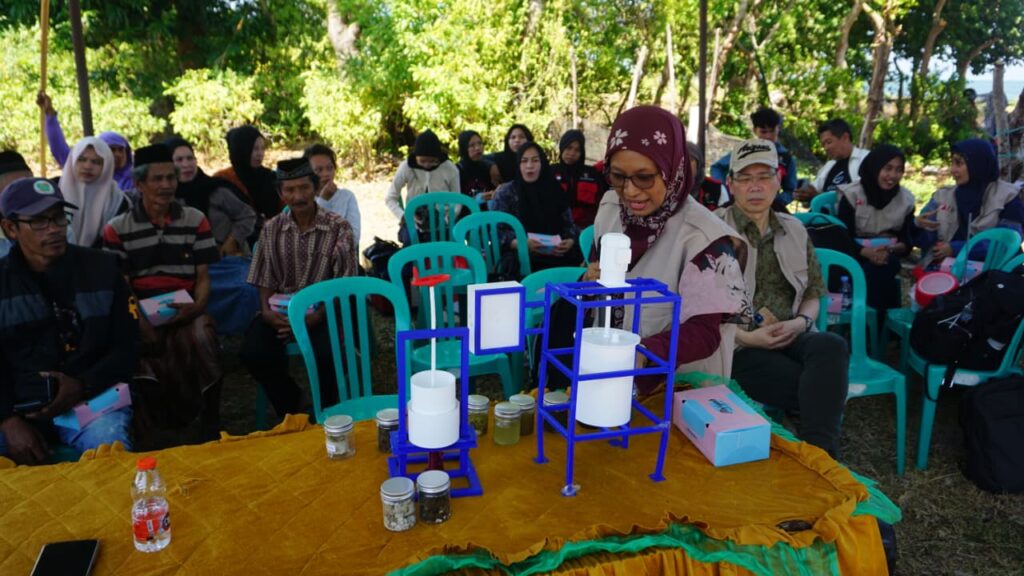
Ultimately, this research and community service activity represents an important step toward integrating scientific knowledge, technological innovation, and community participation. By empowering seaweed farmers and promoting environmentally friendly product development through a circular economy approach, the initiative seeks to encourage sustainable economic opportunities, strengthen coastal community resilience, and support the responsible management of Indonesia’s marine resources for future generations.