
MAKASSAR, Indonesia March 2 2026 /AISRG/– When the COVID-19 pandemic spread across the world, many people immediately thought about hospitals, health workers, and rising infection numbers. Yet beyond the health crisis, another challenge quietly entered households everywhere: food. Suddenly, many families faced uncertainty. Jobs became unstable, incomes decreased, and daily necessities became more difficult to afford. People began asking a simple but important question: Will there still be enough food on the table tomorrow?
In Indonesia, the pandemic affected not only cities but also rural communities whose lives depend heavily on agriculture. During difficult times, many farming households relied on local agricultural products to survive. One crop that unexpectedly became important during this period was cloves. A study titled “Analysis of Household Food Security Clove Agribusiness in Sinjai Regency During the COVID-19 Pandemic,” published on 1 March 2025 in the IOP Conference Series: Earth and Environmental Science by IOP Publishing Ltd, explored how clove farming helped support household food security during one of the most challenging periods in recent history.
For many people, cloves are known mainly as a spice ingredient used in food products or traditional products. However, for communities in Sinjai Regency, South Sulawesi, cloves represent much more than that. Cloves are also a source of livelihood. During the pandemic, when many sectors experienced economic disruption, clove farming continued providing income for many households. While many families elsewhere struggled with uncertainty, agricultural activities became a source of stability for rural communities.
The research highlighted an important reality: food security is not simply about whether food exists in markets or stores. Food security also means families have access to food, can afford nutritious meals, and are able to maintain stable food availability over time. During crises, these factors become extremely important because disruptions in income and supply systems can quickly affect people’s daily lives.
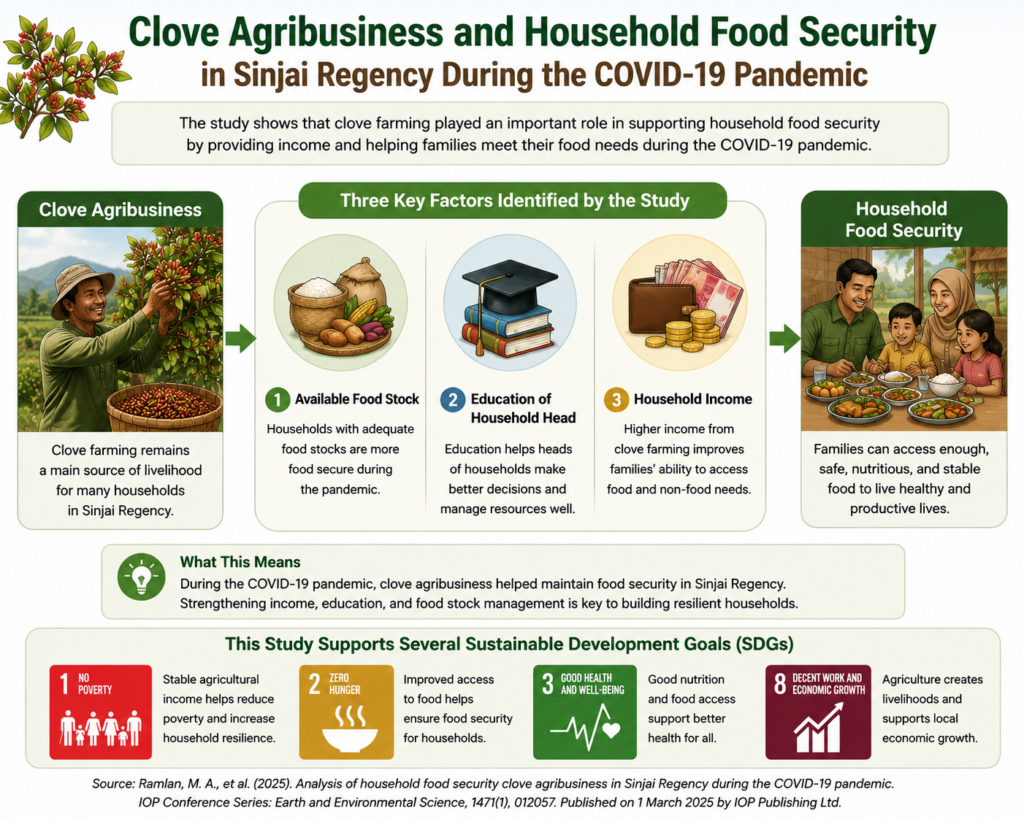
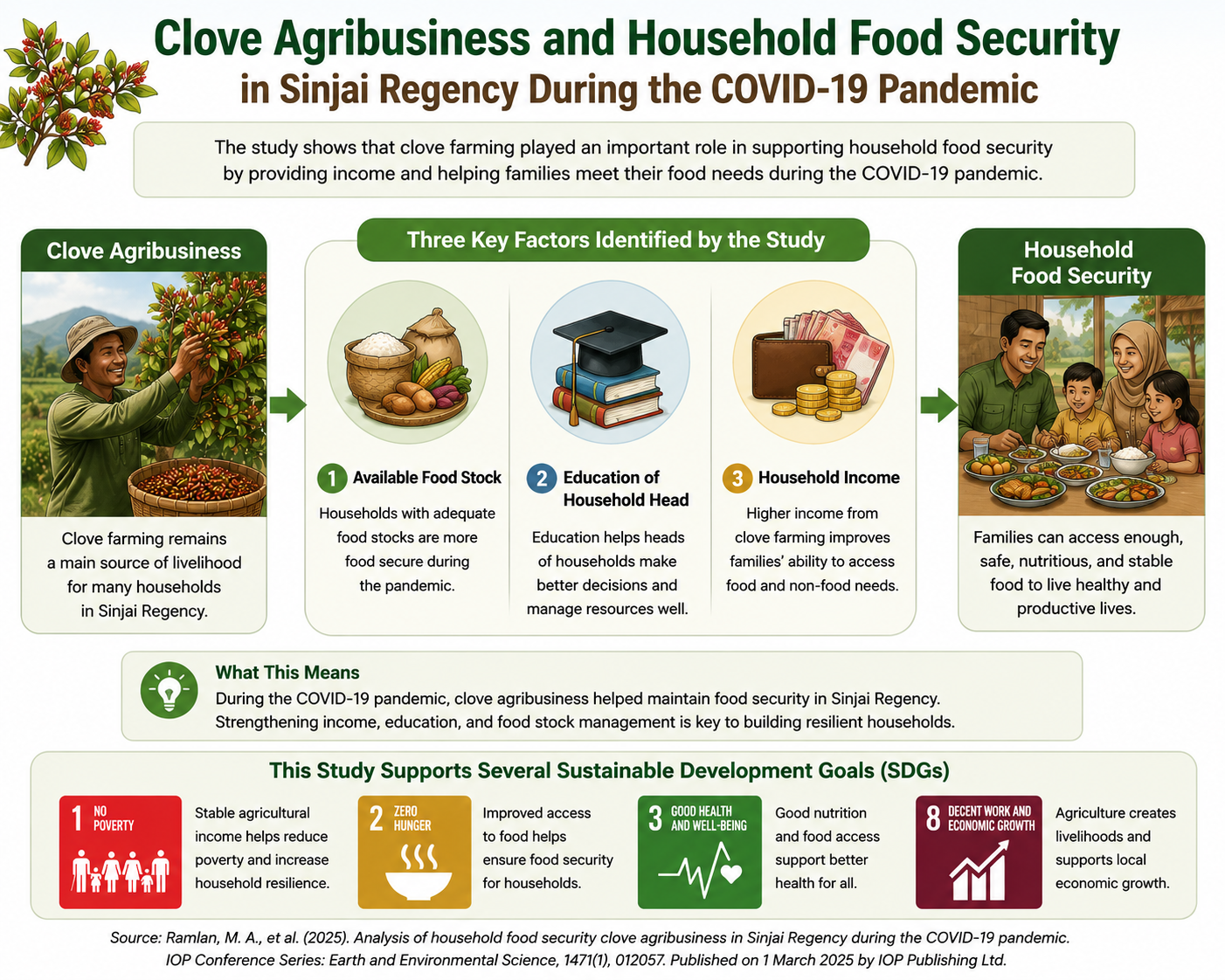
Figure 1. Clove Agribusiness and Household Food Security in Sinjai Regency During the COVID-19 Pandemic
Adapted from Ramlan et al. (2025), “Analysis of Household Food Security Clove Agribusiness in Sinjai Regency During the COVID-19 Pandemic,” IOP Conference Series: Earth and Environmental Science, IOP Publishing Ltd.
The findings suggested that clove farming contributed positively to household food security by helping families maintain their purchasing power and fulfill daily needs. Agricultural income became a valuable support system during uncertain times. These findings also remind us that local commodities are not merely products for trade. Sometimes they become important protection systems for communities facing economic shocks.
The study also carries a broader message that extends beyond Sinjai Regency. It connects strongly with several United Nations Sustainable Development Goals (SDGs). First, it supports SDG 1: No Poverty, because stable agricultural income helps reduce household economic vulnerability. Second, it directly contributes to SDG 2: Zero Hunger, which focuses on ensuring access to safe and nutritious food for everyone. Third, it aligns with SDG 3: Good Health and Well-being, since good nutrition and stable food access influence community health. The findings also support SDG 8: Decent Work and Economic Growth, because agriculture continues providing livelihoods and sustaining local economies during times of crisis.
The story of Sinjai teaches an important lesson. Agriculture is not only about planting and harvesting crops. It is also about protecting families, strengthening communities, and creating resilience when unexpected challenges arise. Sometimes, solutions to global problems begin with something surprisingly simple: a crop growing quietly in local fields.
Reference:
DOI: http://doi.org/10.1088/1755-1315/1471/1/012057
Contact:
Prof. Sitti Bulkis
+62 813-5549-1888
bulkisd@agri.unhas.ac.id