
MAKASSAR, Indonesia February 25 2026 /AISRG/– Every time floods wash away rice fields, drought dries up farmland, or roads collapse after disasters, the first thing many people worry about is food. Will there be enough rice in the market? Will prices suddenly rise? Will families in remote areas still have access to basic meals?
Food security is often imagined as a matter of producing more crops. But what if the real question is not only how much food we grow, but also who works together to keep food available when crisis happens?
A recently published study titled Institutional framework for improving food security in crisis-prone areas in Indonesia, published in the Journal of Agriculture and Food Research by Elsevier on 24 February 2026, explores this important issue by looking beyond farms and harvests. Instead of focusing only on crops and production, the research examined the network of institutions that quietly shape how food systems survive during crises.
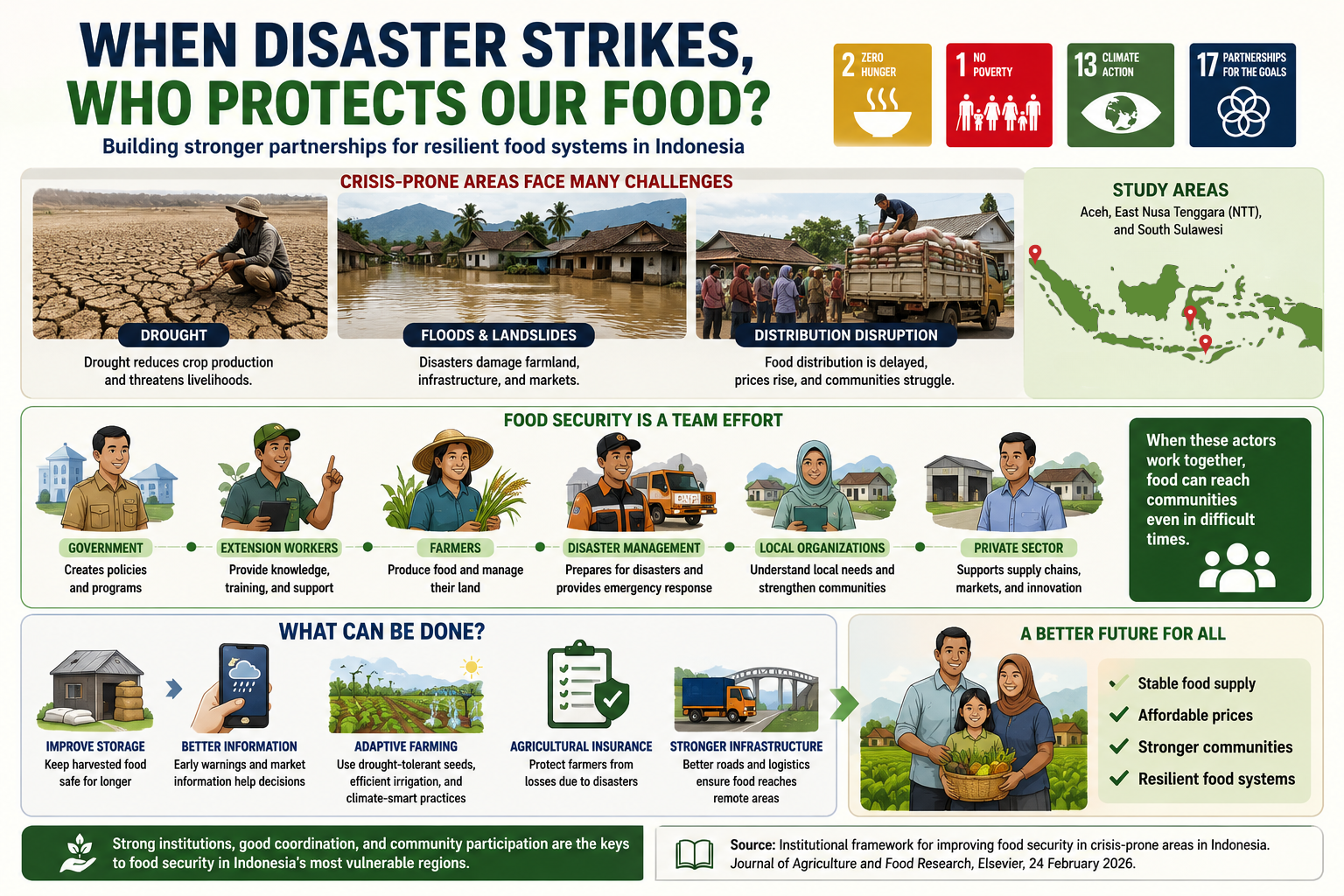
The study focused on three highly vulnerable regions in Indonesia: Aceh, East Nusa Tenggara (NTT), and South Sulawesi. Each area faces different challenges. Aceh continues to deal with post-disaster and post-conflict impacts. NTT struggles with recurring drought and poverty. South Sulawesi frequently experiences floods and landslides that damage agricultural land and disrupt transportation routes.
The findings reveal an important message: food security is not simply about farmers planting crops. It depends on an invisible network of actors—government agencies, local institutions, disaster management teams, village organizations, agricultural extension workers, and communities themselves.
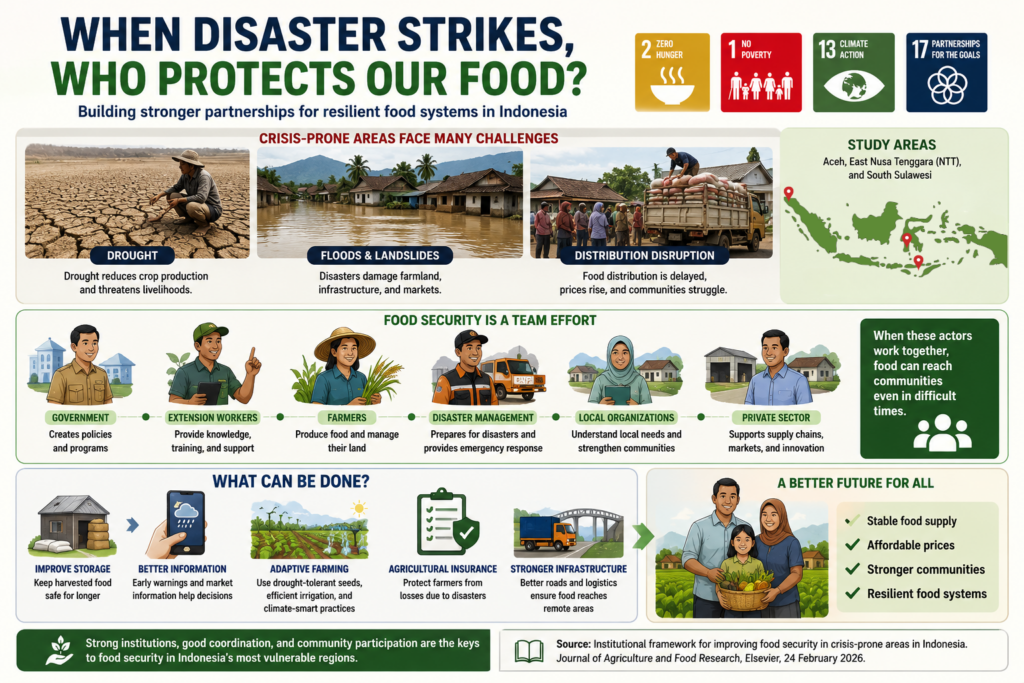
Figure 1. Building food security requires collaboration among institutions, communities, and disaster-response systems.
Adapted from findings of “Institutional framework for improving food security in crisis-prone areas in Indonesia” (Journal of Agriculture and Food Research, Elsevier, 2026).
When this network works well, food can still reach communities even during difficult times. But when coordination breaks down, problems quickly appear. Damaged agricultural land reduces production, disrupted transportation delays food distribution, and prices increase in isolated villages. Families become more vulnerable, especially low-income households.
Why should ordinary people care about this?
Because food insecurity affects everyone, not only farmers. Rising food prices influence household spending. Supply disruptions affect local markets. Children may face nutritional risks, and communities become less prepared when future disasters occur. Food security is closely connected to social stability and quality of life.
This research also highlights the importance of building stronger local food systems through adaptive farming practices, improved storage facilities, agricultural insurance, and better information systems. Communities that are prepared before a disaster occurs recover faster afterward.
The study strongly supports several global development goals under the United Nations Sustainable Development Goals (SDGs). It directly contributes to SDG 2: Zero Hunger by improving food availability and resilience. It supports SDG 1: No Poverty, because stronger food systems help reduce economic vulnerability among households. The findings are also linked to SDG 13: Climate Action, since climate adaptation becomes essential in disaster-prone regions. Most importantly, the research reflects SDG 17: Partnerships for the Goals, emphasizing that no single institution can solve food insecurity alone.
Perhaps the most powerful lesson is this: protecting food does not begin after disaster arrives. It begins long before—with cooperation, preparation, and stronger partnerships. Because when communities face storms, drought, or floods, food security becomes more than an agricultural issue. It becomes a question of how well people work together.
Reference:
DOI: doi.org/10.1016/j.jafr.2026.102774
Contact:
Prof. Sitti Bulkis
+62 813-5549-1888
bulkisd@agri.unhas.ac.id