
MAKASSAR, Indonesia, July 12 2025 /AISRG/ – When COVID-19 swept across the world, the crisis extended far beyond hospitals and healthcare systems. For millions of families, it also meant shrinking incomes, disrupted livelihoods, and growing concerns about putting enough food on the table. Although the pandemic has subsided, many households are still recovering from its economic and social consequences, making food security an ongoing challenge.
Imagine a family trying to rebuild life after the pandemic. Parents struggle to earn a stable income, household expenses continue to rise, and every shopping trip requires careful budgeting. Some families recover more quickly than others, but what makes the difference?
A recent study provides important answers. The research, titled “The Application of Binary Logistic Regression in Modeling the Post-COVID-19 Effects on Food Security: In Search of Policy Recommendations in Promoting Sustainable Livelihoods for Food-Insecure Households,” was published in Sustainability by MDPI on 11 July 2025. Conducted in Pangkajene and Islands (Pangkep) Regency, South Sulawesi, Indonesia, the study analyzed data from 257 households to identify the key factors influencing household food security after the COVID-19 pandemic. Researchers applied Binary Logistic Regression to compare several statistical models and determine which factors most strongly contribute to household resilience.
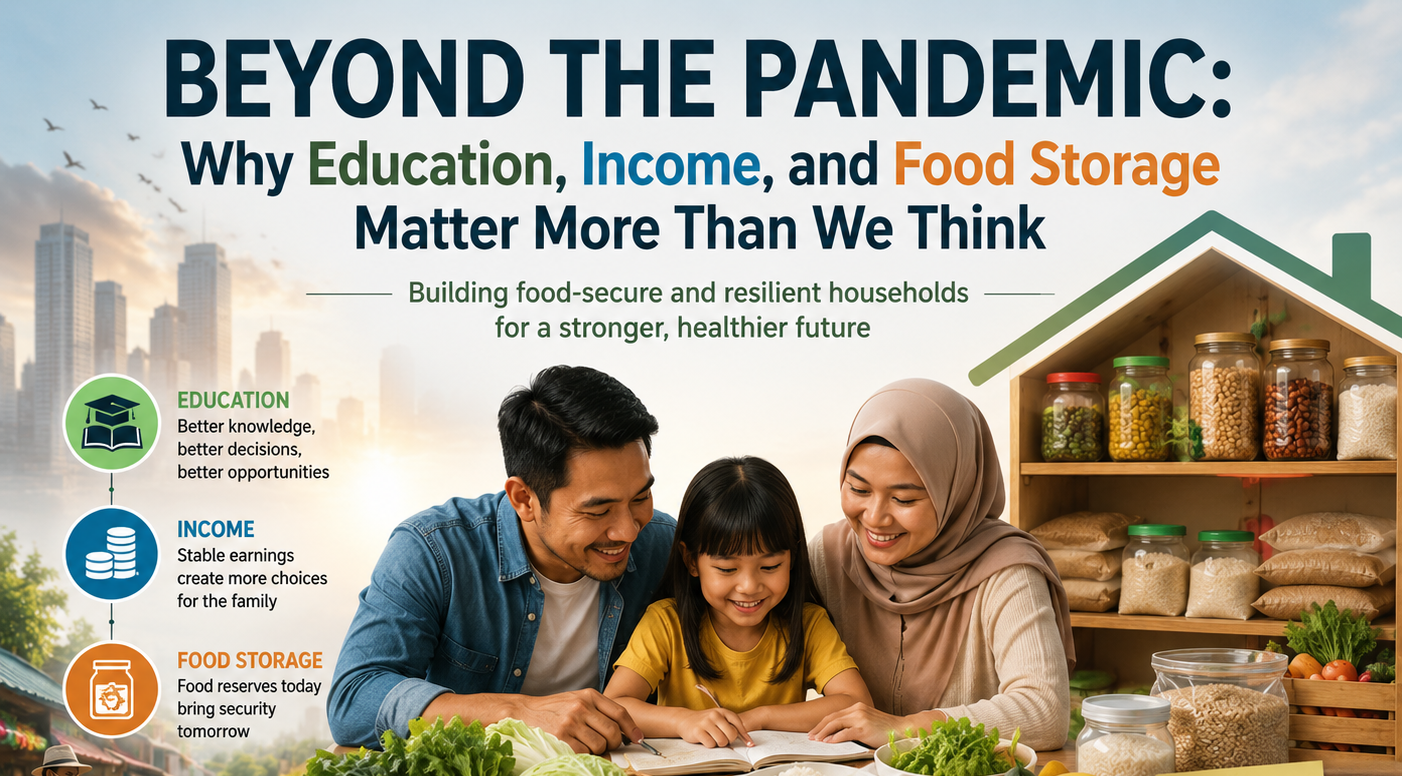
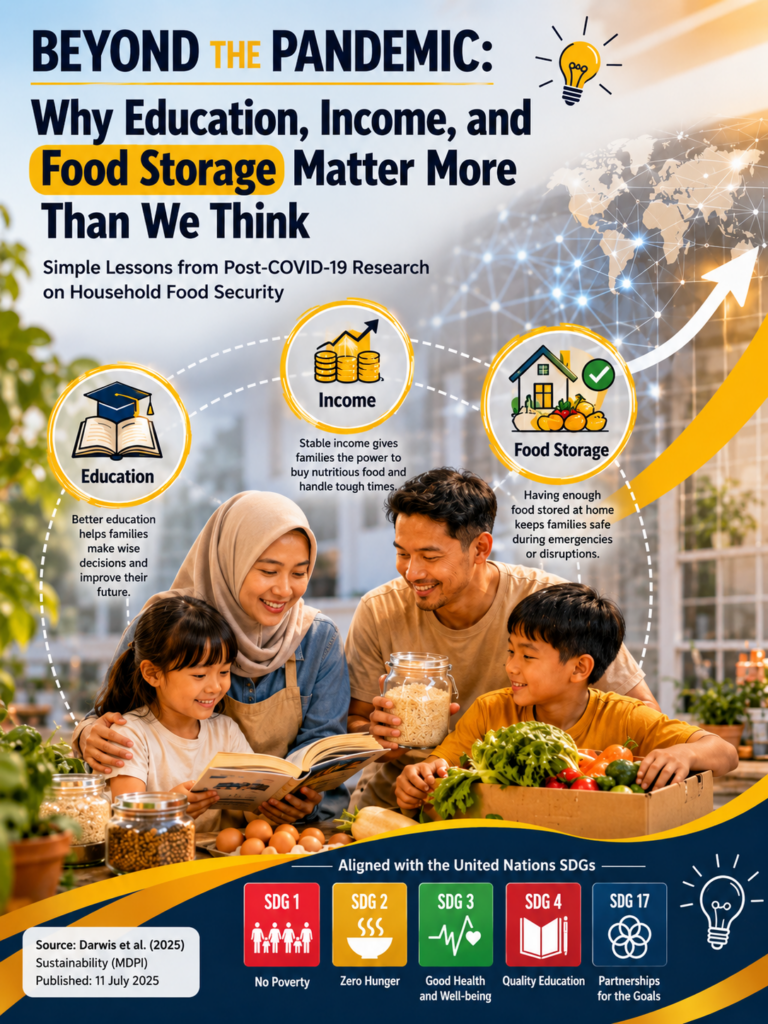
The findings reveal that household food security depends on more than simply having food available today. The researchers identified three key factors consistently associated with better household food security: adequate food reserves at home, the education level of the household head, and stable household income. Families with sufficient food stocks are better prepared to cope with temporary disruptions, while stable incomes improve their ability to purchase nutritious food and withstand economic shocks. Meanwhile, higher educational attainment can help household heads make more informed financial and livelihood decisions, increasing their capacity to adapt during difficult times.
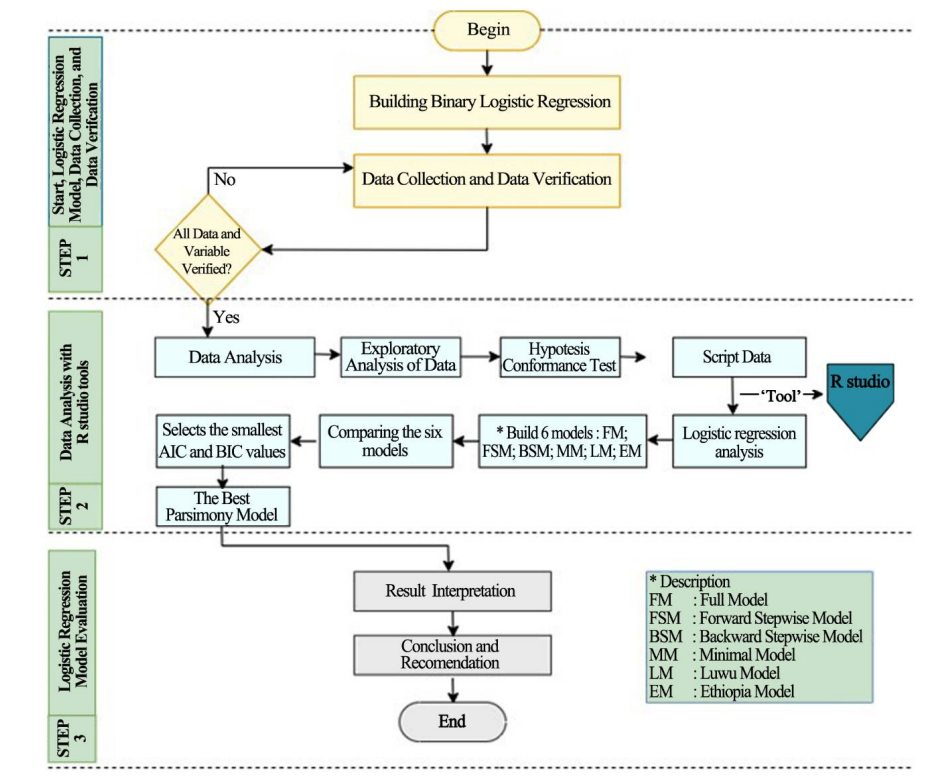
Figure 1. Research process and design used in identifying factors affecting household food security.
Source: Darwis et al. (2025), Sustainability.
The study also highlights that strengthening household resilience requires long-term strategies rather than short-term assistance alone. Policies that improve education, expand economic opportunities, strengthen household food reserves, and support sustainable livelihoods are likely to have a lasting impact on food security.
Beyond its scientific contribution, this research demonstrates the value of international collaboration in addressing global development challenges. The study brought together researchers from Hasanuddin University, Universitas Muhammadiyah Makassar, Universitas Muhammadiyah Sidenreng Rappang, the Chinese Academy of Agricultural Sciences (China), and Omdurman Islamic University (Sudan). By combining expertise from different countries and institutions, the research provides stronger evidence to support policies that improve household resilience and promote sustainable food systems.

The findings also contribute to several United Nations Sustainable Development Goals (SDGs). The study supports SDG 1 (No Poverty) by identifying strategies that strengthen household economic resilience and sustainable livelihoods. It contributes to SDG 2 (Zero Hunger) by providing evidence-based recommendations to improve household food security. The findings are also relevant to SDG 3 (Good Health and Well-being), as improved food security increases access to adequate and nutritious food, and to SDG 4 (Quality Education), where the study identifies the education level of the household head as one of the key factors associated with household food security. Furthermore, the international collaboration among universities and research institutions from Indonesia, China, and Sudan reflects the spirit of SDG 17 (Partnerships for the Goals) in addressing global development challenges through collaborative research.
The pandemic may have ended, but one important lesson remains: food security begins long before food reaches the dining table. It is built through stable livelihoods, informed decisions, adequate food reserves, and strong partnerships that enable families and communities to face future challenges with greater confidence.
Reference:
DOI: doi.org/10.3390/su17146375
Contact:
Prof. Sitti Bulkis
+62 813-5549-1888
bulkisd@agri.unhas.ac.id