
MAKASSAR, Indonesia May 19 2026 /AISRG/– Imagine a farmer waking up before sunrise, walking through fields of rice or corn, and hoping that this season will bring a better harvest. Many people think successful farming depends only on fertile land, good weather, or high-quality seeds. But behind every productive field, there is often an unseen network of people working together. Farmers do not work alone. Their success depends on guidance, knowledge, market access, and cooperation among many different actors.
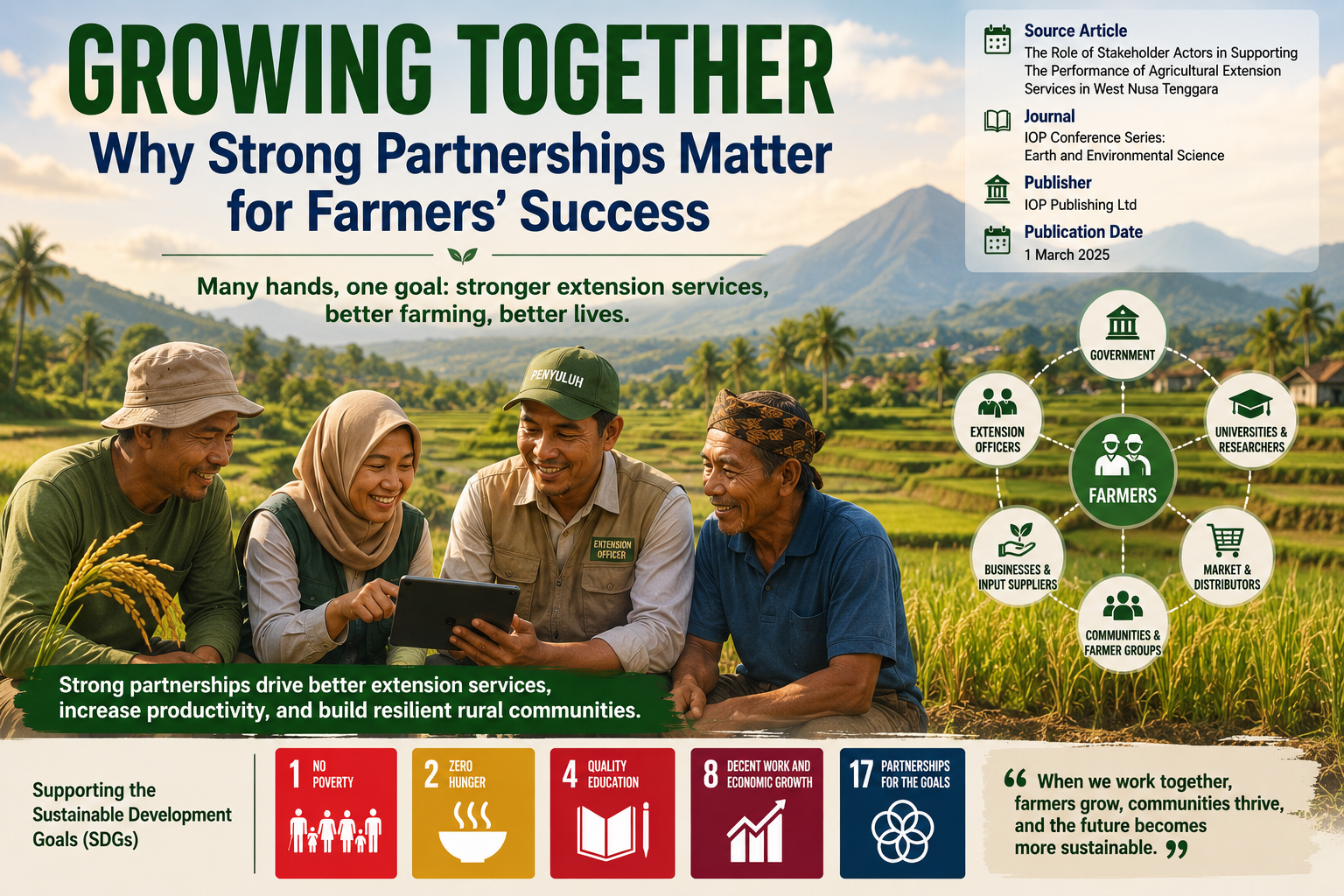
This idea became clearer through a study published on 1 March 2025 in the IOP Conference Series: Earth and Environmental Science, published by IOP Publishing Ltd, titled “The Role of Stakeholder Actors in Supporting The Performance of Agricultural Extension Services in West Nusa Tenggara.” The research explored how different groups contribute to strengthening agricultural extension services in Indonesia and highlighted an important message: farming success is not just about crops—it is also about relationships and collaboration.
Agricultural extension services may sound like a technical term, but their purpose is simple. They help farmers learn better ways to grow crops, use technology, solve farming problems, and improve their livelihoods. Think of agricultural extension workers as bridges connecting farmers with useful information and opportunities.
The study found that many actors play important roles in this system. Government agencies create agricultural programs and policies. Extension officers work directly with farmers in the field. Universities and researchers contribute knowledge and innovation. Businesses provide farming inputs, while distributors and traders help connect agricultural products with markets. Farmers themselves are central actors because they are the people directly applying new knowledge and practices.
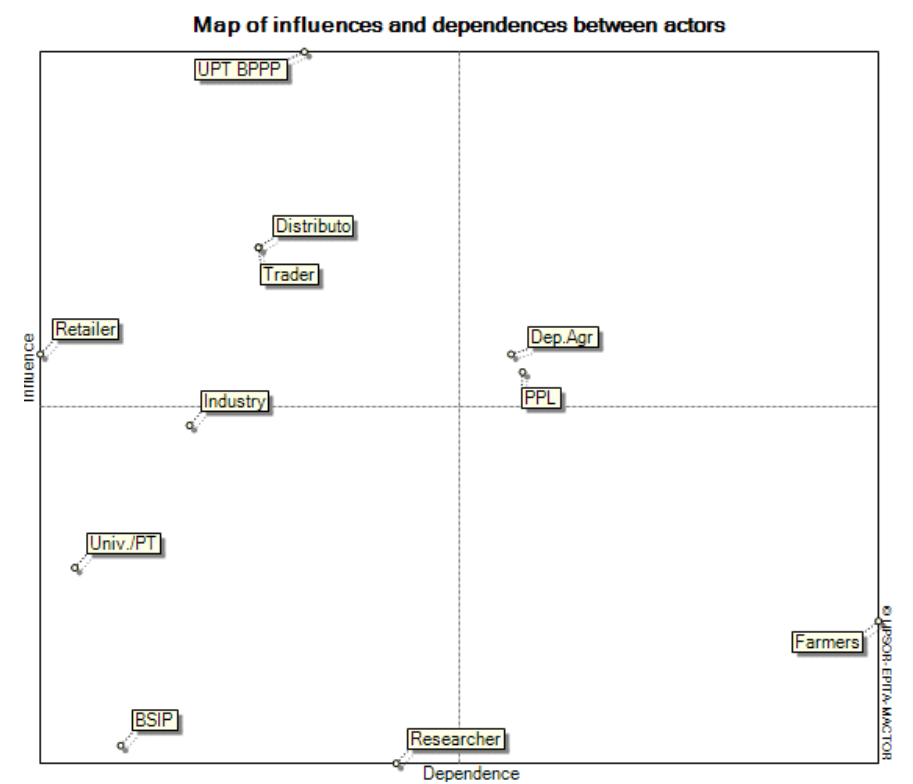
Figure 1. Stakeholder mapping showing the influence and role of actors supporting agricultural extension services
(Source: Wulandari et al., 2025)
What makes this important for ordinary people? Because the food on our tables begins long before it reaches supermarkets and kitchens. When support systems for farmers are weak, food production can suffer. Lower productivity may affect food availability, prices, and ultimately household well-being. In contrast, stronger cooperation among stakeholders can help farmers become more productive and resilient.
This research also connects strongly with several United Nations Sustainable Development Goals (SDGs). First, it supports SDG 1: No Poverty, because improving agricultural performance can increase farmers’ incomes and reduce rural poverty. Second, it contributes to SDG 2: Zero Hunger, as stronger farming systems help secure food production and availability. Third, it aligns with SDG 4: Quality Education, because agricultural extension is essentially a process of continuous learning and knowledge-sharing. Finally, the study strongly reflects SDG 17: Partnerships for the Goals, since meaningful collaboration between governments, universities, communities, and businesses is at the center of agricultural progress.
The future of agriculture may not depend only on smarter technologies or larger farms. Sometimes the real answer lies in stronger partnerships among people. A farmer may plant the seeds, but many hands help those seeds grow into food that nourishes communities. Supporting farmers therefore means supporting an entire ecosystem of cooperation—and that matters to everyone.
Reference:
DOI: doi.org/10.1088/1755-1315/1471/1/012038
Contact:
Prof. Sitti Bulkis
+62 813-5549-1888
bulkisd@agri.unhas.ac.id