
MAKASSAR, Indonesia, June 30, 2026/AIS-TRG/–Technology is everywhere. We use mobile banking to manage money, e-learning platforms to study, and digital applications to make everyday tasks easier. Yet having access to technology does not automatically mean that people will use it. A technology can be modern and sophisticated, but if it does not help users accomplish their tasks, it may quickly be abandoned. This simple idea lies at the heart of a study exploring why people accept and continue using information technology.
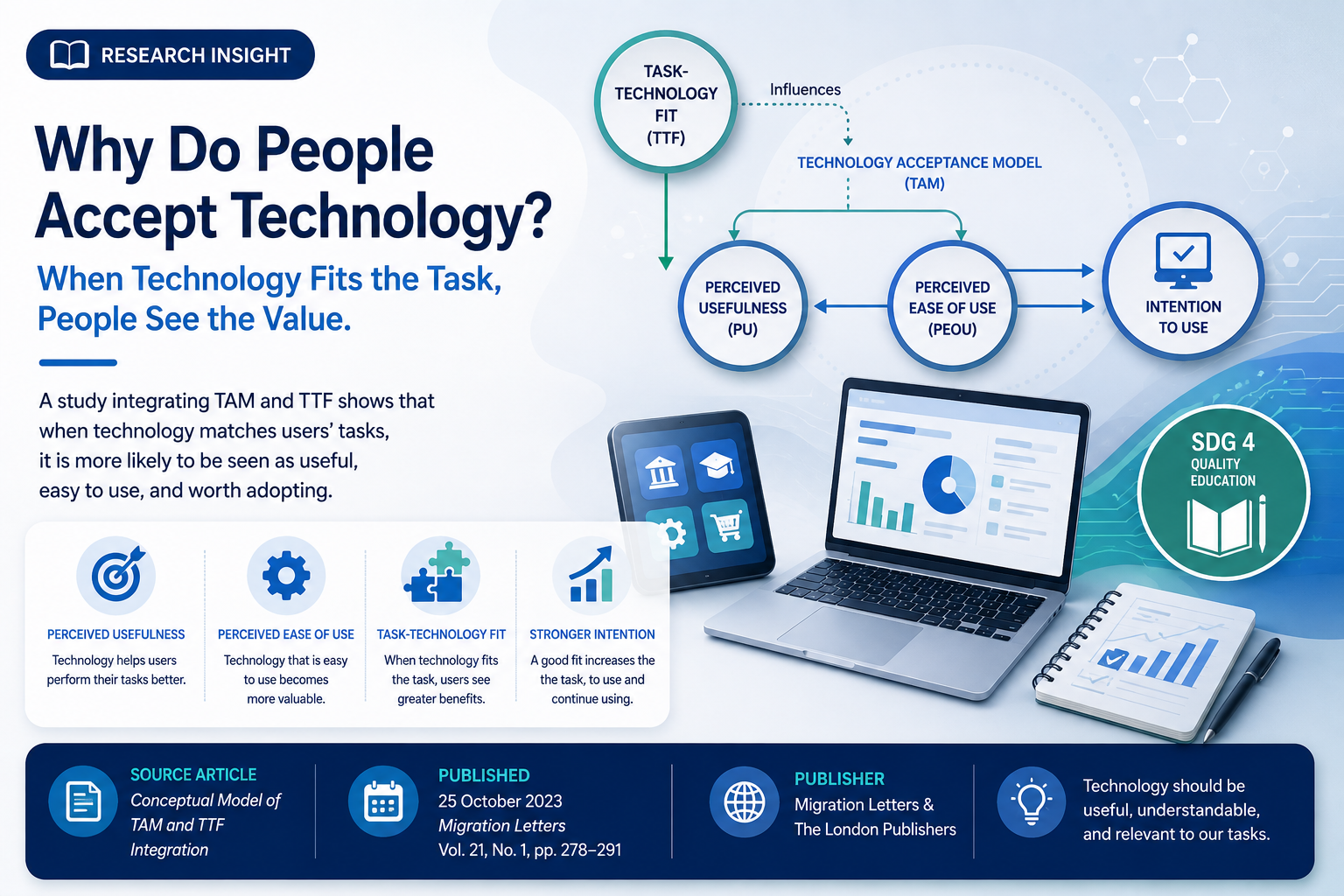
The article, Conceptual Model of TAM and TTF Integration, was written by Mediaty, Grace T. Pontoh, Aini Indrijawati, Ade Ikhlas Amal Alam, Julius Jillbert, Christoforus Yohannes, Syaiful Ali, Jacqueline Birt, Astri Dyastiarini, Wa Ode Rayyani, Safria Syarifuddin, and Muhammad Faisal Arif. The article was published in Migration Letters, a journal published by Migration Letters & The London Publishers, on 25 October 2023. It appears in Volume 21, Number 1, on pages 278–291. The researchers conducted a literature-based conceptual study by searching for research on the integration of the Technology Acceptance Model (TAM) and Task-Technology Fit (TTF). From 21 relevant articles identified through Publish or Perish and Watase UAKE, 15 studies published in Scopus Q1 and Q2 journals were selected for closer examination.
So, what makes people accept a technology? The Technology Acceptance Model, or TAM, provides one important answer. It focuses on two familiar ideas: Perceived Usefulness (PU) and Perceived Ease of Use (PEOU). In simple terms, people are more likely to use technology when they believe it can help them perform their work better and when they do not find it difficult to operate. The study also highlights that technology perceived as easy to use can become even more useful because users can complete their tasks with less effort.
But usefulness and simplicity are only part of the story. The Task-Technology Fit, or TTF, model asks another practical question: Does the technology actually match the task? A digital banking application, for example, may have a beautiful interface, but if it does not provide the functions customers need for their daily transactions, users may not continue using it. TTF therefore emphasises the compatibility between task requirements and technological capabilities.
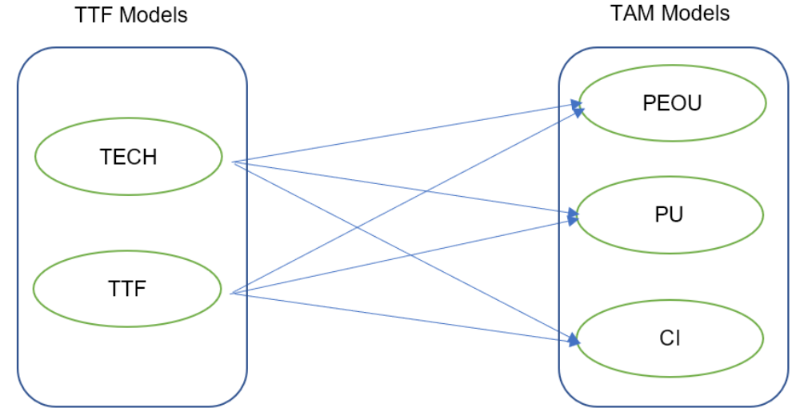
The researchers found that TTF is frequently integrated into TAM as an external factor influencing perceived usefulness and perceived ease of use. Across the reviewed studies, TTF showed a particularly strong relationship with perceived usefulness. The findings suggest that when users feel a technology fits their tasks, they are more likely to see it as useful and develop stronger intentions to use it.
This insight connects directly with SDG 4: Quality Education. Successful digital transformation requires more than providing access to technology. People also need the knowledge and digital skills to understand technological functions and determine how those functions can support their real needs. The article specifically encourages users to learn about different technological functions before adopting them.
The lesson is clear: technology should not simply be impressive—it should be useful, understandable, and relevant. When people have the skills to understand technology and when technology fits the work they need to do, digital adoption becomes more meaningful. In the end, successful technology is not necessarily the technology with the most features, but the one that makes people’s tasks easier and more effective.
Reference
DOI: 10.59670/ml.v21i1.5179
Contact:
Grace T. Pontoh
+6281332206898
gracetpontoh@fe.unhas.ac.id