
MAKASSAR, Indonesia, July 21, 2026/AIS-TRG/– Digital transformation in government is often presented as a technology problem. Build a new system, train employees, and expect better public administration. But what happens when the people required to use the system do not feel comfortable with it?
A recent study of Indonesia’s Sistem Informasi Pemerintahan Daerah (SIPD) suggests that technology acceptance may depend on something less technical: how strongly users feel connected to the system they use every day.
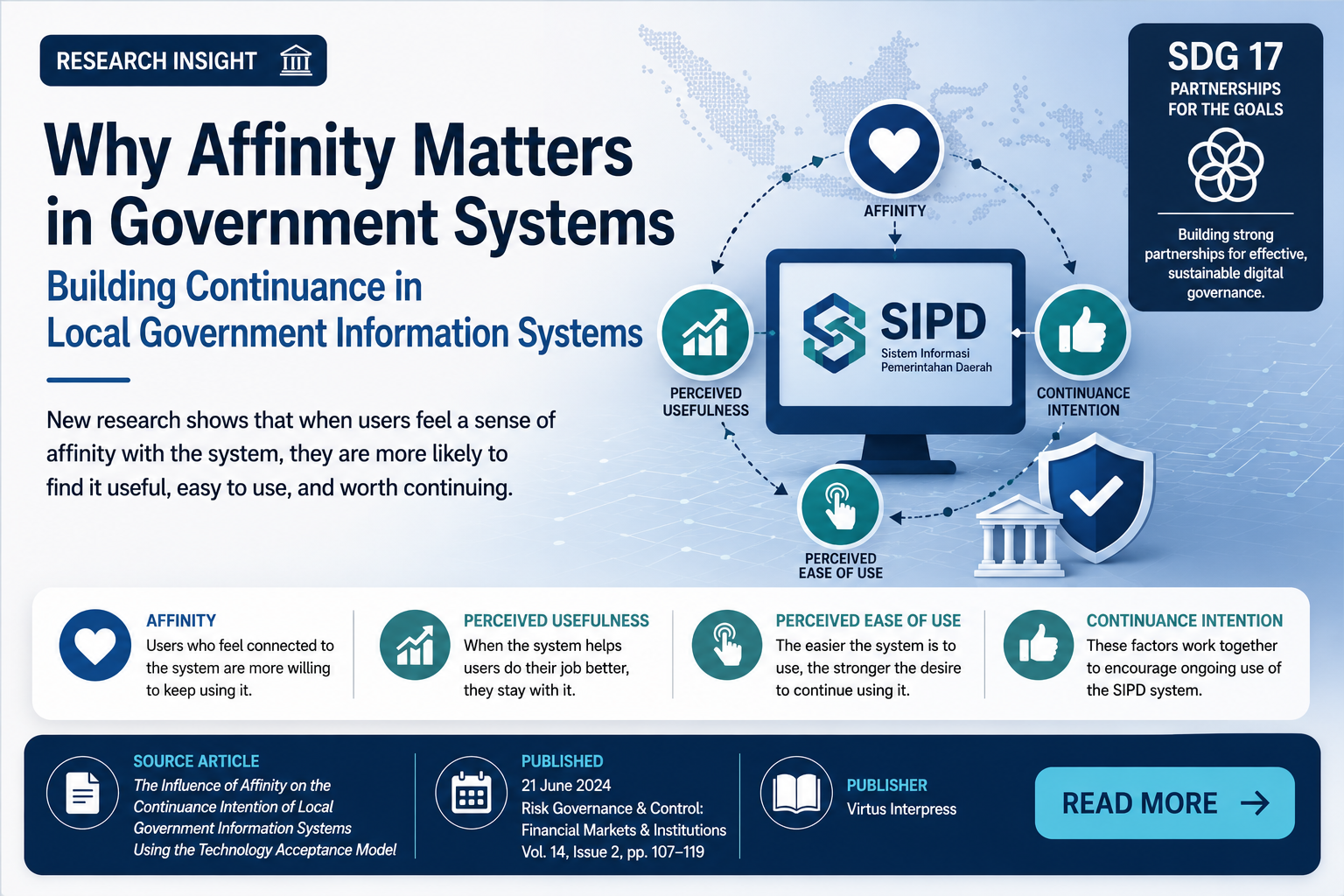
The study examined 100 active SIPD users across 24 districts and cities in South Sulawesi. Using an online questionnaire and Structural Equation Modeling with SmartPLS, the researchers investigated whether users’ affinity toward SIPD could influence their intention to continue using it. They also examined whether two familiar Technology Acceptance Model factors—perceived usefulness and perceived ease of use—could explain this relationship.
The results were significant. Affinity had a positive effect on users’ intention to continue using SIPD. The direct relationship produced a coefficient of 0.252, with a p-value of 0.028. Affinity also strongly influenced perceived usefulness and perceived ease of use, with coefficients of 0.428 and 0.676, respectively.
The two mediators mattered as well. Perceived usefulness positively influenced continuance intention, while perceived ease of use also had a positive and significant effect. More importantly, affinity continued to influence continuance intention through both pathways. The indirect effects were 0.106 through perceived usefulness and 0.279 through perceived ease of use.
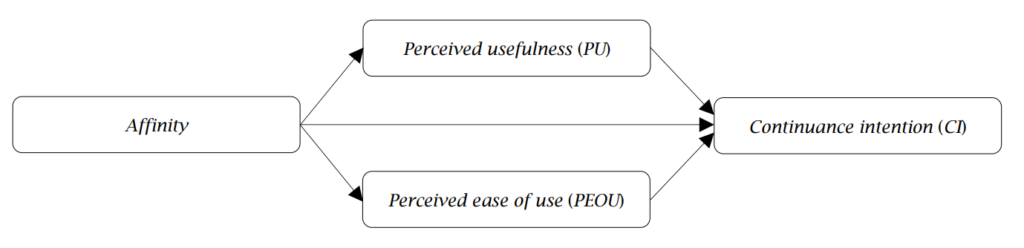

What does “affinity” mean here? In simple terms, it reflects how comfortable and connected users feel with a technology. If a government employee considers a system important to their daily work and feels that they can operate it comfortably, they may be more willing to keep using it. The study therefore suggests that successful digital government is not simply about making a system mandatory. User experience matters too.
This can be connected to Sustainable Development Goal (SDG) 17: Partnerships for the Goals. The study does not directly measure partnerships or SDG 17. However, sustainable digital government requires cooperation among policymakers, system developers, institutions, and the people who use these systems. Understanding user needs can help these stakeholders work toward digital systems that are more sustainable and effective.
The source article is “The Influence of Affinity on the Continuance Intention of Local Government Information Systems Using the Technology Acceptance Model,” published in Risk Governance & Control: Financial Markets & Institutions, with Virtus Interpress as the publisher, on 21 June 2024. The authors are Grace Theresia Pontoh, Mediaty, Sutrisno Parintak, Vica Vanessa Sesaryo Timang, Andi Aisyah, Arga Bhayangkara Handayanto, and Heri Yanto. The article appears in Volume 14, Issue 2, pages 107–119.
The broader lesson is simple: a digital system becomes sustainable when people can actually work with it—not merely when they are required to use it. Better government technology therefore requires attention not only to software and infrastructure, but also to the experience, comfort, and needs of its users.
Reference
DOI 10.22495/rgcv14i2p11.
Contact:
Grace T. Pontoh
+6281332206898
gracetpontoh@fe.unhas.ac.id