
MAKASSAR, Indonesia, July 2, 2026/AIS-TRG/– Going digital is often presented as an easy solution for small businesses. Download an application, learn the basic functions, and start managing the business digitally. But technology adoption is rarely that simple. Even when a digital accounting application is free and accessible, some entrepreneurs may still choose not to use it. Why? A recent study suggests that the answer may lie not only in technology, but also in what motivates people to use it.
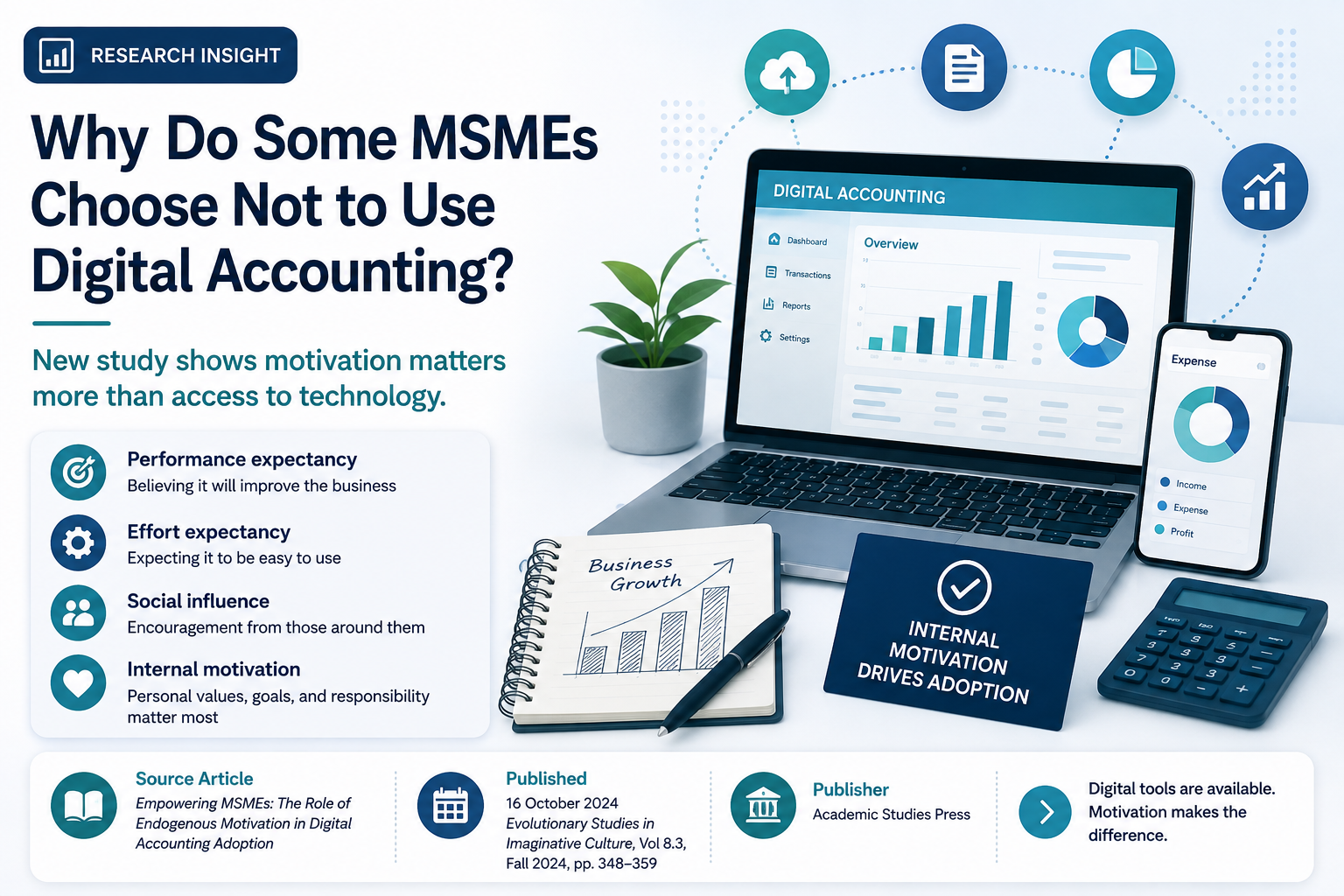
The article, Empowering MSMEs: The Role of Endogenous Motivation in Digital Accounting Adoption, was written by Dinar, Mediaty, Grace T. Pontoh, Nadhirah Nagu, and Anis Anshari Mas’ud. It was published in Evolutionary Studies in Imaginative Culture, a journal published by Academic Studies Press, on 16 October 2024. The article is included in Volume 8.3, Fall 2024, and appears on pages 348–359. The researchers focused on MSMEs in South Sulawesi and surveyed 203 MSME actors using questionnaires. The data were analysed using Partial Least Squares Structural Equation Modelling (PLS-SEM) to examine factors influencing the intention to adopt digital accounting.
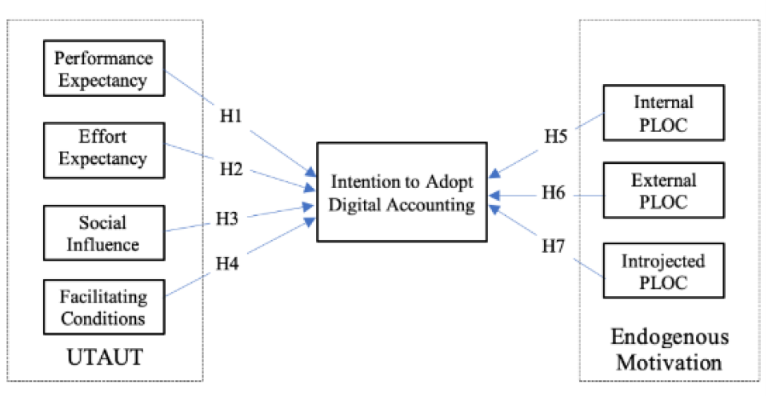
The study begins with an important question: after businesses were pushed toward digital technology during the COVID-19 pandemic, would they continue using it when the emergency was over? Digital accounting can help entrepreneurs record transactions, organise financial information, and produce financial reports. Yet access to technology does not automatically create willingness to use it.
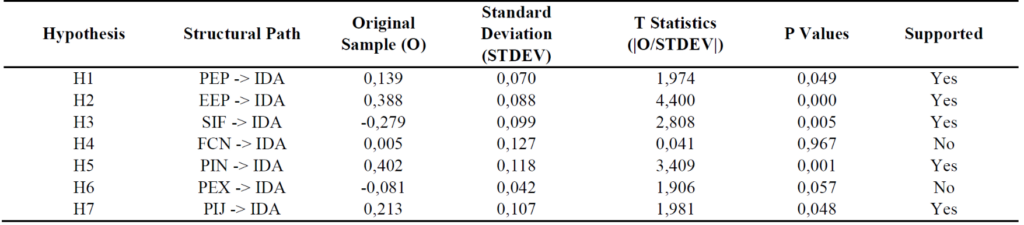
The researchers found that performance expectancy, effort expectancy, and social influence contribute to the intention to adopt digital accounting. In everyday language, entrepreneurs are more likely to consider using digital accounting when they believe it will improve their work, when they expect it to be manageable, and when people around them encourage or influence its use.
But the most interesting finding concerns endogenous motivation. The study shows that two forms of internal motivation—PLOC-Internal and PLOC-Introjected—make a strong contribution to the intention to adopt digital accounting. This suggests that adoption is not simply a matter of external pressure or available facilities. People can be driven by internal reasons, such as feeling that using technology is personally meaningful or connected to their own goals and sense of responsibility. Meanwhile, facilitating conditions and PLOC-External did not contribute to adoption intention in the study.
This finding connects strongly with SDG 4: Quality Education. Digital transformation requires more than giving entrepreneurs access to applications. MSME owners need opportunities to develop knowledge, understand digital tools, and build confidence in using them. Training programmes, therefore, should not focus only on technical instructions. They should also help entrepreneurs understand why digital accounting matters to their businesses and encourage them to develop their own motivation to use it.
The broader lesson is simple: digitalisation begins with people, not applications. A free tool may open the door, but knowledge, confidence, perceived benefits, social encouragement, and internal motivation can determine whether entrepreneurs actually walk through it. For MSMEs seeking to become more competitive, investing in digital skills and motivation may be just as important as investing in digital technology.
Reference
DOI: 10.70082/esiculture.vi.1936
Contact:
Grace T. Pontoh
+6281332206898
gracetpontoh@fe.unhas.ac.id