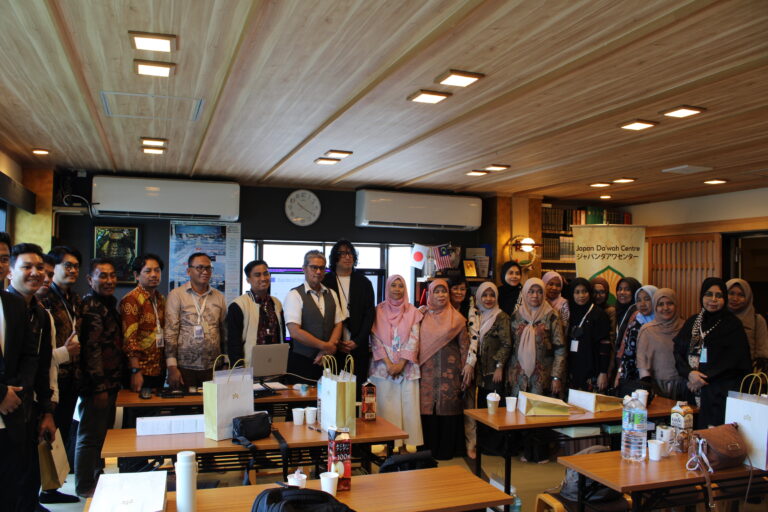
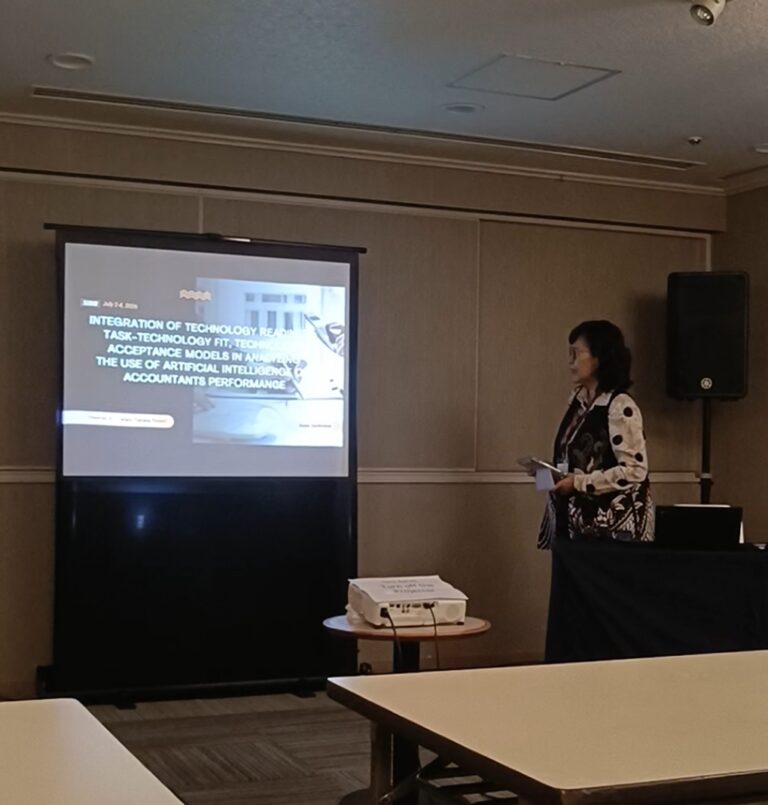
Makassar — The Accounting Information System Research Group, Universitas Hasanuddin, held a Focus Group Discussion (FGD) on August 26, 2026, focusing on the research topic “Digital Competence, Technology Readiness, and Accounting Information System Capabilities in Driving Digital Transformation and the Professional Sustainability of Accountants.” The discussion was organized as an academic forum to strengthen the research framework, broaden scholarly perspectives, and explore how digital capabilities can support accountants in responding to the accelerating transformation of the accounting profession.
The FGD brought together participants representing the leadership of the Accounting Information System Research Group, lecturers, an international speaker, researchers, and students. The session was led by Prof. Dr. Grace Theresia Pontoh, S.E., Ak., M.Si., CA, who guided the discussion on the relationship between digital competence, technology readiness, accounting information system capabilities, digital transformation, and the long-term sustainability of the accounting profession.
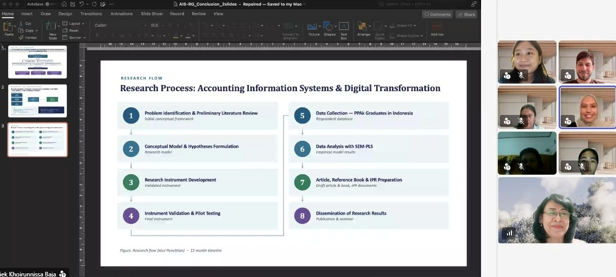
Throughout the session, participants exchanged academic perspectives on the increasingly important role of digital competence in contemporary accounting practice. The discussion highlighted that digital transformation is not determined solely by the availability of technology, but also by the readiness of individuals and organizations to adopt, utilize, and integrate technology effectively into accounting processes. In this context, the capability of accounting information systems becomes an important organizational resource for supporting information quality, decision-making, adaptability, and the transformation of professional accounting practices.
The participation of lecturers, researchers, students, and an international speaker enriched the discussion by bringing together different academic and professional perspectives. Particular attention was given to how accountants can remain relevant in an increasingly technology-driven environment and how research can provide empirical evidence regarding the competencies and technological capabilities required to support this transition. The exchange of perspectives also provided valuable input for strengthening the conceptual and empirical direction of research on accounting information systems and digital transformation.
Through this FGD, the Accounting Information System Research Group reaffirmed its commitment to supporting the Sustainable Development Goals (SDGs), particularly SDG 4 (Quality Education), SDG 8 (Decent Work and Economic Growth), and SDG 9 (Industry, Innovation and Infrastructure). The contribution to SDG 4 is reflected in efforts to strengthen digital knowledge, competencies, and research-based learning for academics, students, and future accounting professionals. The relevance to SDG 8 is demonstrated through the emphasis on strengthening accountants’ professional capabilities and adaptability to ensure sustainable careers and productive participation in a changing digital economy. Meanwhile, the connection to SDG 9 is reflected in the research focus on technological readiness, information systems capabilities, innovation, and digital transformation.
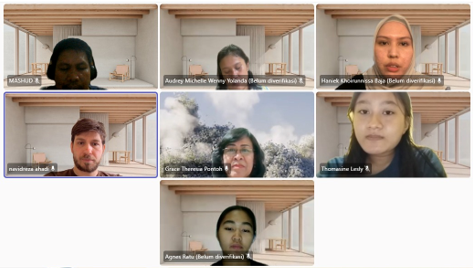
Moving forward, the outcomes of the FGD are expected to provide a stronger foundation for the development of the research agenda of the Accounting Information System Research Group, particularly in examining the factors that enable successful digital transformation within the accounting profession. The discussion is also expected to contribute to further empirical studies, scientific publications, academic collaboration, and research-based recommendations that can help educational institutions, professional organizations, and accounting practitioners strengthen their readiness for the evolving digital environment.
Through continued research and collaboration, the Accounting Information System Research Group seeks to generate relevant and impactful knowledge that bridges accounting, information systems, technology, and professional development while supporting a more adaptive and sustainable accounting profession in the digital era.