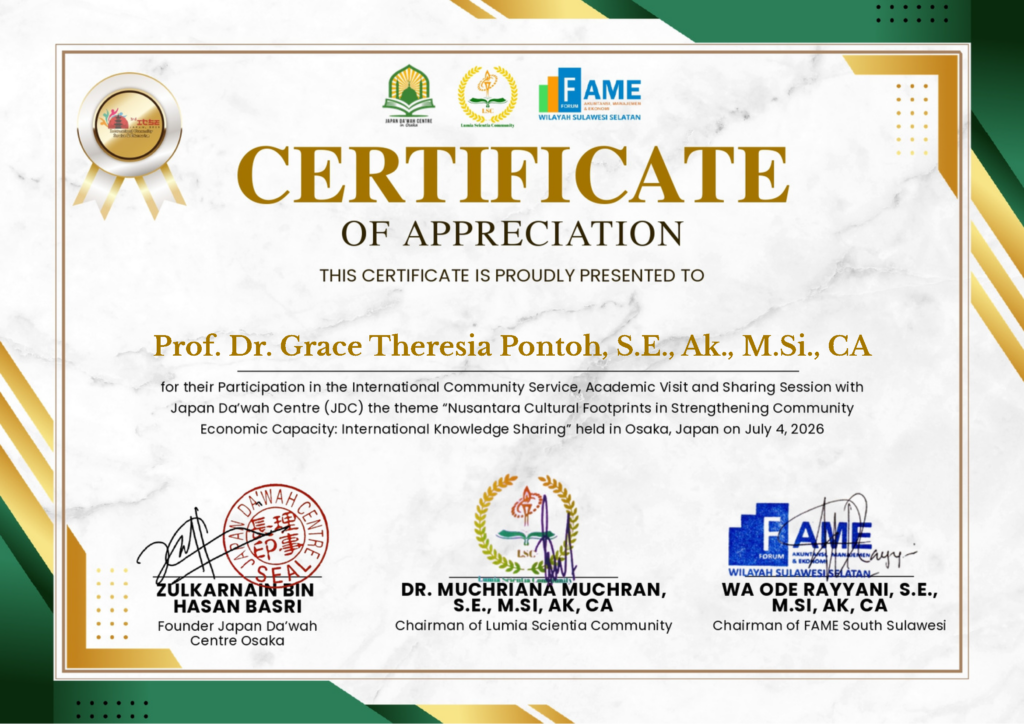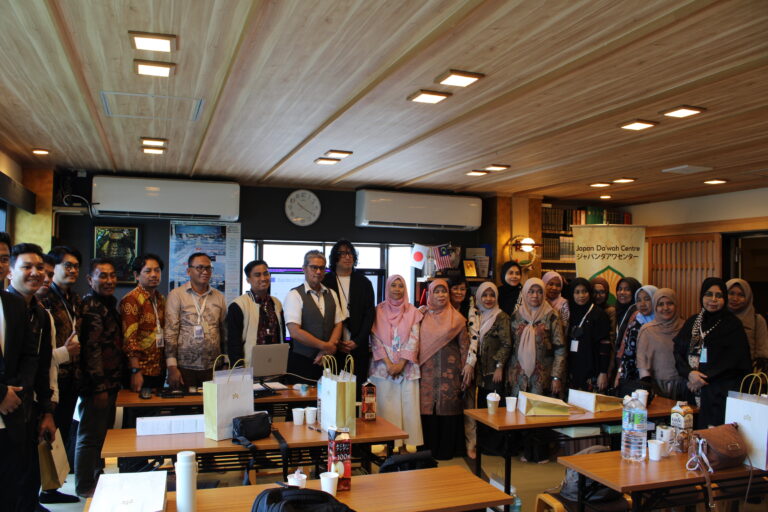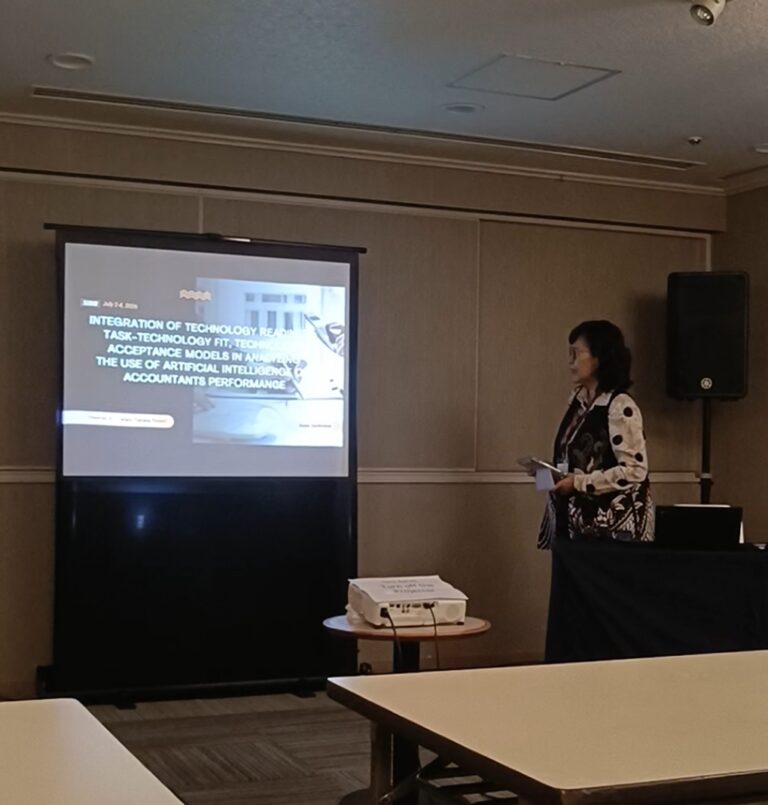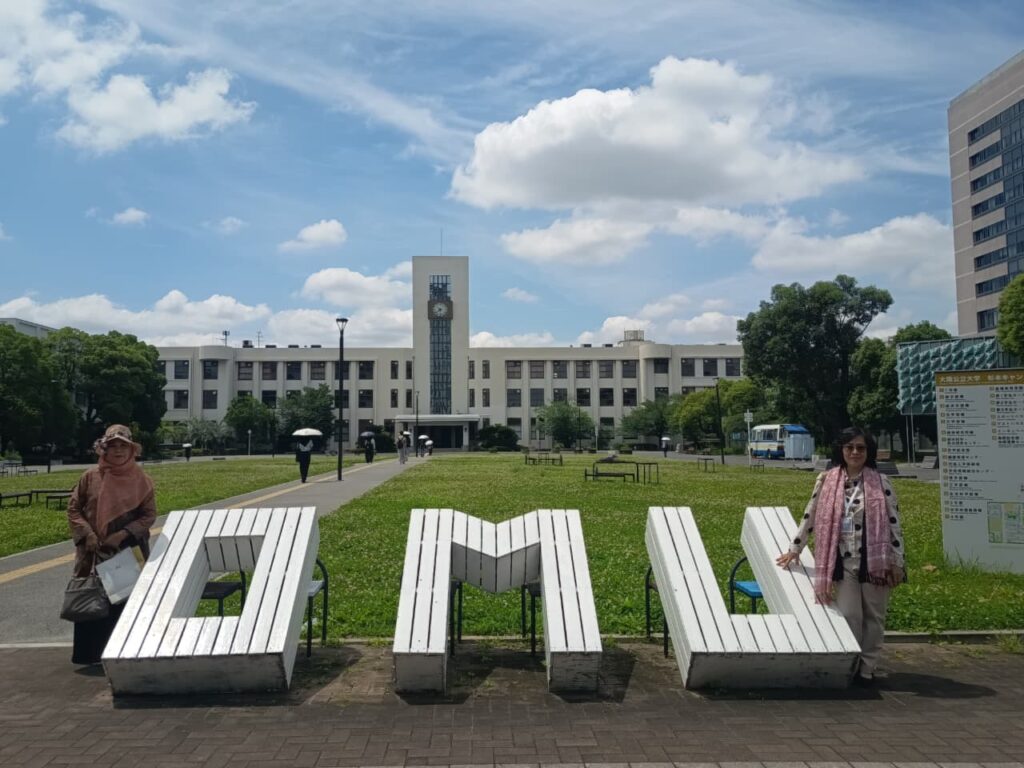

Osaka, Japan — 4 July 2026. In a meaningful demonstration of international academic engagement and community empowerment, a team of educators and scholars conducted an International Community Service and Academic Visit at the Japan Da’wah Centre (JDC) in Osaka, Japan. The activity was designed as an international form of pengabdian kepada masyarakat, bringing together academics, community leaders, and members of the Indonesian community in Japan to exchange knowledge, strengthen social connections, and explore opportunities for sustainable community development.
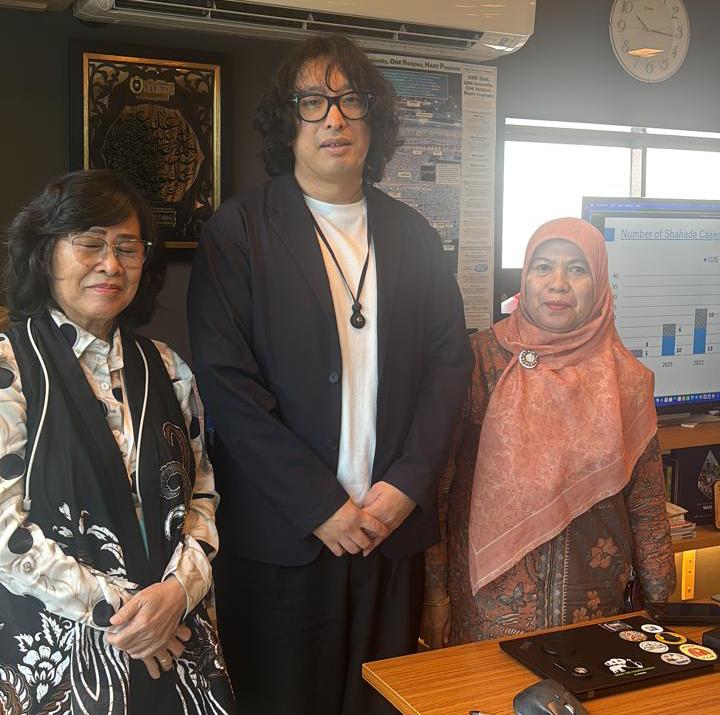
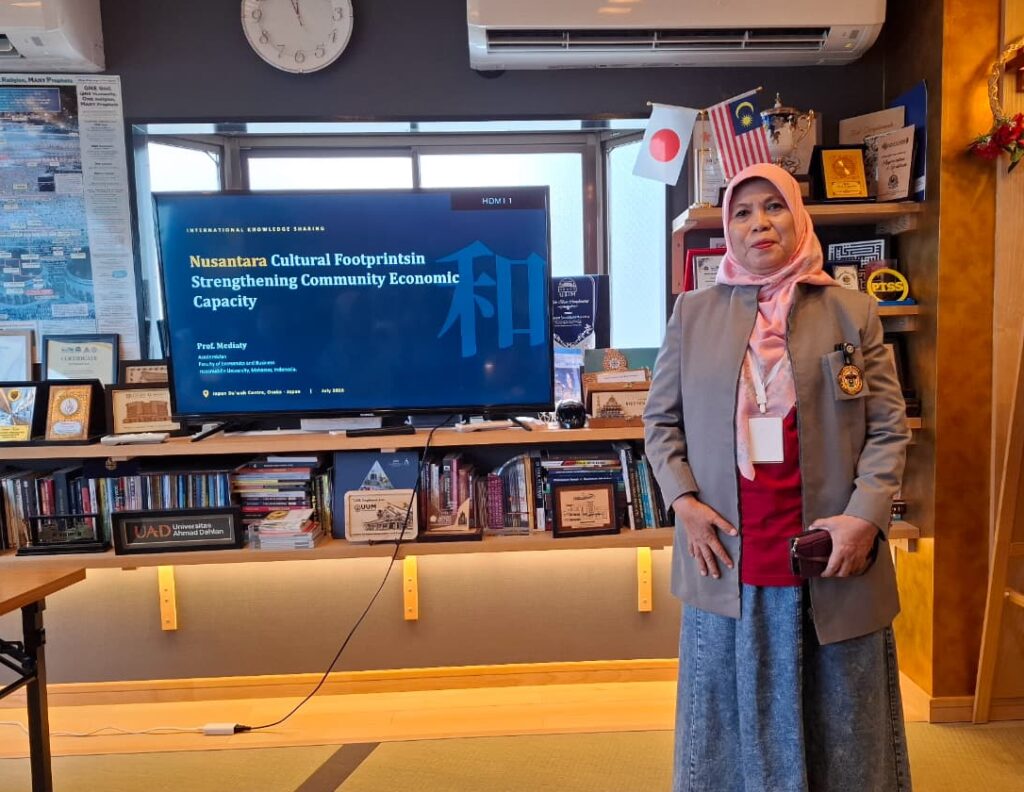
The central theme of the community service activity was “Nusantara Cultural Footprints in Strengthening Community Economic Capacity.” Through this knowledge-sharing session, the delegation highlighted Indonesia’s rich cultural heritage as a valuable social and economic resource that can continue to provide meaningful benefits beyond national borders. The discussion explored how Nusantara traditions, cultural knowledge, local wisdom, creative practices, and community identity can be transformed into opportunities for economic empowerment, particularly for Indonesian communities living and working in Japan.
The activity was not limited to a conventional academic presentation. It provided an interactive space for participants to reflect on how cultural identity can become a source of strength in building resilient and productive communities within the diaspora. Discussions also addressed the importance of preserving cultural heritage while adapting it to contemporary social and economic contexts. In this regard, Indonesian cultural heritage was presented not merely as something to be preserved, but as a living asset that can contribute to entrepreneurship, creative industries, community-based economic activities, and stronger social networks.
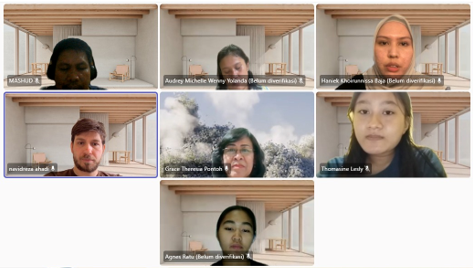
The program received strong participation, with approximately 100 participants attending through both online and offline platforms. The high level of engagement demonstrated the community’s interest in strengthening knowledge, cultural awareness, and economic capacity through collaborative learning. Participants actively contributed to discussions and shared perspectives concerning the challenges and opportunities faced by Indonesian communities in an international environment.
The international community service activity also reflects the broader role of higher education in extending academic knowledge beyond the campus and contributing directly to society. By engaging with the Indonesian community in Osaka, the program created a bridge between academic expertise and community needs. The exchange demonstrated that community service can transcend geographical boundaries and become a meaningful platform for international knowledge transfer, cultural preservation, and community empowerment.
This initiative is closely aligned with several Sustainable Development Goals (SDGs). Most prominently, it contributes to SDG 1 (No Poverty) by encouraging community economic empowerment and exploring ways in which cultural resources can support sustainable livelihood opportunities. The activity also advances SDG 4 (Quality Education) through international knowledge exchange, lifelong learning, and cross-cultural educational engagement.
The program further contributes to SDG 3 (Good Health and Well-Being) by strengthening social interaction, community connectedness, and a sense of belonging among members of the Indonesian diaspora. The discussion of Nusantara ecological wisdom also provides a cultural perspective relevant to SDG 14 (Life Below Water) and SDG 15 (Life on Land), particularly through awareness of traditional approaches to environmental stewardship, responsible resource use, and harmonious relationships between communities and nature. At the same time, the collaboration between the academic community and the Japan Da’wah Centre demonstrates the importance of SDG 17 (Partnerships for the Goals) in creating meaningful international cooperation for community development.
The International Community Service activity at the Japan Da’wah Centre in Osaka therefore represents more than a one-day academic engagement. It reflects a commitment to bringing higher education closer to communities, strengthening Indonesian cultural identity in an international setting, and transforming knowledge and cultural heritage into resources for community empowerment. Through continued collaboration, similar initiatives can provide further opportunities for knowledge sharing, cultural exchange, and sustainable community development between Indonesia and the Indonesian diaspora in Japan.
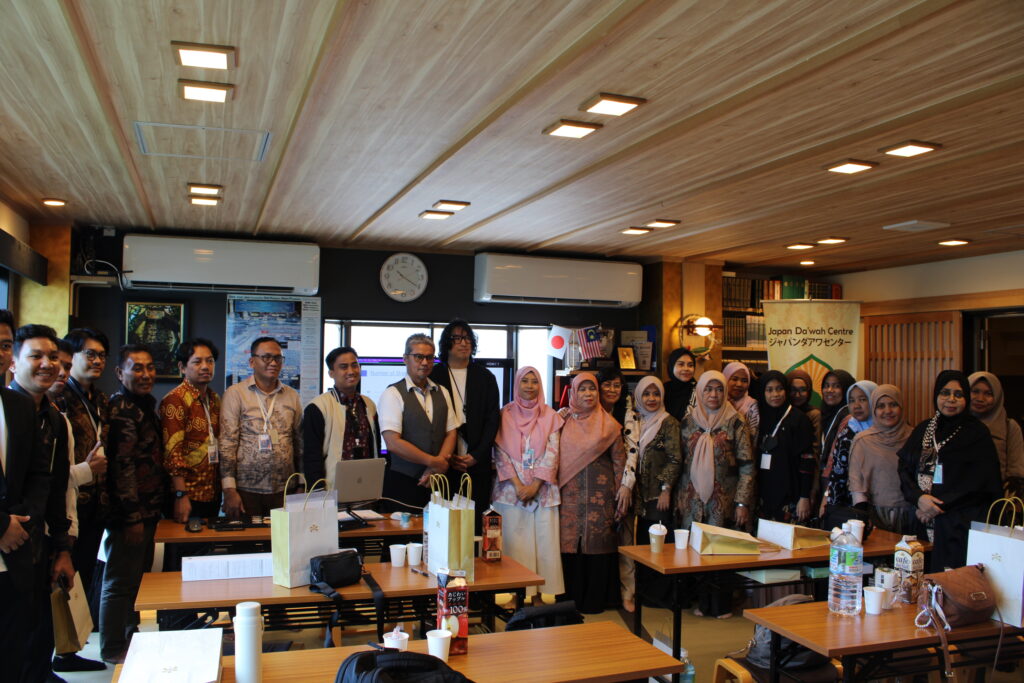
Ultimately, the activity demonstrates that Nusantara cultural heritage can serve not only as a symbol of national identity, but also as a source of knowledge, resilience, and economic potential for Indonesian communities wherever they are located. The initiative at Japan Da’wah Centre in Osaka is expected to become a foundation for continued international community service programs that integrate education, culture, community empowerment, and sustainable development.