

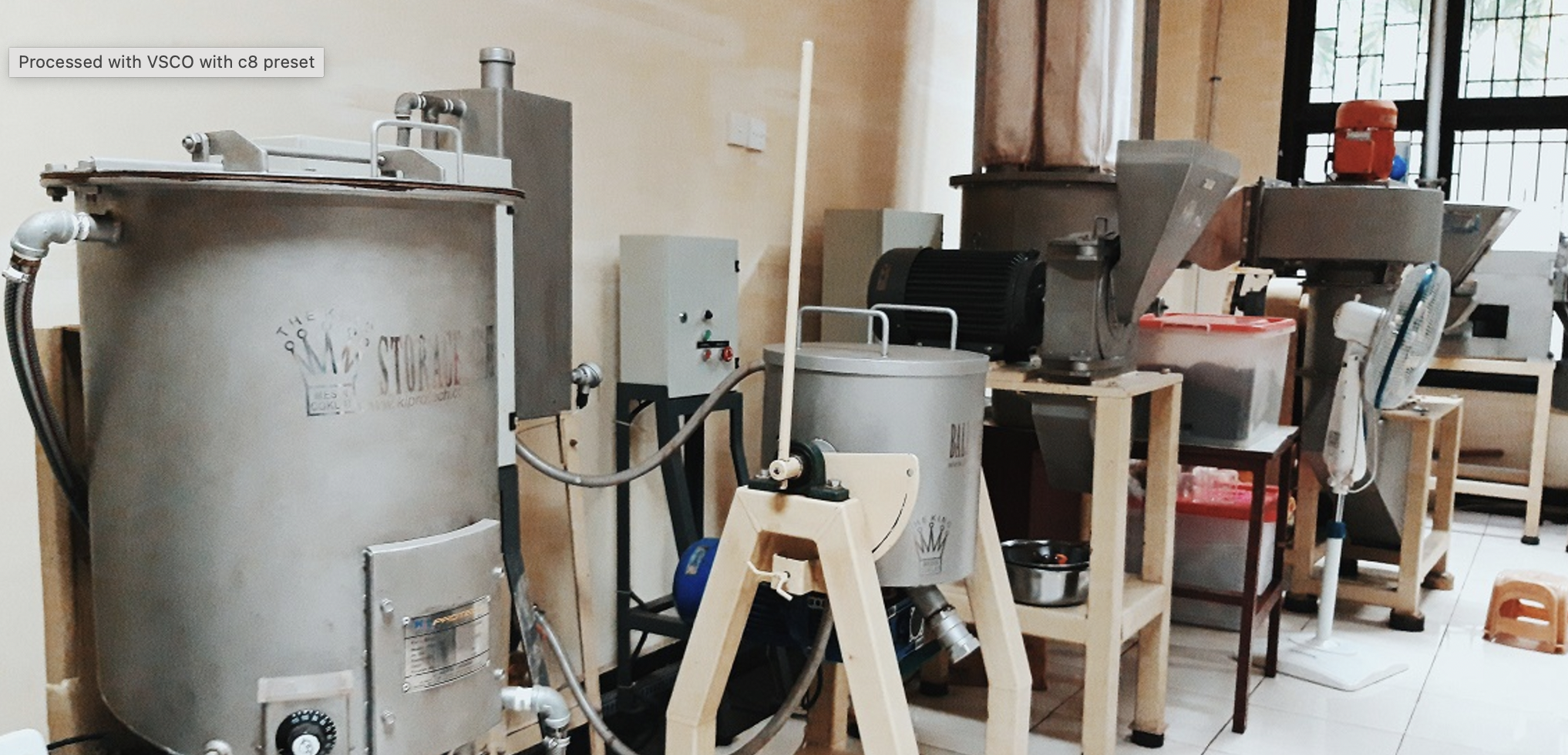
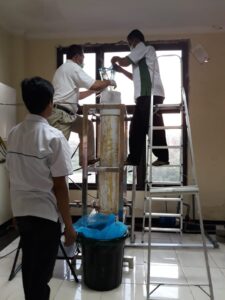
Seaweed is one of Indonesia’s leading export commodities, prompting the government to intensify its cultivation by forming seaweed production clusters across various provinces. Indonesia’s seaweed production continues to rise in line with the expansion of cultivation areas and increasing global demand. In 2012, global seaweed production reached 23 million tons, with a total value of approximately 6.37 billion USD (FAO, 2014). Data from FAO (2014) also shows that the main producers of seaweed worldwide are in Asia (99.18%), with the largest being China (12.83 million tons), Indonesia (6.51 million tons), the Philippines (1.75 million tons), Korea (1.02 million tons), and Japan (0.44 million tons). Efforts to boost national seaweed production carried out by the government and communities must be accompanied by the development of domestic processing industries and technology, in order to create optimal added value and open up employment opportunities. Up to now, most of Indonesia’s seaweed production is still exported as dried seaweed, with only around 15% exported as processed products such as carrageenan and agar (KKP, 2011). The low level of domestic processing activity is due to the limited number of processing industries capable of competing globally. This is mainly because the processing technology applied is generally still conventional. Research activities to be conducted in 2018 (the third year) include optimization experiments for extracting Eucheuma cottonii (Kappaphycus alvarezii) seaweed using a prototype industrial-scale continuous flow processing system, refinement of the equipment system, and economic analysis of seaweed processing technology based on ohmic technology. The planned outcomes for 2018 include articles in reputable international journals, papers for international seminar proceedings, and tested seaweed processing technology. With the completion of this research in the third year, the technology prototype developed will be ready for implementation in domestic processing industries. Up to August 2018, research activities carried out include refining equipment systems from the aspects of safety and ergonomics, as well as conducting economic feasibility analysis of the developed system. Safety improvements have mainly focused on better electrical systems to avoid potential accidents for operators. Ergonomic improvements are aimed at increasing the comfort and work efficiency of operators. Economic feasibility analysis is conducted using NPV, BCR, IRR, and BEP analyses. Experiments to optimize extraction conditions are still ongoing for the second replication of each condition being tested.
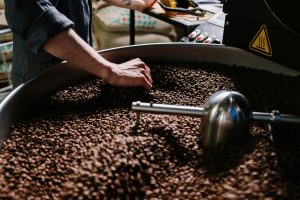
This research explores the chemical and flavor profiles of Arabica coffee beans produced through artificial fermentation using ohmic heating technology. This innovative approach allows precise control over the fermentation process, aiming to enhance the taste, aroma, and chemical quality of coffee. The study seeks to contribute significantly to the advancement of coffee fermentation technology and create opportunities for producing premium coffee with consistent quality standards.
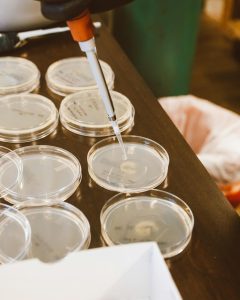
This research investigates the microbiological and chemical dynamics of Arabica coffee cherries processed through ohmic-based carbonic maceration. By combining carbonic maceration—a technique known for enhancing flavor complexity—with ohmic heating technology, the study aims to better understand the microbial activity and chemical transformations occurring during fermentation. The findings are expected to contribute to the development of innovative coffee processing methods that deliver enhanced flavor profiles and improved quality.