

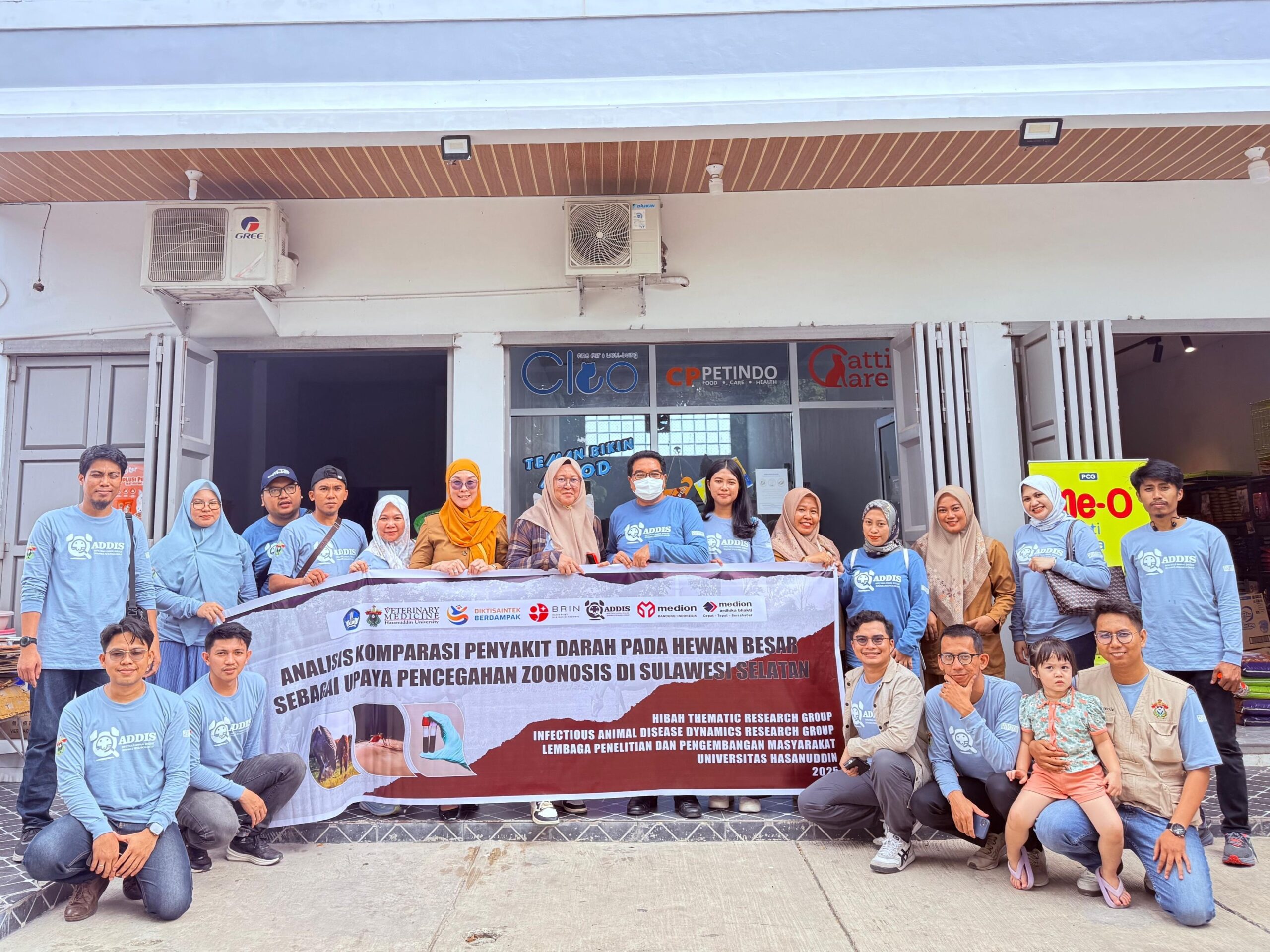

Jeneponto, August 5th 2025 – The Animal Disease Dynamics Research Group (ADDIS TRG) officially initiated a new field research project titled “Comparative Analysis of Blood Diseases in Animals as an Effort to Prevent Zoonoses in South Sulawesi.” Launched in close collaboration with the Regional Government of Jeneponto Regency, this crucial scientific effort addresses vector-borne disease risks at the intersection of livestock health and human well-being.
The principal objective of the study is to detect and identify Trypanosoma parasite infections within the local horse population of Jeneponto Regency. Given the significant zoonotic potential of Trypanosoma, which allows it to cross species barriers and pose serious health risks to human populations, establishing accurate surveillance is a paramount public health priority for the region. A total of 15 expert lecturers and researchers from ADDIS TRG are actively involved in executing this comprehensive field and laboratory investigation.
To ensure maximum diagnostic accuracy, the multidisciplinary research team is employing a robust, multi-faceted detection framework. Field and laboratory methodologies include microscopic examination of peripheral blood smears, Card Agglutination Trypanosoma Tests (CATT) on serum samples, and high-precision Polymerase Chain Reaction (PCR) molecular testing.
Beyond target pathogen detection, the researchers are conducting an extensive suite of supplementary diagnostic examinations. These include complete blood counts (CBC), clinical blood chemistry profiles, fecal analyses to screen for intestinal worms and protozoa, and anal swabs for bacteriological screening. Furthermore, to evaluate systemic disease impact and meat quality, the team is performing histopathologic evaluations of internal organs alongside detailed carcass morphometry on horse meat.
This field research directly supports and connects to several key United Nations Sustainable Development Goals (SDGs):
SDG 1: No Poverty — Horses in Jeneponto serve as vital working animals and agricultural assets; preventing devastating parasitic outbreaks preserves working livestock productivity, secures household livelihoods, and avoids severe financial losses for local farmers.
SDG 3: Good Health and Well-Being — Detecting zoonotic parasites early prevents the transmission of dangerous vector-borne infections from animals to humans, safeguarding public health across rural communities in South Sulawesi.
SDG 4: Quality Education — Conducting rigorous field and laboratory investigations advances academic scientific knowledge, offering evidence-based research outcomes that enhance veterinary education, diagnostic standards, and clinical practice.
SDG 15: Life on Land — Comprehensive disease screening and parasite control contribute to sustainable livestock management, protect terrestrial animal populations, and promote healthier rural ecosystems.
SDG 17: Partnerships for the Goals — The strong synergy between ADDIS TRG researchers and the Regional Government of Jeneponto Regency highlights the vital role of academic-government collaborations in solving regional health challenges.
By integrating advanced diagnostic tools with field-level veterinary epidemiology, the 15-member ADDIS TRG research team provides essential scientific data to help local authorities formulate targeted disease control and prevention strategies, ultimately safeguarding animal welfare and public health across South Sulawesi.


