

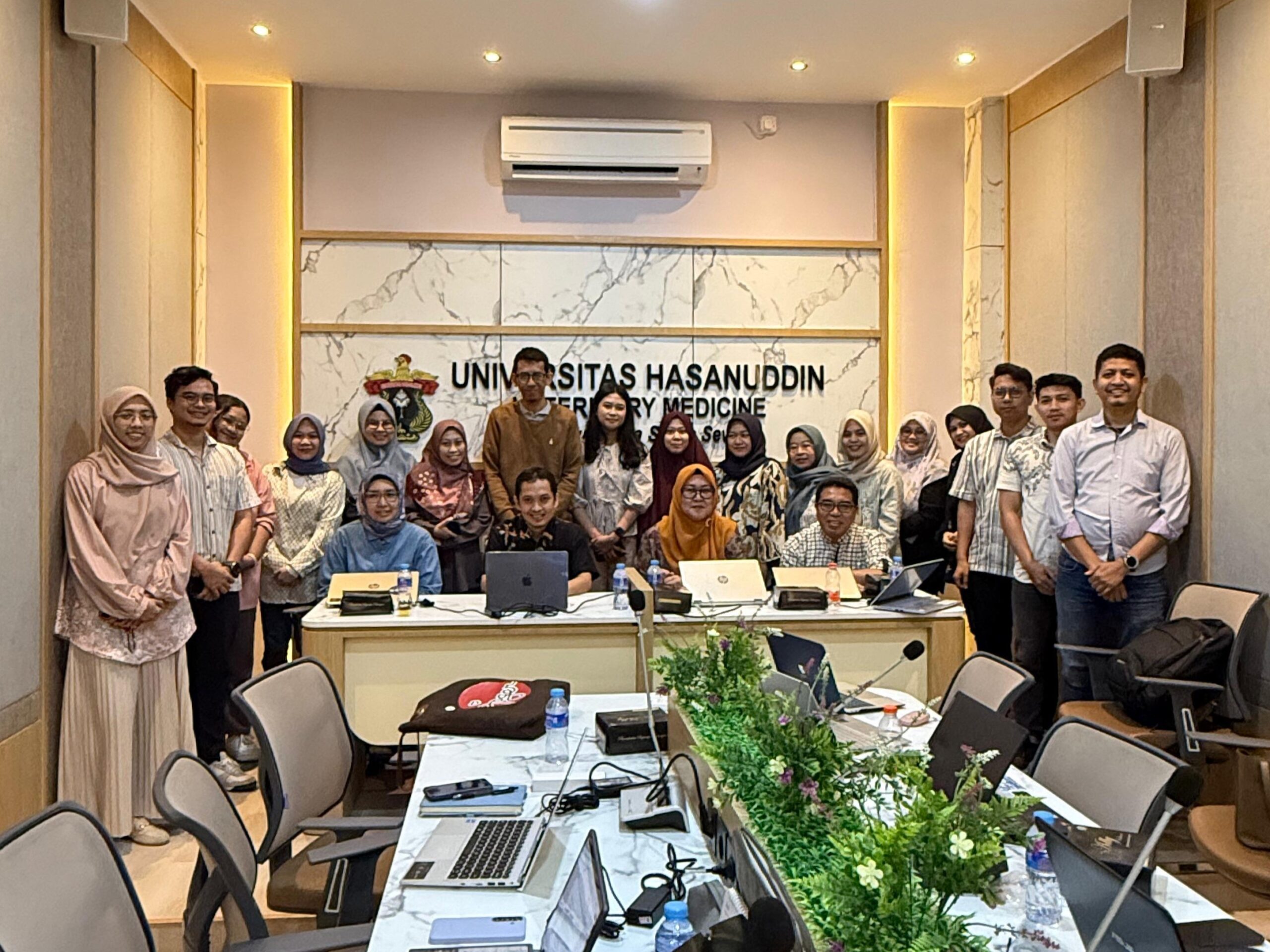

Makassar, July 13th 2025 – Fifteen lecturer-researchers from the Animal Disease Dynamics Research Group (ADDIS TRG) actively participated in an intensive training workshop focused on bibliometric analysis and data visualization. Held at Hasanuddin University, the training session was specifically designed to strengthen researchers’ analytical capabilities and elevate the overall quality of scholarly manuscripts intended for publication in reputable, high-impact international journals.
The workshop featured two distinguished experts in academic publishing: Prof. Ir. Andi Dirpan, S.TP., M.Si., Ph.D., and Andi Fadiah Ainani, S.TP. The speakers delivered comprehensive, practical guidance covering every key phase of bibliometric article development. Attending faculty members received hands-on training in advanced data mining techniques, literature database indexing, and the operational use of modern visualization software. These scientific tools enable scholars to systematically map research trends, identify co-authorship networks, and visualize thematic clusters within vast bodies of scientific literature.
For the ADDIS TRG—a dedicated research group focused on investigating the complex epidemiology, transmission dynamics, and control of infectious animal diseases—mastering bibliometric methodologies provides a crucial strategic advantage. Bibliometric tools empower researchers to rapidly pinpoint unaddressed knowledge gaps, analyze global research directions, and track emerging pathogen trends across international databases. Acquiring these sophisticated analytical skills allows the 15 participating faculty members to contextualize their empirical field findings within broader scientific discourse, ensuring that their research outputs remain innovative, highly cited, and globally relevant.
This academic capacity-building workshop directly supports and aligns with several United Nations Sustainable Development Goals (SDGs):
- SDG 1: No Poverty — Enhancing research quality and publication standards regarding infectious animal disease dynamics helps produce evidence-based scientific solutions. These findings inform policies that protect livestock health, safeguard rural farm livelihoods, and prevent catastrophic economic losses for vulnerable agricultural communities.
- SDG 3: Good Health and Well-Being — Systematic bibliometric mapping enables researchers to trace zoonotic disease trends and host-pathogen interactions globally, facilitating timely academic interventions that protect public health from emerging cross-species disease threats.
- SDG 4: Quality Education — Continuous professional development and upskilling in advanced data visualization directly elevate the standard of higher education, ensuring that academic staff deliver cutting-edge methodology training and mentorship to undergraduate and postgraduate students.
- SDG 17: Partnerships for the Goals — Utilizing bibliometric mapping tools allows researchers to identify international research clusters, facilitating global academic networking and fostering cross-border institutional collaborations to address complex health and scientific challenges.
By continuously upgrading the research and analytical capabilities of its faculty, the ADDIS TRG reinforces Hasanuddin University’s steadfast commitment to international academic excellence. This bibliometric training empowers the research group to produce rigorous, high-quality publications that contribute meaningfully to global veterinary medicine, disease surveillance, and scientific innovation.


