

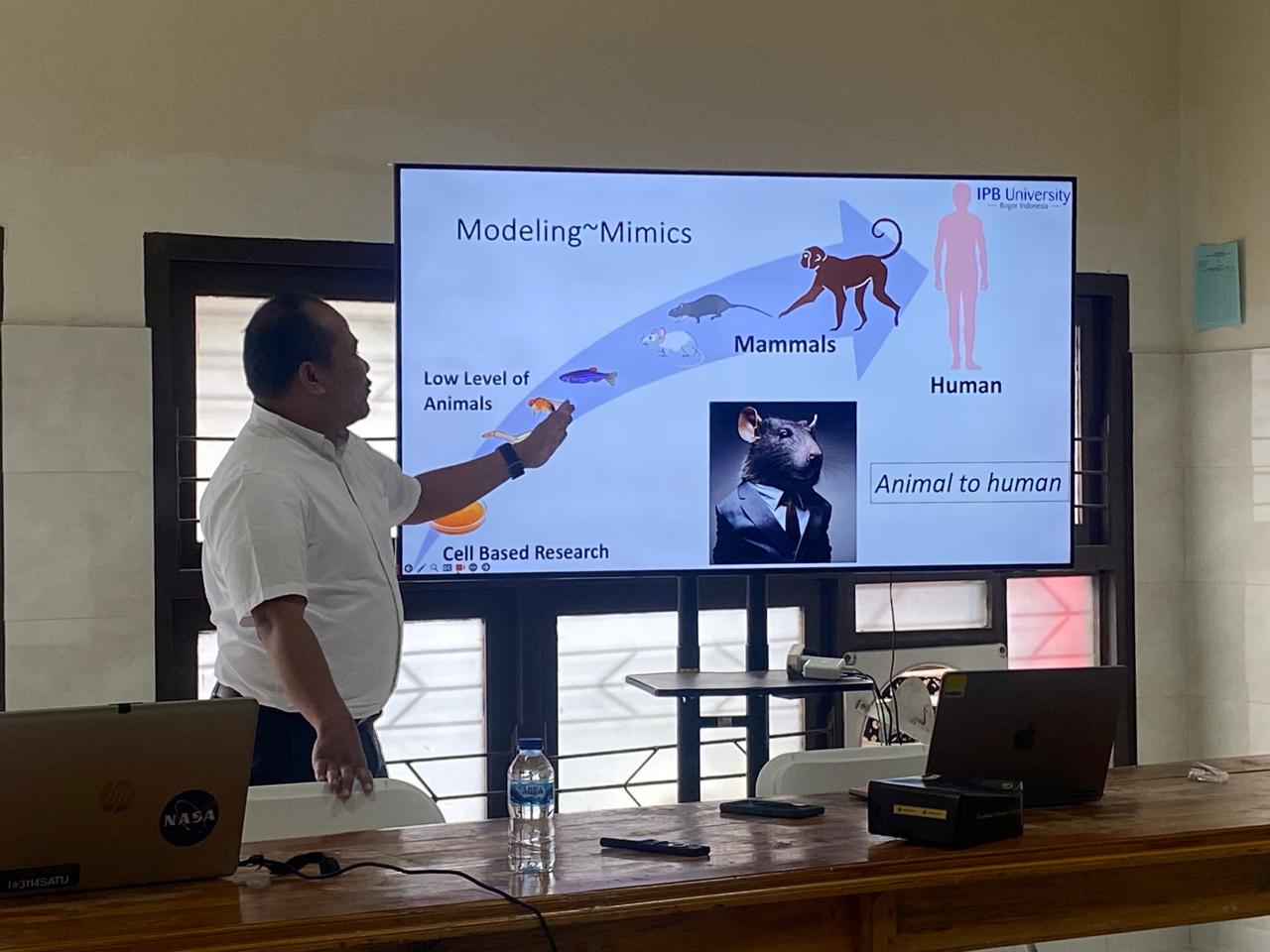

Makassar, February 25th 2025 – The Veterinary Pathology Laboratory Division of the Veterinary Medicine Study Program at Universitas Hasanuddin successfully organized an intensive scientific workshop titled “Utilization of Animal Models for Disease Studies and Data Visualization Techniques in Digital Pathology.” The specialized training brought together fifteen lecturer-researchers from VMSP, all of whom are active members of the Animal Disease Dynamics Research Group (ADDIS TRG), to deepen their expertise in experimental disease modeling and advanced analytical techniques.
The workshop featured drh. Mawar Subangkit, M.Si., Ph.D., a distinguished expert from the School of Veterinary Medicine and Biomedical Sciences at IPB University. The training provided comprehensive instruction on the strategic selection and ethical application of animal models in experimental pathology, emphasizing their critical role in unraveling host-pathogen interactions and evaluating infectious disease progression under controlled laboratory settings.
Beyond theoretical insights, the workshop emphasized practical, hands-on technical training. Participants were guided through advanced scientific image processing using ImageJ software—a fundamental tool in modern digital pathology for quantifying cellular alterations, tissue lesions, and histopathological markers. Furthermore, the session introduced statistical workflows and data visualization techniques using RStudio, equipping researchers with the computational skills required to analyze complex biological datasets, refine experimental methodologies, and produce high-precision visual data for scholarly publication.
This intensive technical workshop directly aligns with several United Nations Sustainable Development Goals (SDGs):
- SDG 1: No Poverty — Developing robust animal models and diagnostic methodologies for infectious disease studies helps researchers create actionable solutions that protect livestock productivity and secure agricultural livelihoods for rural farming communities.
- SDG 3: Good Health and Well-Being — Mastering digital pathology and statistical modeling accelerates translational research on infectious and zoonotic diseases, advancing scientific understanding to safeguard both animal populations and human public health.
- SDG 4: Quality Education — Upskilling 15 academic staff members in cutting-edge software like ImageJ and RStudio elevates the standard of higher education, ensuring that faculty members pass on advanced research methodologies and computational skills to undergraduate and postgraduate students.
- SDG 17: Partnerships for the Goals — The collaboration between Universitas Hasanuddin and IPB University demonstrates how inter-university knowledge sharing and academic partnerships strengthen national scientific research capacity in veterinary medicine.
By integrating digital pathology with computational data analysis, the 15 participating ADDIS researchers reinforced Universitas Hasanuddin’s commitment to scientific excellence, evidence-based disease surveillance, and innovative academic mentorship.


