

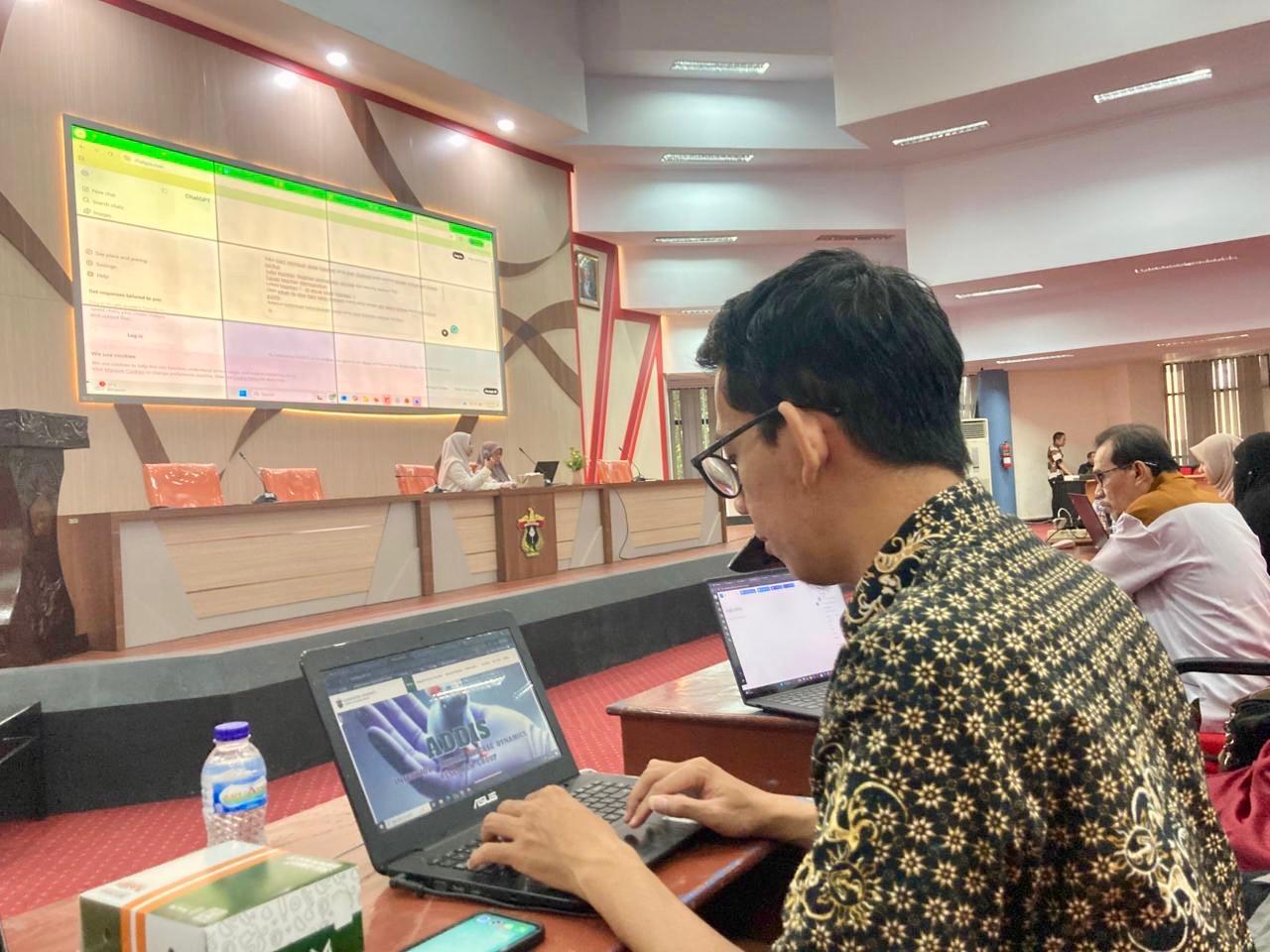

Makassar, April 7th 2026 – In today’s digital age, effective online platforms are essential for sharing scientific knowledge and fostering global collaboration. Universitas Hasanuddin demonstrated its commitment to research excellence by organizing a specialized training workshop focused on strengthening the digital presence of its Thematic Research Groups (TRGs). The event, titled Training on Improving Activity and Security of Thematic Research Group (TRG) Websites within Universitas Hasanuddin, aimed to help research teams develop more dynamic, secure, and comprehensive websites.
The main objective of the training was to enhance the quality and completeness of TRG websites, including that of the Animal Disease Dynamics (ADDIS) Research Group. By improving website activity and implementing stronger security measures, the program equipped participants with practical skills to regularly update content, protect sensitive research data, and make scientific information more accessible to both academic and public audiences. A well-maintained website serves as a powerful tool for disseminating research findings, building partnerships, and increasing the visibility of important work conducted by the university’s research groups.
The training was held on 7 April 2026 at The Institute for Research and Community Service (LPPM) of Universitas Hasanuddin in Makassar. It successfully gathered 90 participants, consisting of researchers, faculty members, and technical staff from various Thematic Research Groups across the university. Through interactive sessions and hands-on practice, attendees learned best practices in content management, cybersecurity protocols, search engine optimization, and website analytics. The workshop used a clear, narrative approach that made technical digital concepts easy to understand and directly applicable to research communication.
This capacity-building initiative strongly aligns with the United Nations Sustainable Development Goals, particularly SDG 1 (No Poverty), SDG 4 (Quality Education), and SDG 17 (Partnerships for the Goals). The training supports SDG 4 by promoting inclusive and equitable quality education through enhanced digital literacy and lifelong learning opportunities for the academic community. It contributes to SDG 1 by strengthening the capacity of research groups to produce and share knowledge that can drive innovations addressing poverty-related challenges, such as improving animal health to support sustainable livelihoods in agriculture-dependent communities. Moreover, the collaborative spirit of the workshop embodies SDG 17, as it fosters effective partnerships among university units, researchers, and stakeholders to mobilize resources and knowledge toward common sustainable development objectives.
By investing in better digital infrastructure, Universitas Hasanuddin ensures that research groups like ADDIS can communicate their findings more effectively to national and international audiences. This not only amplifies the impact of scientific work but also encourages greater engagement between researchers and society.
The participants gained valuable technical skills along with a deeper understanding of how digital tools can responsibly support research dissemination and societal impact. This event represents an important step in Universitas Hasanuddin’s efforts to modernize research communication and maximize the contribution of its Thematic Research Groups to global knowledge and sustainable development.


