
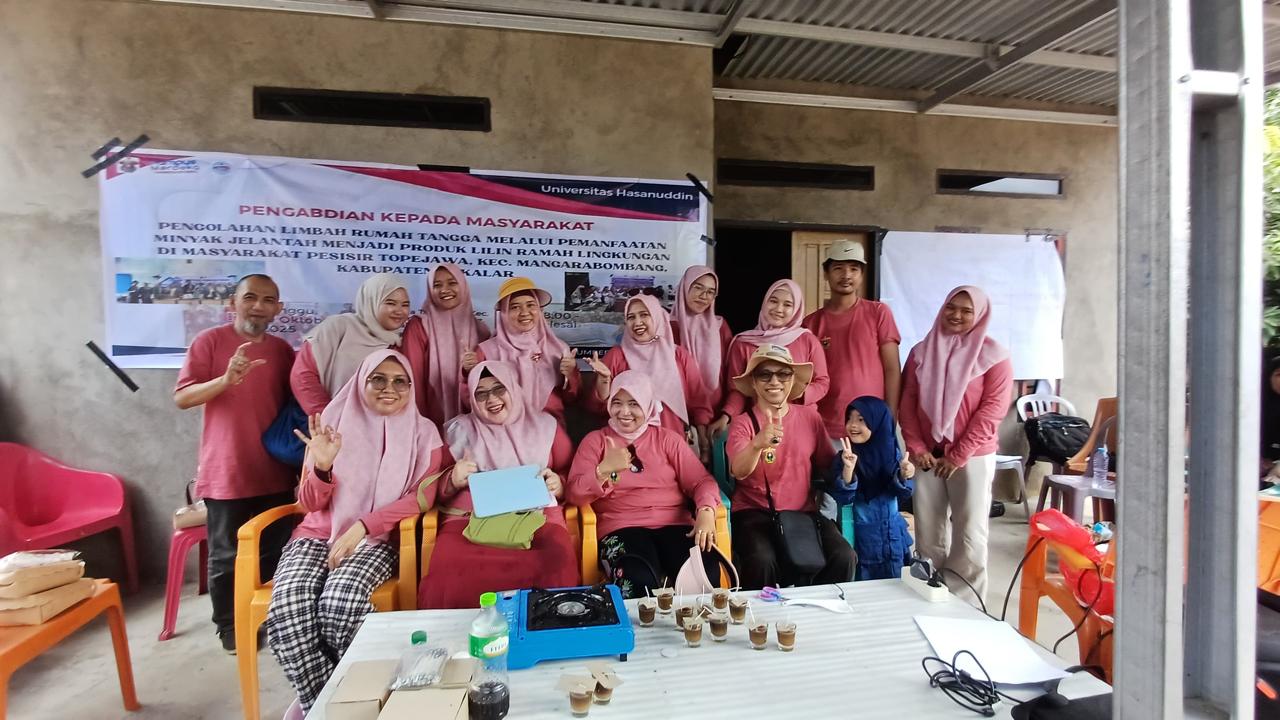

Domestic waste is often perceived as a burden that must simply be discarded. In reality, many types of household waste still possess economic and environmental value when managed properly. One example is used cooking oil, commonly known as waste cooking oil or “jelantah.” In many communities, this waste is frequently disposed of directly into drainage systems or the surrounding environment, potentially causing environmental pollution and health risks. Recognizing this challenge, an educational and community empowerment activity titled “Transformation of Domestic Waste Cooking Oil into Economic Products (Candles)” was conducted to demonstrate how household waste can be converted into useful and economically valuable products.
The activity took place in Dusun Lamangkia, Desa Topejawa, Mangarabombang Subdistrict, Takalar Regency, a coastal community where household waste management remains a significant challenge. The program aimed to educate local residents about the environmental impacts of improper waste disposal while providing practical skills to transform used cooking oil into candles. Through this simple yet innovative approach, participants were introduced to the concept of circular economy at the household level, where waste can be reused, recycled, and converted into valuable products.
The training was held on 19 October 2025 and involved 22 participants, consisting of 19 lecturers and 3 students who actively contributed to community engagement activities. Among the participating lecturers were Prof. Dr. Ir. Khusnul Yaqin, M.Sc., Dr. Sri Wahyni Rahim, and several other academic staff members who facilitated the training sessions and provided scientific explanations regarding waste management and environmental sustainability. The presence of students in the activity also strengthened the educational dimension of the program, as they assisted in demonstrations and interacted directly with community members during the practical sessions.
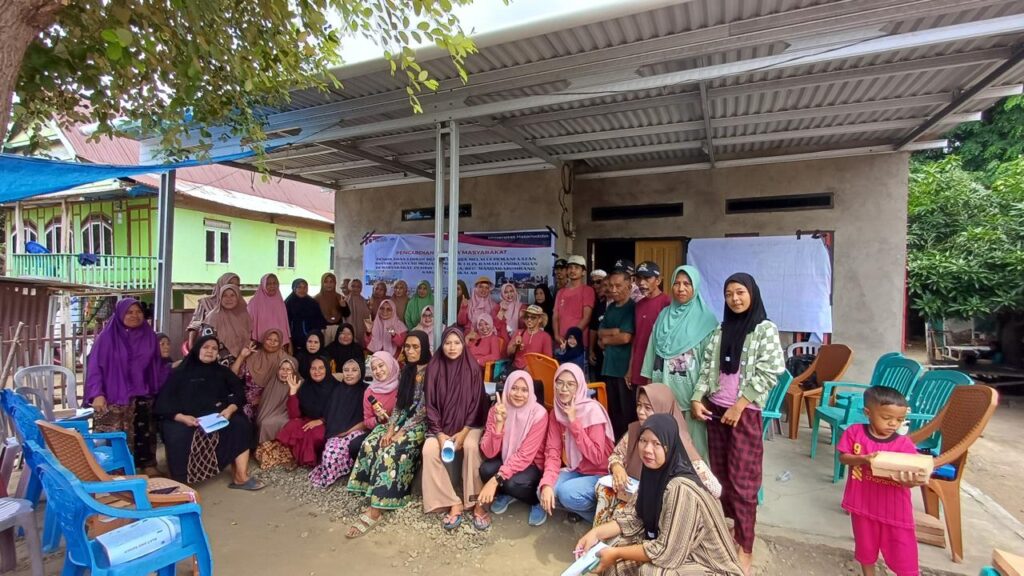
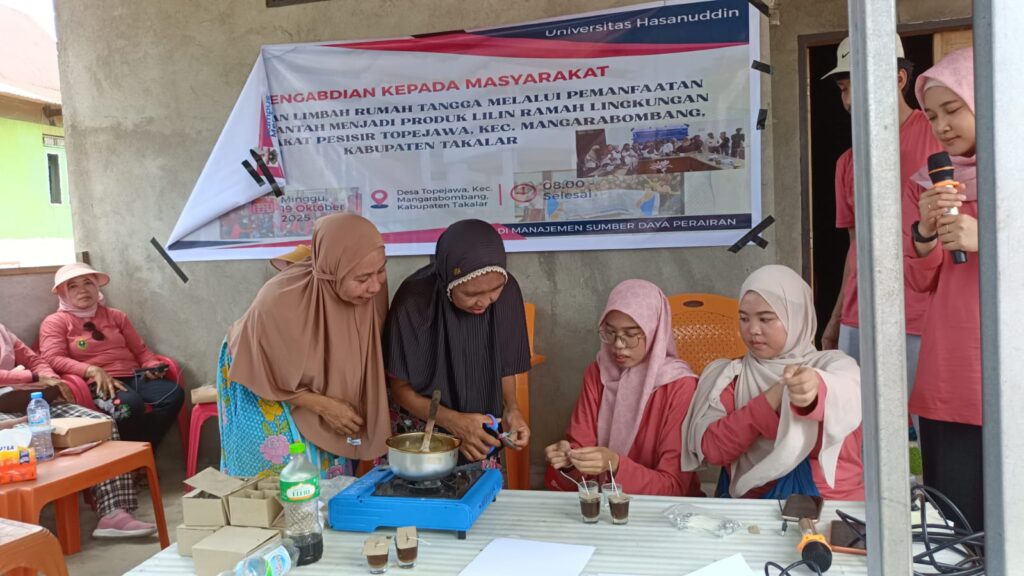
During the workshop, participants learned the step-by-step process of purifying used cooking oil, mixing it with appropriate materials, and molding it into functional candles. The activity not only demonstrated the technical aspects of candle production but also highlighted the broader environmental benefits of recycling domestic waste. By converting waste oil into candles, communities can reduce pollution, minimize waste discharge into waterways, and potentially develop small-scale home industries that generate additional household income.
This community initiative aligns closely with several global priorities outlined in the United Nations Sustainable Development Goals (SDGs). First, the activity supports SDG 1: No Poverty by introducing a simple entrepreneurial opportunity that can generate additional income for households through the production and sale of recycled candles. Second, the program contributes to SDG 4: Quality Education by promoting community-based learning and practical environmental education. Through hands-on training, participants gained knowledge about waste management, environmental protection, and sustainable resource utilization. Third, the initiative reflects the spirit of SDG 17: Partnerships for the Goals, as it demonstrates collaboration between academic institutions, lecturers, students, and local communities to address environmental and socio-economic challenges together.
Beyond its immediate educational impact, this activity also represents a broader effort to strengthen environmental awareness and community empowerment in coastal areas. By encouraging residents to see domestic waste as a resource rather than a problem, the program fosters a more sustainable mindset toward waste management and local economic development. It is hoped that the knowledge and skills gained through this initiative will inspire community members to continue developing small-scale innovations that transform household waste into valuable products while protecting the environment.


