
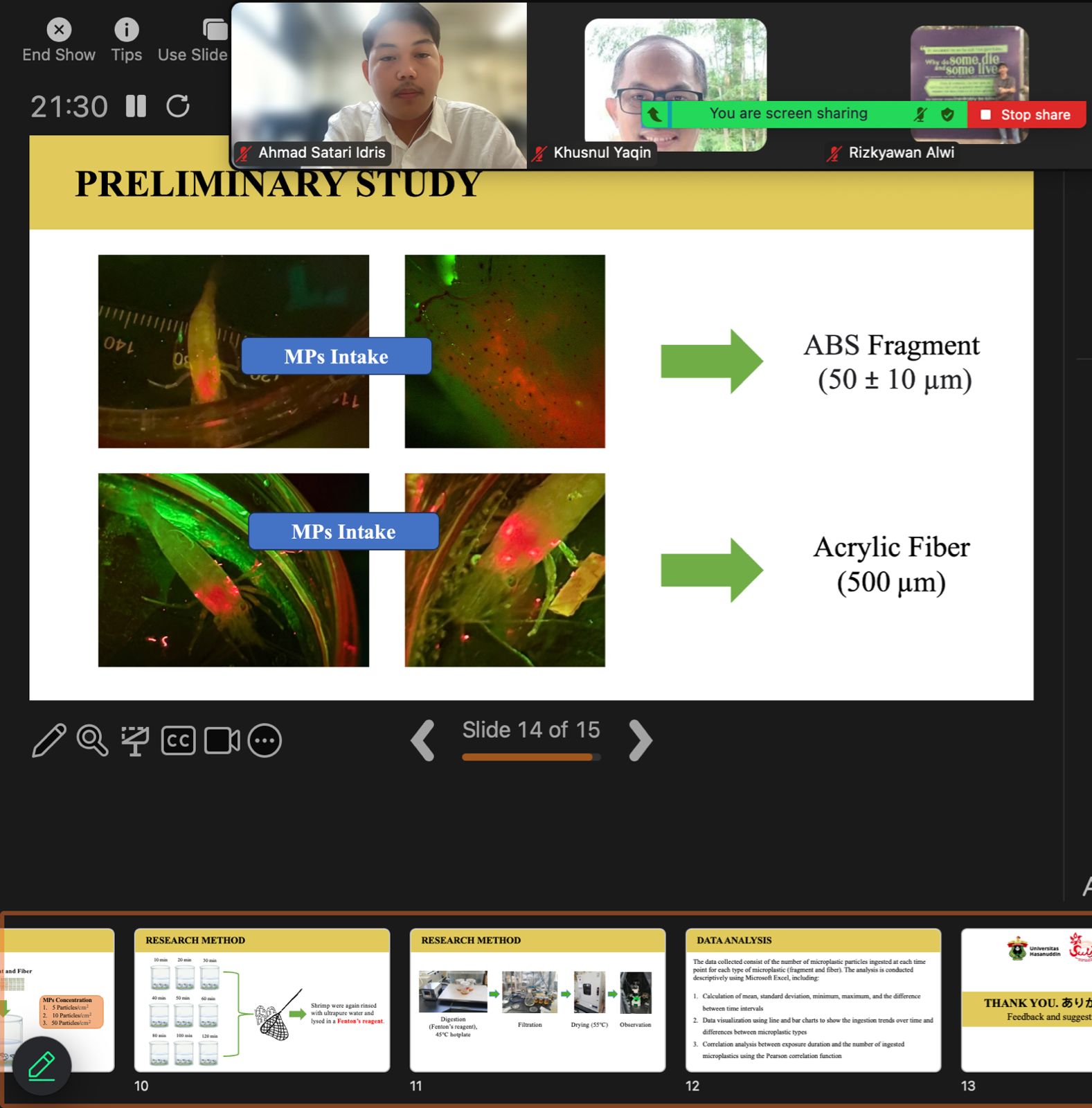

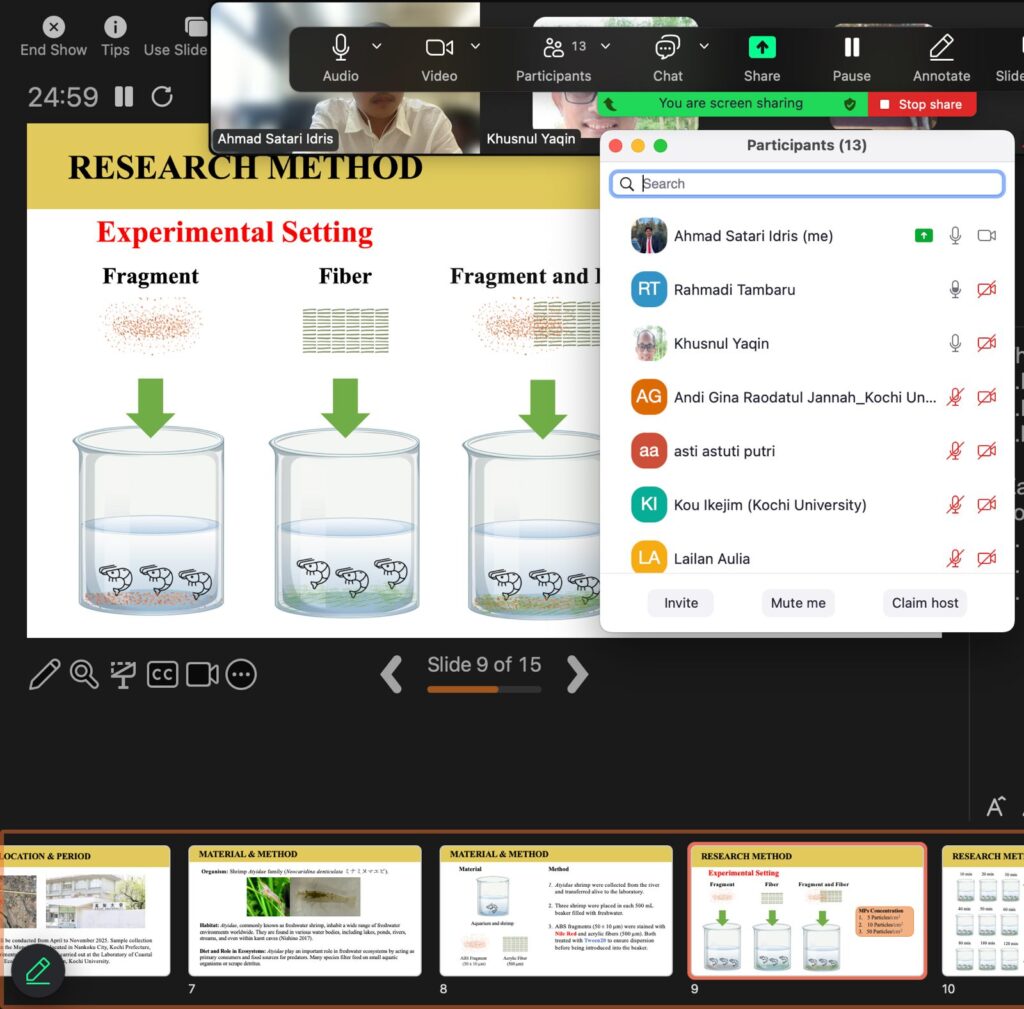
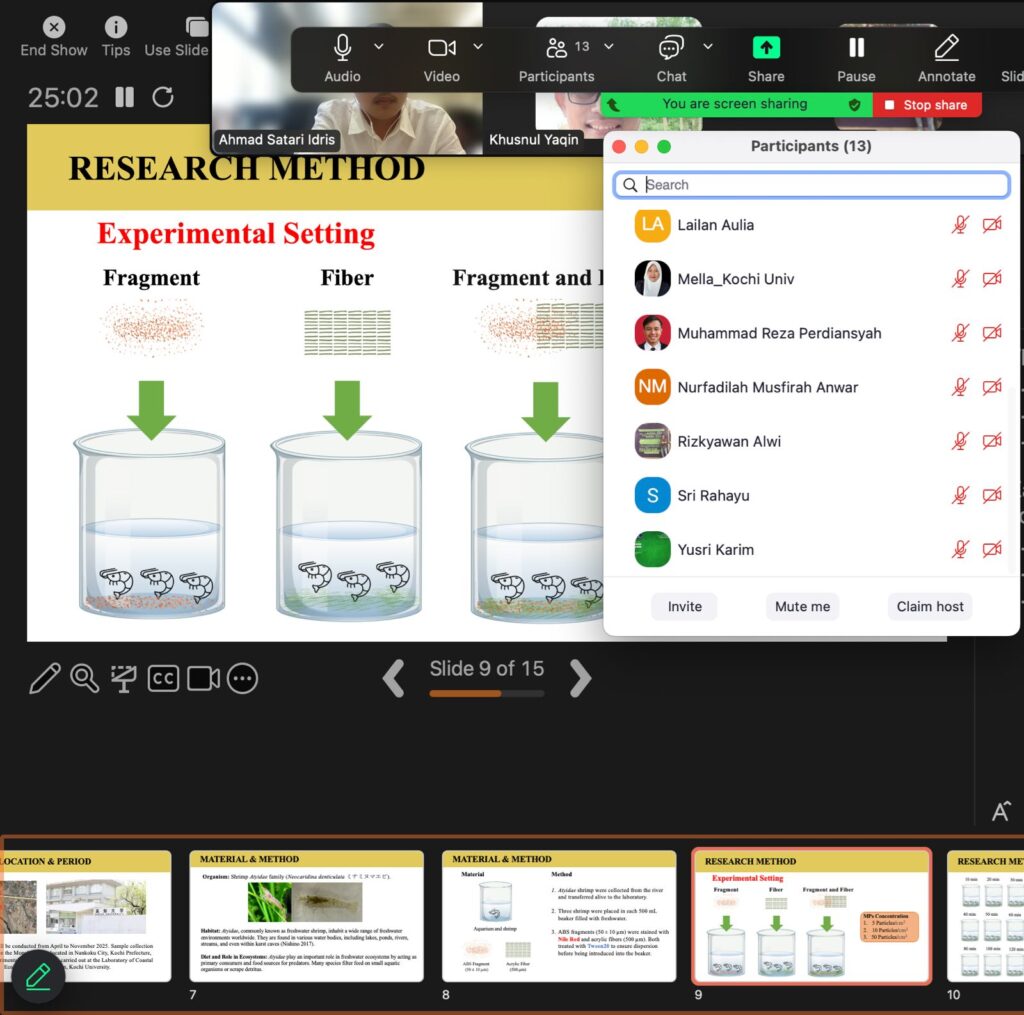
Scientific collaboration across institutions plays an important role in addressing emerging environmental challenges, particularly the growing concern of microplastic pollution in aquatic ecosystems. As part of this effort, a proposal seminar entitled “MICROPLASTIC ACCUMULATION DYNAMICS IN BENTHIC CRUSTACEANS Neocaridina denticulata” was successfully conducted on 30 June 2025. The activity served as an academic forum for presenting and discussing a master’s research proposal in Fisheries Science while also strengthening international academic cooperation.
The seminar was organized collaboratively by Kōchi University, Japan, and the Faculty of Marine Science and Fisheries, and was conducted through an online platform. Despite being held virtually, the event created a dynamic academic atmosphere that allowed scholars, researchers, and students from different institutions to participate and exchange ideas. The number of participants: 12 individuals, consisting of lecturers, researchers, and graduate students with strong interests in aquatic ecology, fisheries science, and environmental pollution studies.
The research proposal was presented by Ahmad Satari, a Master’s student in Fisheries Science, who is conducting a study on the accumulation dynamics of microplastics in benthic crustaceans, specifically Neocaridina denticulata. This freshwater shrimp species has significant potential as a model organism for understanding how microplastics are absorbed, accumulated, and possibly transferred within aquatic ecosystems. Microplastic contamination has increasingly been detected in water, sediments, and aquatic organisms, raising concerns about its long-term impacts on biodiversity, ecosystem stability, and food security.
Through this seminar, Ahmad Satari explained the research design, experimental approach, and analytical framework that will be used to investigate how microplastics interact with benthic organisms. The discussion highlighted the importance of developing reliable biological indicators to assess environmental pollution and its ecological consequences. Constructive feedback from participants was also provided to strengthen the research methodology and enhance the scientific contribution of the study.
Several distinguished academics and participants attended the seminar, contributing valuable insights during the discussion session. The seminar participants included Prof. Khusnul Yaqin, Lailan Aulia, Mella from Kōchi University, Muhammad Reza Perdiansyah, Nurfadilah Musfirah Anwar, Rizkyawan Alwi, Sri Rahayu, Prof. Yusri Karim, Prof. Rahmadi Tambaru, and Prof. Kou Ikejima, Ph.D. In particular, Prof. Kou Ikejima, Ph.D attended the seminar as a prospective international partner, opening opportunities for future research collaboration between Indonesian and Japanese institutions.
Beyond its academic significance, this seminar also reflects a broader commitment to global sustainability initiatives. The research aligns strongly with SDG 14: Life Below Water, which emphasizes the importance of protecting aquatic ecosystems from pollution and environmental degradation, including the growing threat of microplastics. Furthermore, the activity supports SDG 4: Quality Education by strengthening graduate-level scientific training and research capacity. It also contributes to SDG 1: No Poverty, as sustainable fisheries and healthy aquatic ecosystems are closely linked to the livelihoods of coastal and freshwater communities. Equally important, the collaboration between universities highlights the role of SDG 17: Partnerships for the Goals, which promotes international partnerships in advancing scientific knowledge and sustainable development.
Overall, this seminar represents an important step toward building stronger international collaboration in the field of aquatic environmental research. By combining expertise from different institutions and countries, initiatives like this can contribute to deeper scientific understanding of microplastic pollution and support global efforts to protect aquatic ecosystems for future generations.


