

Successful Hatching of Oryzias matanensis: A New Hope for Ex Situ Conservation that Debunks a Long-Held Myth
Khusnul Yaqin, Putri Rahastri Adelia, Tesalonika Tirsa Rura, Basse Siang Parawansa
Oryzias matanensis, a small member of the Adrianichthyidae family, was first described by Aurich in 1935. This species is endemic to Lake Matano, the deepest tectonic lake in Indonesia, which is located in South Sulawesi. Aurich’s original description was based on specimens collected directly from the lake, which marked a significant milestone in the documentation of Sulawesi’s freshwater biodiversity. The primary taxonomic reference was Aurich, H. J. (1935). “Die Zahnkärpflinge Celebes’.” Zoologische Jahrbücher, Abteilung für Systematik, 67, 1–96 [1]. Since its discovery, O. matanensis has become a symbolic species that represents the ecological uniqueness and fragility of Lake Matano’s endemic biota.
Historically, O. matanensis was believed to be extremely sensitive to environmental changes, which made attempts to domesticate it for scientific research, especially in fields such as fish biology and aquatic ecotoxicology, largely unsuccessful. This repeated failure contributed to a pervasive myth within the local community: that this fish “cannot survive” outside its natural habitat. The difficulty of culturing this species in captivity has not only highlighted its ecological and physiological distinctiveness but has also posed a persistent challenge for researchers hoping to use it as a representative model of endemic lake ecosystems or to conduct ex situ conservation efforts. These conservation efforts are critical because in the event of catastrophic habitat degradation due to anthropogenic activities, such as industrial waste discharge, repopulation can only be achieved rapidly and effectively through ex situ preservation.
The successful hatching of Oryzias matanensis outside its native environment represents a pivotal breakthrough. It is not only a technical achievement in the care and reproduction of an endemic species, but also a crucial step forward in understanding the ecological and physiological dynamics of a fish previously deemed impossible to domesticate. In the face of longstanding local beliefs that this small-bodied species would perish in artificial environments such as aquariums, research conducted by the Aquatic Ecotoxicology Thematic Research Group (TRG) at the Laboratory of Animal and Aquatic Physiology, Faculty of Marine and Fisheries Sciences, Hasanuddin University, has effectively dismantled that notion. This success was not merely the result of refined handling techniques but was deeply rooted in the persistent observation of the species’ responses to environmental stressors and a dedicated effort to address biological threats, including parasitic, bacterial, and fungal infections.
The local belief that O. matanensis cannot be kept in aquariums, but is not entirely unfounded, reflects empirical observations unsupported by comprehensive scientific analysis. In many cases, the relocation of fish from Lake Matano to artificial aquaria results in premature mortality, often within days. This phenomenon was observed repeatedly, gradually forming a localized narrative that was taken as an ecological truth. However, when examined from the perspectives of fish physiology, pathology, and aquatic microbiology, multiple overlooked factors have been identified.
One of the most significant findings from the laboratory observations was the presence of complex parasitic infestations in O. matanensis sourced from the lake. Once introduced into artificial environments, fish succumbed to these infections. Specifically, five species of ectoparasite and one species of endoparasite were identified. The ectoparasites attacked the skin and fins, whereas the endoparasite targeted the gills. These parasitic infections, compounded by concurrent fungal and bacterial infections, drastically weaken the physiological conditions of the fish during the adaptation period. Without close monitoring and proper intervention, mortality rates remained high, inadvertently reinforcing the myth of fish’s incompatibility with captive environments. This situation could threaten the survival of the species, underscoring the urgency to develop effective ex situ conservation strategies.
This myth began to emerge when a structured and consistent scientific approach was implemented. The TRG team at Hasanuddin University began by identifying the primary stressors experienced by the fish during translocation. One of the most effective interventions involved a gradual acclimatization process while ensuring that the physical and chemical properties of the aquarium water closely mirrored those of Lake Matano. Concurrently, environmentally friendly and non-toxic treatments have been administered to prevent and combat parasitic infections, especially in broodstock individuals.
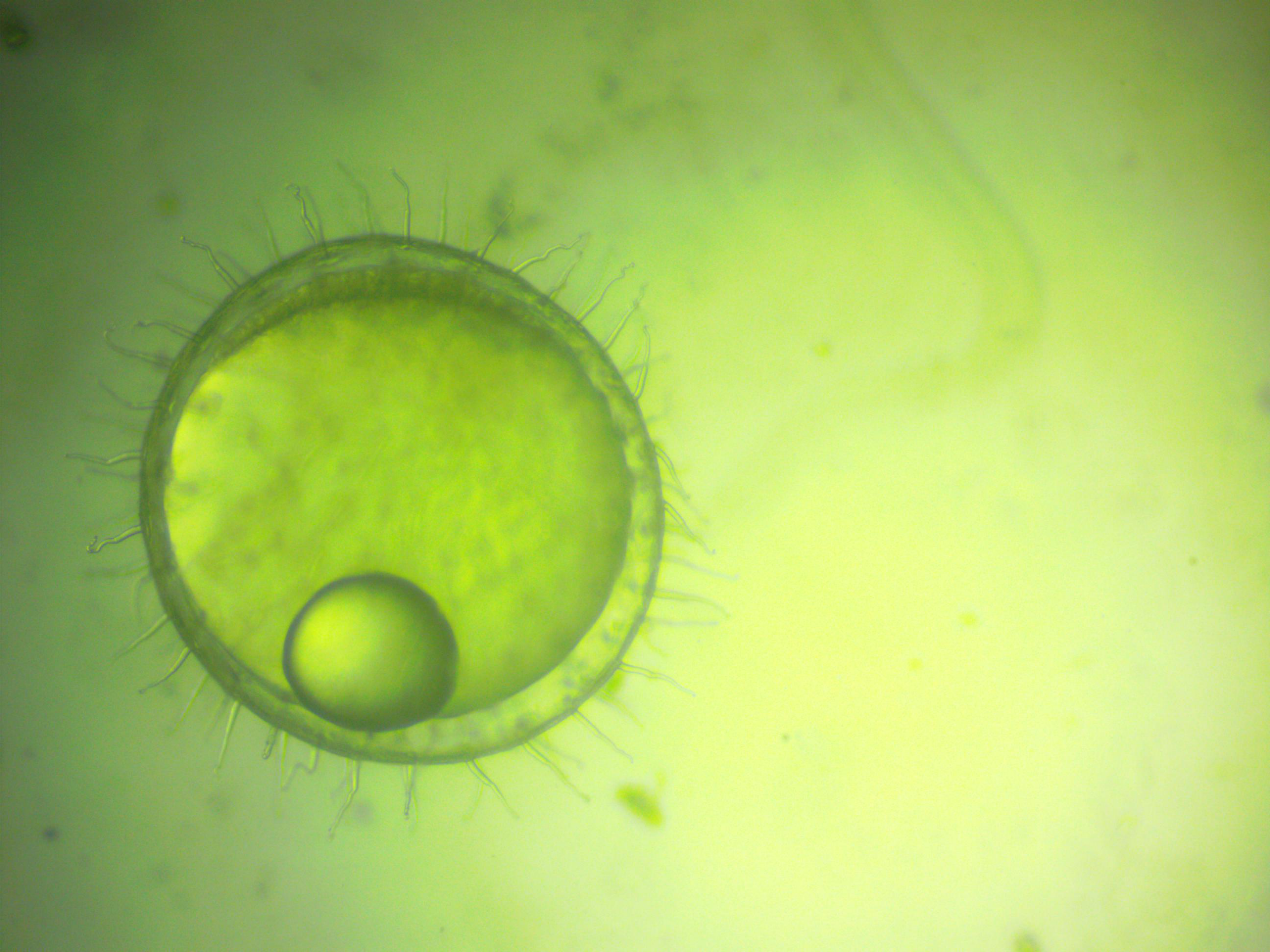
The turning point occurred when O. matanensis not only survived in captivity but also successfully reached the fertilization stage. This achievement marked the beginning of a new scientific understanding: that this species is indeed capable of surviving and reproducing in artificial environments, provided that its ecological and biological needs are meticulously addressed. The resulting embryos were nurtured in E3 embryo rearing medium (ERM), a nutrient-rich solution with ionic stability that is conducive to healthy embryonic development. Over a nine-day incubation period, the embryos developed steadily and hatched into viable larvae.
This hatching success serves as empirical proof that O. matanensis holds genuine aquaculture potential, as long as the challenges of early translocation and acclimatization are effectively mitigated. By identifying the underlying causes of previous failures, namely parasitic infections and microbial diseases, researchers are now better equipped to design targeted science-driven maintenance strategies. This progress opens up significant opportunities for ex-situ conservation and future research exploring species physiology, genetics, and reproductive behavior.
Moreover, the broader implications of this success extend to social and cultural domains. Amid ongoing biodiversity conservation challenges across Indonesia, particularly in the species-rich Wallacea region, this research provides a powerful example of how local knowledge and modern science can converge to yield remarkable outcomes. Rather than dismissing traditional beliefs, this project underscores the value of embracing local empirical wisdom and subjecting it to scientific inquiry, thus yielding insights grounded in both observation and analysis.
Simultaneously, this achievement raises new questions that are vital for future conservation of endemic species. Can O. matanensis be reared on a larger scale as part of a structured restocking or reintroduction programme? How can genetic integrity be preserved during prolonged captive breeding? Could generative breeding and advanced technologies, such as stem cell manipulation, be employed? Such stem-cell-based techniques have been widely developed in species, such as O. latipes and O. melastigma, with embryonic stem (ES)-like cell lines established in 1994. Haploid ES cells (hMMES1), for instance, have demonstrated the ability to form chimeras and differentiate into multiple tissue types, whereas primordial germ cell (PGC) transplantation has enabled the creation of transgenic and semi-clonal lines.
These questions are growing more urgently in the face of climate change and mounting anthropogenic pressure, demanding adaptive conservation frameworks that move beyond preservation to proactive biological stewardship.
From a scientific standpoint, this breakthrough has broadened the scope of research on fish physiology, aquatic microbiology, and environmental toxicology. O. matanensis has evolved unique physiological adaptations that may serve as invaluable biological data, given its origin in a highly oligotrophic and metal-rich lake with exceptional water clarity. Embryos and larvae can be cultivated as sentinel organisms for ecosystem health monitoring, complementing or even replacing traditional test species in ecotoxicological studies.
On a more systemic level, the success of this project has contributed to the capacity-building of laboratories and the development of human resources in marine and fishery sciences. The students and researchers involved in this endeavor have gained technical expertise, as well as ecological sensitivity and scientific ethics. They have come to understand that meaningful scientific achievements stem not merely from sophisticated instruments but from persistent inquiry, humility before nature, and a willingness to listen deeply.
In summary, this milestone is more than a laboratory achievement; it represents scientific and cultural transformation. This illustrates how community-held beliefs, when examined in terms of scientific rigour, can lead to groundbreaking discoveries. It also proves that species once believed to be biologically fragile may possess extraordinary resilience, provided that humans are willing to meet them halfway, creating environments that respect and replicate their natural conditions.
Moving forward, this research is expected to lay the foundation for integrated conservation programs—initiatives that not only secure species survival but also strengthen the reciprocal relationship between humans and nature through science that is locally grounded, culturally aware, and globally relevant. Should this research continue to evolve, there is a real possibility that Oryzias matanensis will emerge as a flagship species for Lake Matano’s conservation efforts and perhaps even as a national model for harmonizing local wisdom and empirical science in the protection of Indonesia’s extraordinary biodiversity.
Reference
[1] Aurich H J 1935 Zoologische Jahrbücher Abteilung für Systematik, Geographie und Biologie der Tiere vol Bd.1 (1886 (Jena [Germany]: G. Fischer)


