

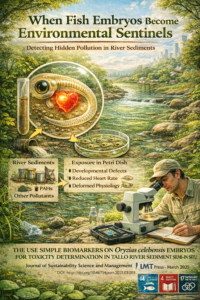
Observing how embryos grow, develop, and function can therefore reveal important clues about the health of an aquatic ecosystem. This biological approach offers a practical way to detect environmental threats that may not always be captured by chemical measurements alone. Among freshwater species in Indonesia, Oryzias celebensis has become an important organism for environmental monitoring. This ricefish species is native to Sulawesi and well adapted to tropical freshwater environments. Its embryos are transparent, allowing scientists to observe developmental processes such as organ formation, heart activity, and overall morphology without invasive procedures. Because of these characteristics, the species has gained attention as a useful model organism for studying ecological toxicity. Readmore...
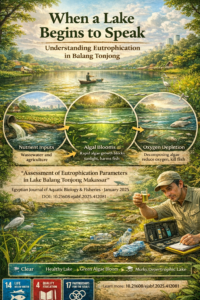
Lakes often appear calm and silent, reflecting the sky like natural mirrors. Yet beneath that quiet surface, complex ecological processes are constantly taking place. When scientists carefully observe these processes, a lake can reveal important messages about environmental change, human activity, and the future of freshwater ecosystems. One such story emerges from Lake Balang Tonjong in Makassar, South Sulawesi. Freshwater lakes are essential for human life. They support fisheries, supply water for communities, sustain biodiversity, and regulate local climate. However, many lakes around the world face a growing environmental problem known as eutrophication. This condition occurs when excessive nutrients—mainly nitrogen and phosphorus—enter a water body, often from domestic waste, agricultural runoff, or urban development. When nutrient levels rise too high, algae and aquatic plants grow rapidly, disturbing the natural balance of the ecosystem. Readmore...
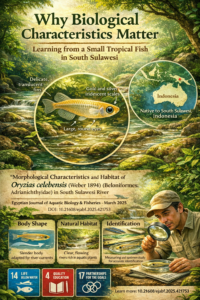
In the world of science, understanding the biological characteristics of a species is the first step toward protecting nature. Every organism carries clues about how life adapts, survives, and interacts with its environment. Even a small fish living quietly in a tropical river can reveal important lessons about biodiversity and ecosystem health. One such species is Oryzias celebensis, a small ricefish native to the rivers of South Sulawesi, Indonesia. At first glance, this fish may seem insignificant. The body shape of a fish, the size of its fins, the pattern of its scales, and its adaptation to flowing water all help researchers understand how the species survives in its habitat. These biological details also help scientists identify environmental changes that may threaten aquatic life. Readmore...
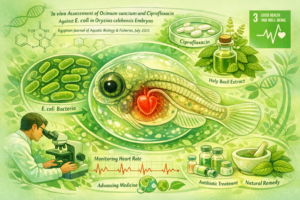
In the search for new ways to combat harmful bacteria, scientists are increasingly turning to unexpected allies in nature. One such ally is a small freshwater fish native to Indonesia known as the Celebes medaka (Oryzias celebensis). Although this species lives quietly in tropical waters, it has become an important model organism for understanding how living systems respond to infection and treatment. Remarkably, even the heartbeat of its developing embryos can reveal valuable insights into biological stress and recovery. Modern medicine faces a growing challenge: bacterial infections that become resistant to antibiotics. While pharmaceutical drugs remain essential tools, researchers are also exploring natural compounds that may complement conventional treatments. Plants long used in traditional medicine are particularly interesting because they contain bioactive molecules with antimicrobial properties. Among these plants, Ocimum sanctum, commonly known as holy basil, has attracted scientific attention due to its potential health benefits. Readmore..