
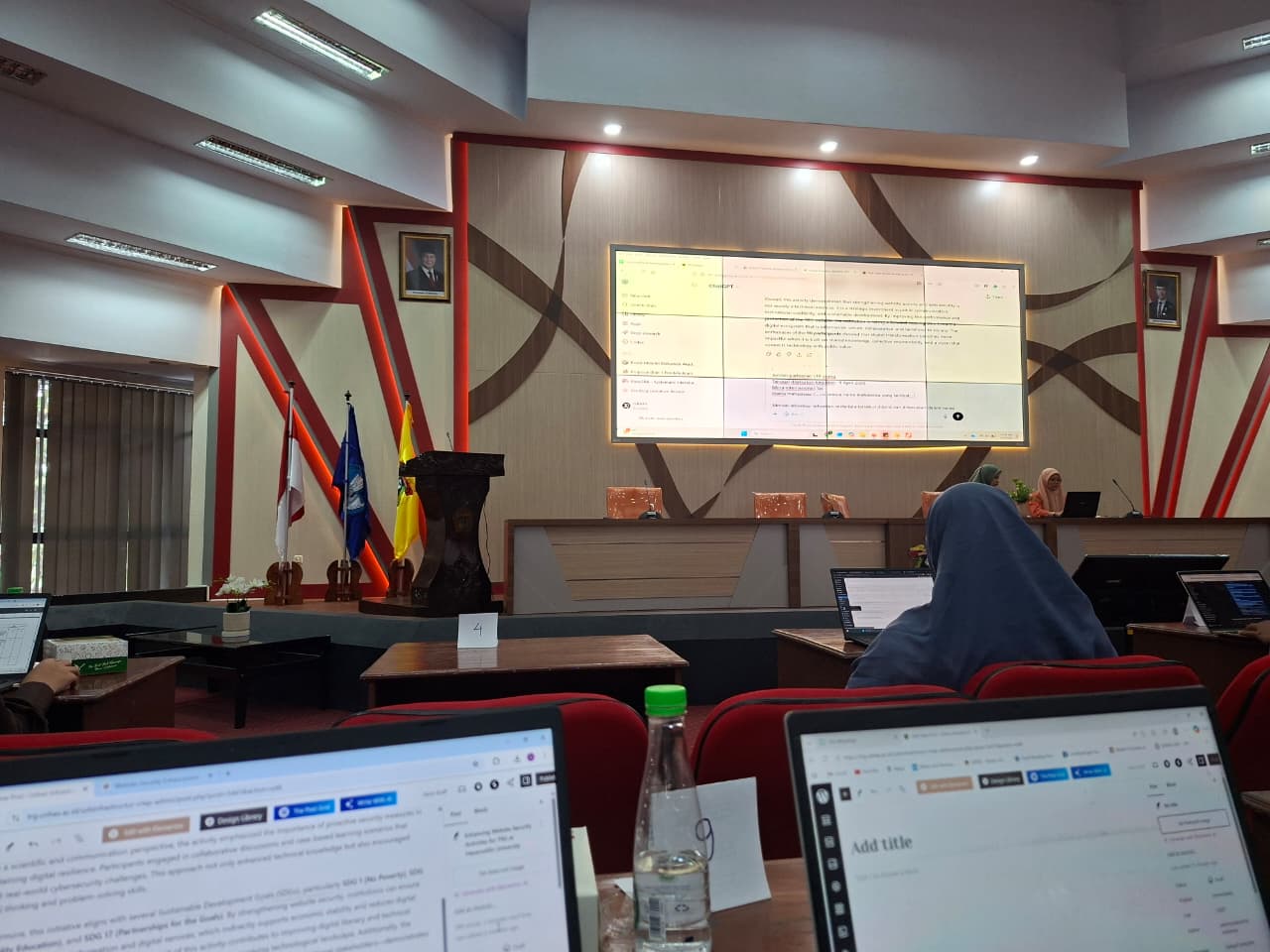

In the era of digital transformation, website security has become a critical component in ensuring the reliability, integrity, and trustworthiness of online information systems. Recognizing this urgency, a capacity-building activity titled “Peningkatan Aktivitas Keamanan Website TRG” was successfully conducted at the LPPM Building of Hasanuddin University. This initiative aimed to strengthen the security framework of the TRG website while fostering awareness and technical competence among participants regarding modern cybersecurity practices.
The activity was attended by 30 participants, consisting of academic staff, IT personnel, and researchers who are directly involved in managing digital platforms. Conducted on 9 April 2026, the program provided a structured and interactive environment for discussing emerging cyber threats, vulnerabilities, and mitigation strategies. Participants were introduced to essential concepts such as secure coding practices, vulnerability assessment, data protection protocols, and real-time monitoring systems. The sessions combined theoretical explanations with practical demonstrations to ensure comprehensive understanding.
From a scientific and communication perspective, the activity emphasized the importance of proactive security measures in maintaining digital resilience. Participants engaged in collaborative discussions and case-based learning scenarios that reflect real-world cybersecurity challenges. This approach not only enhanced technical knowledge but also encouraged critical thinking and problem-solving skills.
Furthermore, this initiative aligns with several Sustainable Development Goals (SDGs), particularly SDG 1 (No Poverty), SDG 4 (Quality Education), and SDG 17 (Partnerships for the Goals). By strengthening website security, institutions can ensure uninterrupted access to information and digital services, which indirectly supports economic stability and reduces digital inequality (SDG 1). The knowledge-sharing aspect of this activity contributes to improving digital literacy and technical education (SDG 4), equipping participants with skills relevant to the evolving technological landscape. Additionally, the collaborative nature of the program—bringing together experts, practitioners, and institutional stakeholders—demonstrates a strong commitment to partnerships and collective action (SDG 17).
The location of the activity at the LPPM Building of Hasanuddin University provided a conducive academic setting that encouraged knowledge exchange and interdisciplinary collaboration. The institutional support further highlighted the university’s commitment to strengthening digital governance and research infrastructure.
In conclusion, the “Peningkatan Aktivitas Keamanan Website TRG” activity represents a strategic step toward enhancing cybersecurity awareness and capacity within academic environments. By integrating scientific knowledge, practical application, and global development goals, this initiative not only improves website security but also contributes to broader efforts in building a secure, inclusive, and sustainable digital ecosystem.


