


MAKASSAR, Indonesia 21 April 2026 /TILA-TECH/–What if the future of fish farming depended not on bigger tanks or more feed—but on invisible allies? Recent research is showing that microscopic organisms like probiotics and prebiotics can significantly improve how we grow one of the world’s most important aquaculture species: Nile tilapia. A scientific article titled “Enhancing Aquaculture through Prebiotics, Probiotics, and Synbiotics in Nile Tilapia Farming,” published in the Journal of Fisheries and Environment by the Faculty of Fisheries, Kasetsart University (Thailand) on April 1, 2025, highlights a promising shift in aquaculture practices. But what does this mean in everyday terms?
Let’s break it down.
In simple language, probiotics are “good bacteria” that support fish health, much like yogurt supports human digestion. Prebiotics are nutrients that feed these good bacteria, helping them grow stronger. When combined, they are called synbiotics, a powerful duo that boosts fish immunity, digestion, and overall growth.
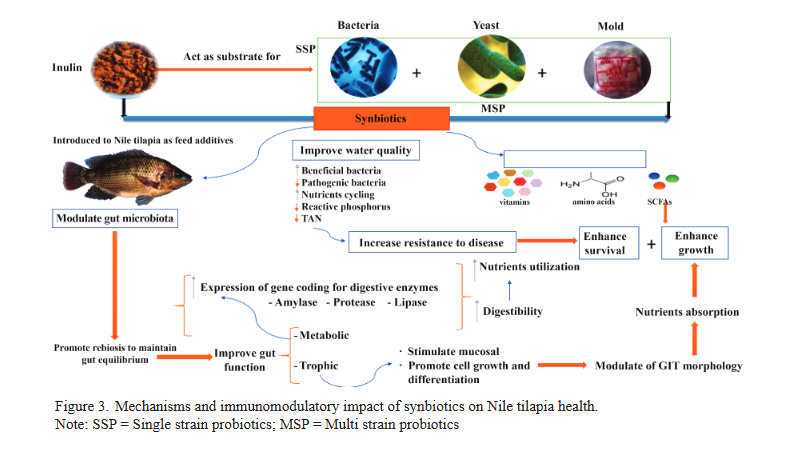
Traditionally, fish farmers have relied heavily on antibiotics and chemical inputs to prevent disease and increase production. However, this approach has raised concerns about environmental damage, antibiotic resistance, and food safety. That’s where these natural alternatives come in.
According to the study, adding probiotics and prebiotics to tilapia feed can improve survival rates, enhance growth performance, and reduce disease outbreaks. Healthier fish mean farmers can produce more with fewer losses—without harming the environment. It’s a win-win situation.
This innovation is closely aligned with Sustainable Development Goal (SDG) 14: Life Below Water, which aims to conserve and sustainably use marine and aquatic resources. By reducing chemical use and improving fish health naturally, this method supports more responsible aquaculture practices that protect aquatic ecosystems.
But the impact doesn’t stop there.
Healthier aquaculture systems also contribute indirectly to SDG 1 (No Poverty) by increasing farmers’ incomes, and SDG 3 (Good Health and Well-being) by ensuring safer food products. Knowledge-sharing about these methods supports SDG 4 (Quality Education), while protecting aquatic biodiversity links to SDG 15 (Life on Land). Finally, global collaboration in research and innovation reflects SDG 17 (Partnerships for the Goals).
In essence, something as small as beneficial bacteria can drive big changes—not just in fish farms, but in global sustainability efforts.
The takeaway is simple: the future of aquaculture doesn’t have to rely on heavy chemicals or risky practices. By working with nature instead of against it, we can build a more sustainable, healthy, and productive system—one fish at a time.
Reference: https://li01.tci-thaijo.org/index.php/JFE/article/view/263866