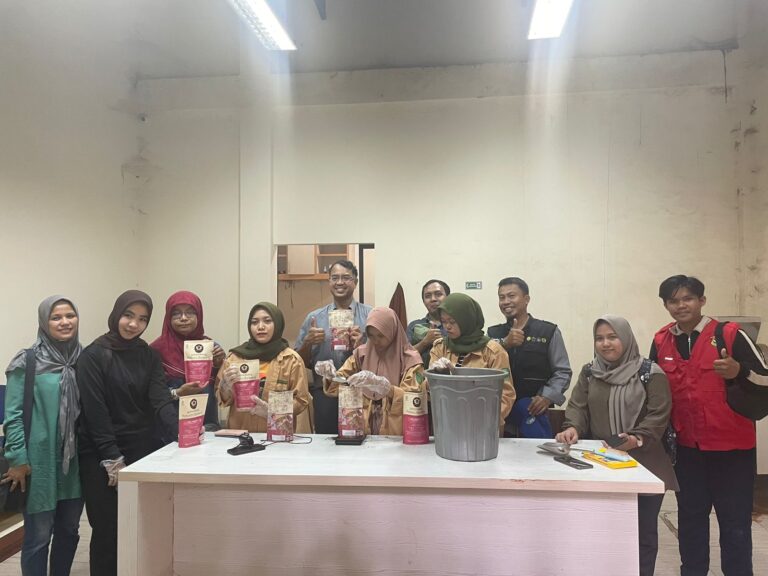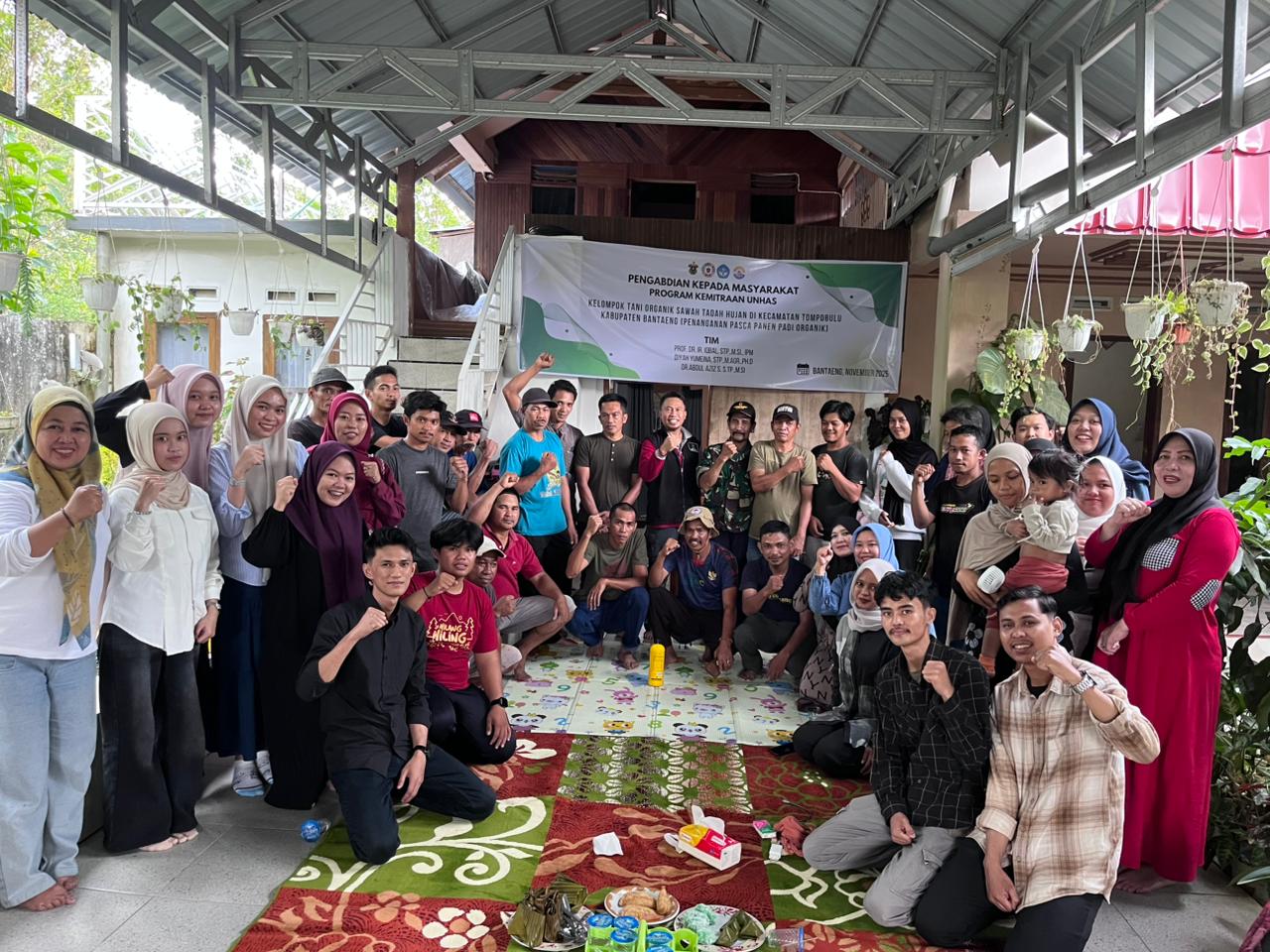


Bantaeng, November 29, 2025 – The Master of Agricultural Engineering Study Program at Hasanuddin University (UNHAS) carried out a community service activity under the UNHAS Partnership Program in Tompobulu District, Bantaeng Regency. The activity, themed “Organic Rice Farming Groups in Rainfed Fields in Tompobulu Subdistrict, Bantaeng Regency (Post-Harvest Handling of Organic Rice),”
The activity, which took the form of an information session and demonstration, was held on November 29, 2029, and was attended by members of the Bunga Padi Kel Banyorang Farmers Group, P4S Mattirowalie Kel Campaga, and the P4S Insan Cemerlang Group from Pattalassang Village. The farmers received explanations about organic rice cultivation, organic fertilizer production, and how to handle organic rice after harvest.
The UNHAS lecturer team, led by Prof. Dr. Ir. Iqbal, STP, MSi, IPM, was accompanied by Dr. Gemala Hardinashinta, STP; Intan Permatahati, STP, MT; Fateta Unhas teaching staff; and students from the UNHAS Agricultural Engineering master’s program. They provided educational materials and conducted a live demonstration of organic fertilizer production.
Prof. Dr. Ir. Iqbal stated that organic rice cultivation and post-harvest handling are very important for improving soil fertility, reducing health risks, improving rice quality, increasing farmers’ income, and reducing environmental impact. “With organic farming, agricultural sustainability can be longer than with conventional farming,” he said.
The group participants were very enthusiastic about this activity. They hope to practice organic rice cultivation more widely to increase their yields and advance the agricultural sector in Bantaeng Regency.
This community service activity is part of UNHAS’s efforts to support agricultural development in the region through the application of appropriate methods and technologies that can improve farmers’ welfare. With activities like this, it is hoped that good cooperation between academics and practitioners in the field can be established for the advancement of Indonesian agriculture.