MAKASSAR, Indonesia Apr 22 2026 /PharmaEpid RG/–Urinary tract infections (UTIs) are among the most common illnesses treated in hospitals and clinics. While antibiotics are essential for managing these infections, their overuse and misuse are becoming a growing concern worldwide. A recent study from Indonesia sheds light on how antibiotic consumption patterns over five years may impact both patient outcomes and public health.
The research, titled “Five years of antibiotic consumption for urinary tract infection patients in Indonesia’s Provincial Public Hospital” (Publisher: Bulgarian Pharmaceutical Scientific Society), published in Pharmacia (Volume 70, Pages 493–498) on July 21, 2023, by Ikhwan Yuda Kusuma, Dian Ayu Eka Pitaloka, Noorma Devita Arbi, Sunarti Sunarti, Hening Pratiwi, Ahmed Altayeb Ali Omer, and Muh. Akbar Bahar, analyzed antibiotic use trends among UTI patients from 2017 to 2021. The study found that antibiotic consumption fluctuated significantly, with the highest use recorded in 2018 and the lowest in 2017, highlighting inconsistencies in prescribing practices.
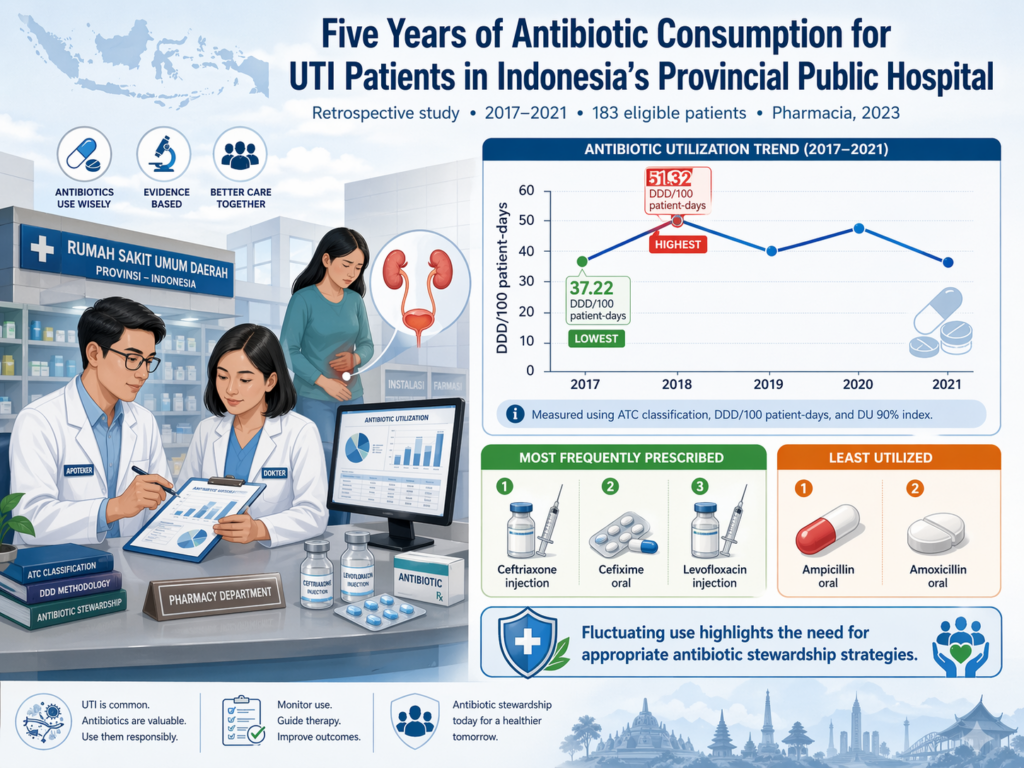
The findings revealed that broad-spectrum antibiotics, particularly ceftriaxone injections, were the most frequently prescribed medications. While effective, these powerful drugs should be used carefully. Overuse can lead to antimicrobial resistance, a condition where bacteria become resistant to treatment, making infections harder—and more expensive—to cure. The study also showed that injectable antibiotics were often preferred over oral forms, suggesting a tendency toward more aggressive treatment approaches.
The importance of this research lies in its ability to provide real-world evidence on how antibiotics are used in everyday clinical practice. By identifying trends and potential overuse, the study offers valuable insights for improving prescribing behavior among healthcare professionals. It also supports the development of antibiotic stewardship programs, which aim to ensure that antibiotics are used only when necessary and in the most effective way. This is crucial not only for patient safety but also for preserving the effectiveness of antibiotics for future generations.
From a global perspective, this study contributes to several key development priorities. It directly supports SDG 3 (Good Health and Well-being) by promoting safer and more effective treatment strategies. By highlighting the need for better education and training in rational drug use, it also aligns with SDG 4 (Quality Education). Furthermore, addressing antibiotic resistance requires collaboration across institutions and countries, reflecting SDG 17 (Partnerships for the Goals).
Ultimately, this study sends a clear message: antibiotics are powerful tools, but they must be used wisely. By improving how these medicines are prescribed and monitored, healthcare systems can protect both current and future generations from the growing threat of antibiotic resistance.
Reference:
DOI: https://doi.org/10.3897/pharmacia.70.e107519
Contact:
Muh. Akbar Bahar, Ph.D
+62 819-4422-8642
akbarbahar@unhas.ac.id