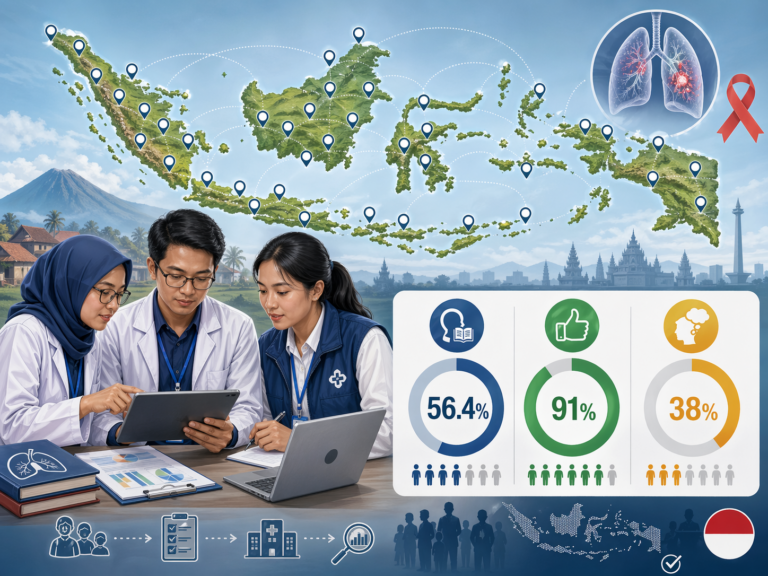

MAKASSAR, Indonesia June 04 2026 /PharmaEpid RG/–Pregnancy is a remarkable period of transformation. As a baby grows, a mother’s body undergoes profound physiological changes to support fetal development. While these changes are essential for a healthy pregnancy, they can also affect how medicines behave inside the body. For women who require antipsychotic medications to manage serious mental health conditions such as schizophrenia, bipolar disorder, or severe psychosis, these changes create an important clinical challenge: how can treatment remain effective while ensuring the safety of both mother and baby?
A recent study titled “Trimesters Induced Changes in Pharmacokinetic Parameters of Antipsychotics”, published by Springer Vienna in Archives of Women’s Mental Health (Volume 29, Issue 1) on February 2026, examined how pregnancy-related physiological changes influence the pharmacokinetics of antipsychotic medications. Conducted by Ida Adhayanti, Robiyanto, Muh. Akbar Bahar, and Elly Wahyudin, the systematic review analyzed evidence from multiple studies investigating how drug absorption, distribution, metabolism, and elimination change throughout pregnancy.
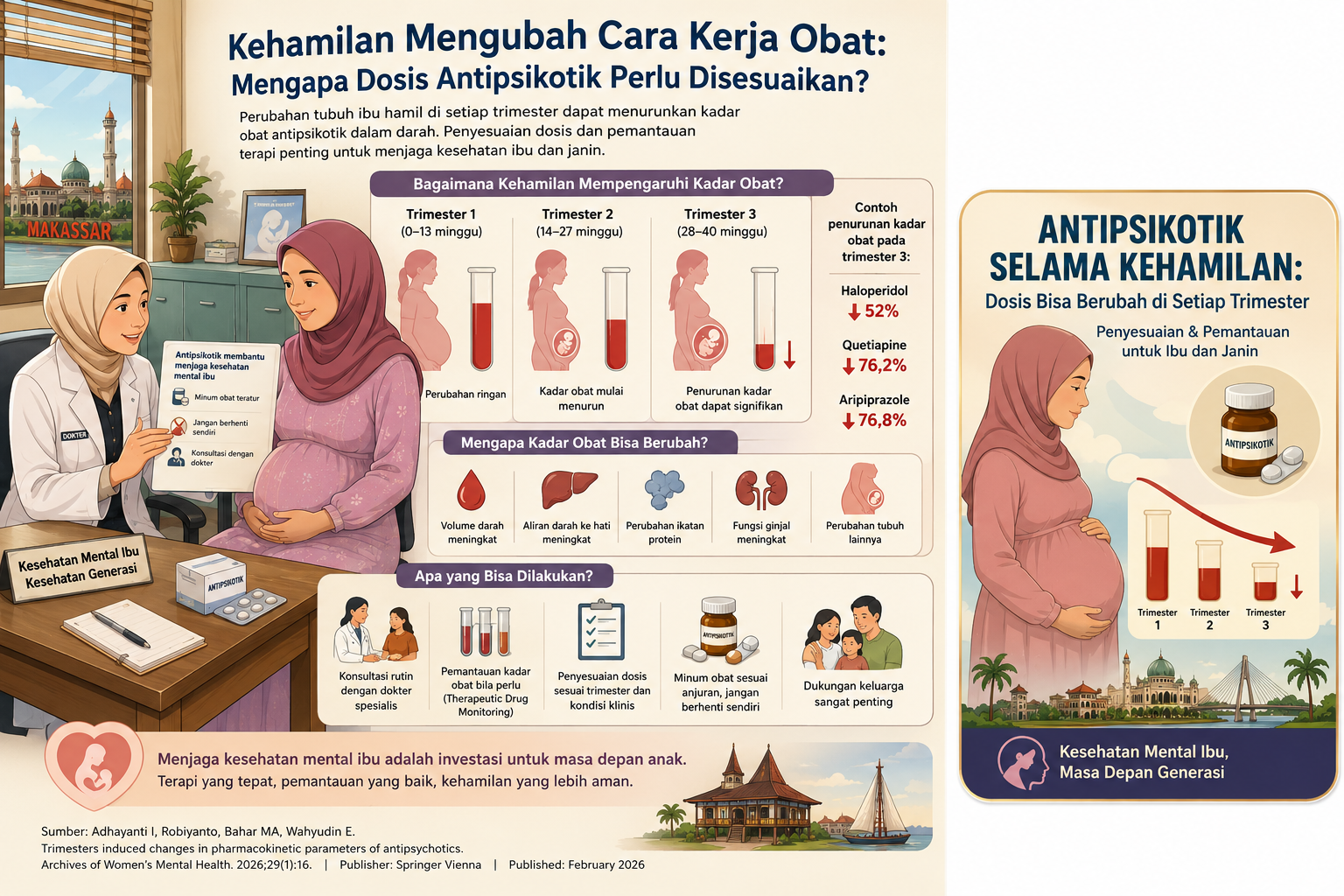
The findings reveal that pregnancy can significantly alter the concentration of antipsychotic drugs in the bloodstream. Physiological changes such as increased plasma volume, enhanced liver blood flow, altered protein binding, and increased kidney function can reduce drug exposure as pregnancy progresses. In some cases, these changes are substantial. The review found that plasma concentrations of haloperidol may decrease by as much as 52% during the third trimester. Similarly, concentrations of quetiapine and aripiprazole can fall by approximately 76%, potentially reducing their therapeutic effectiveness.
These findings are important because inadequate treatment of severe mental illness during pregnancy can have serious consequences. Poorly controlled psychiatric conditions may increase the risk of relapse, hospitalization, self-harm, poor prenatal care, preterm birth, and adverse neonatal outcomes. At the same time, unnecessarily increasing medication doses could expose both mother and fetus to avoidable risks. Achieving the right balance requires careful clinical decision-making supported by scientific evidence.
The study highlights the growing importance of personalized medicine in maternal healthcare. Rather than applying a “one-size-fits-all” approach, clinicians may need to adjust medication doses throughout pregnancy and monitor drug levels more closely. Advanced approaches such as physiologically based pharmacokinetic (PBPK) modeling can help predict how drug exposure changes during each trimester, allowing healthcare professionals to optimize treatment while maintaining safety.
The significance of this research extends beyond psychiatry. It directly contributes to SDG 3 (Good Health and Well-being) by promoting safer and more effective treatment for pregnant women with mental health conditions. It also supports SDG 4 (Quality Education) through the generation and dissemination of evidence that can improve healthcare practice. Furthermore, the collaboration among researchers and healthcare professionals reflects the spirit of SDG 17 (Partnerships for the Goals).
Ultimately, this study reminds us that pregnancy is not only a period of biological change but also a time when medication management becomes more complex. By understanding how antipsychotic drugs behave across different trimesters, healthcare providers can better protect both maternal mental health and fetal well-being.
Reference:
DOI: https://doi.org/10.1007/s00737-025-01665-z
Contact:
Muh. Akbar Bahar, Ph.D
+62 819-4422-8642
akbarbahar@unhas.ac.id