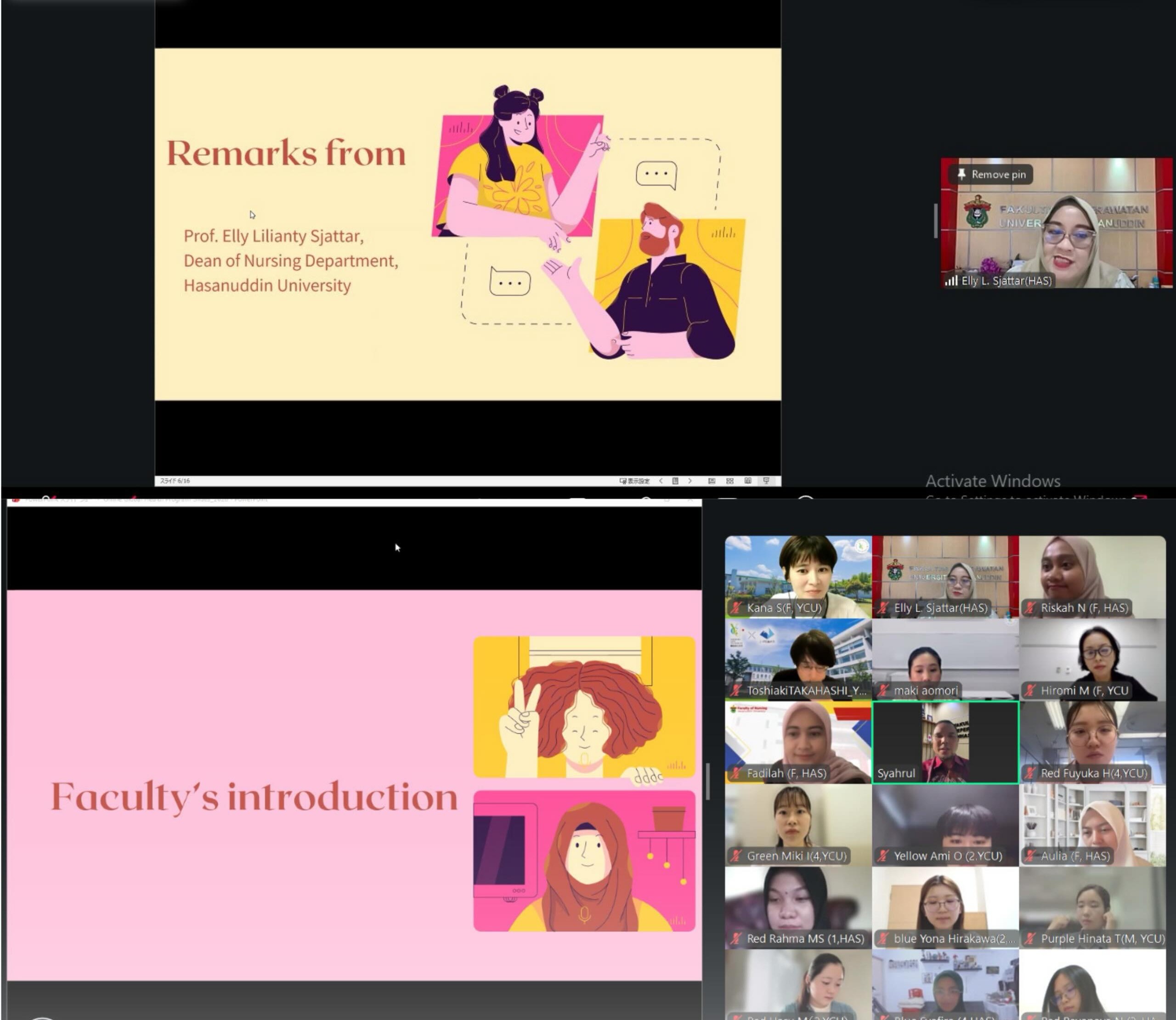

MAKASSAR, Indonesia, July 07, 2026 – The Faculty of Nursing, Universitas Hasanuddin, successfully organized the Online Global Health Program (OGHP) through Zoom Meeting on June 25, 2026, as part of its ongoing commitment to strengthening international academic collaboration and preparing nursing students for the rapidly evolving landscape of global healthcare. The program represented a strategic partnership between the Faculty of Nursing, Universitas Hasanuddin and Yokohama City University (YCU), Japan, under the theme “Utilization of Devices and the Advancement of AI in Nursing.”
The primary objective of this program was to strengthen international collaboration while enhancing students’ knowledge and global perspectives on the utilization of innovative healthcare devices, nursing bioengineering, and artificial intelligence (AI) in nursing practice.
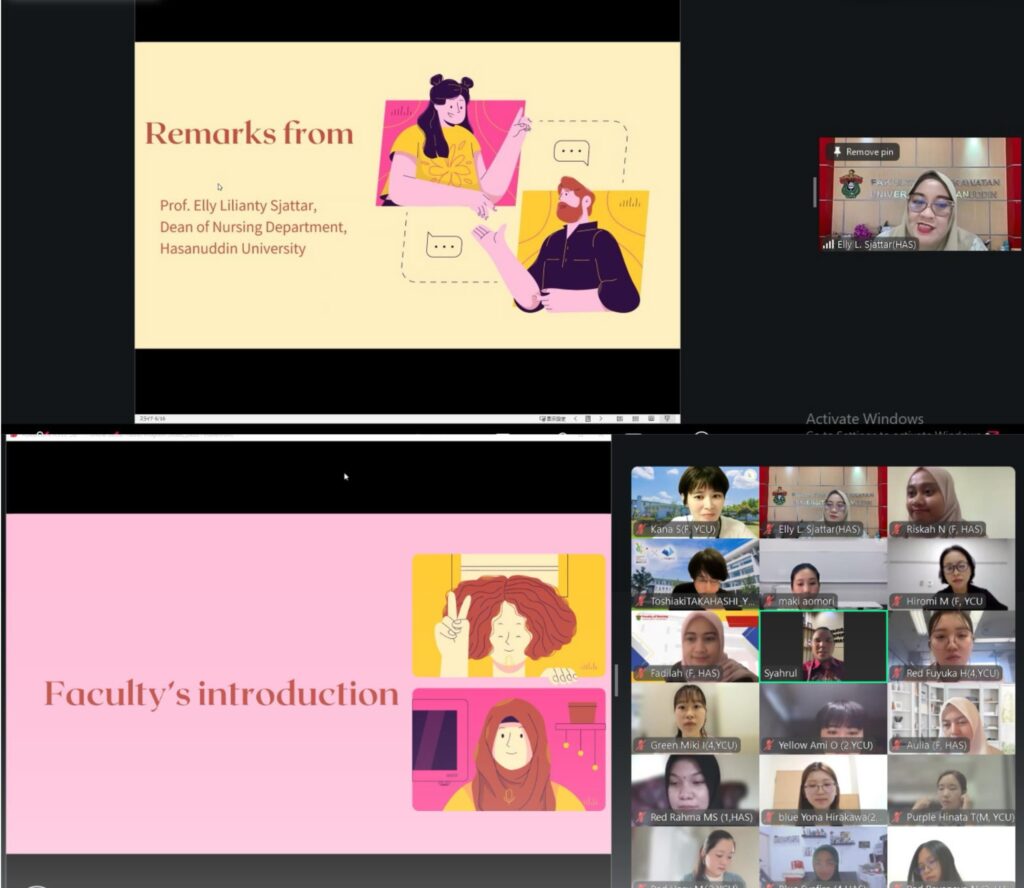
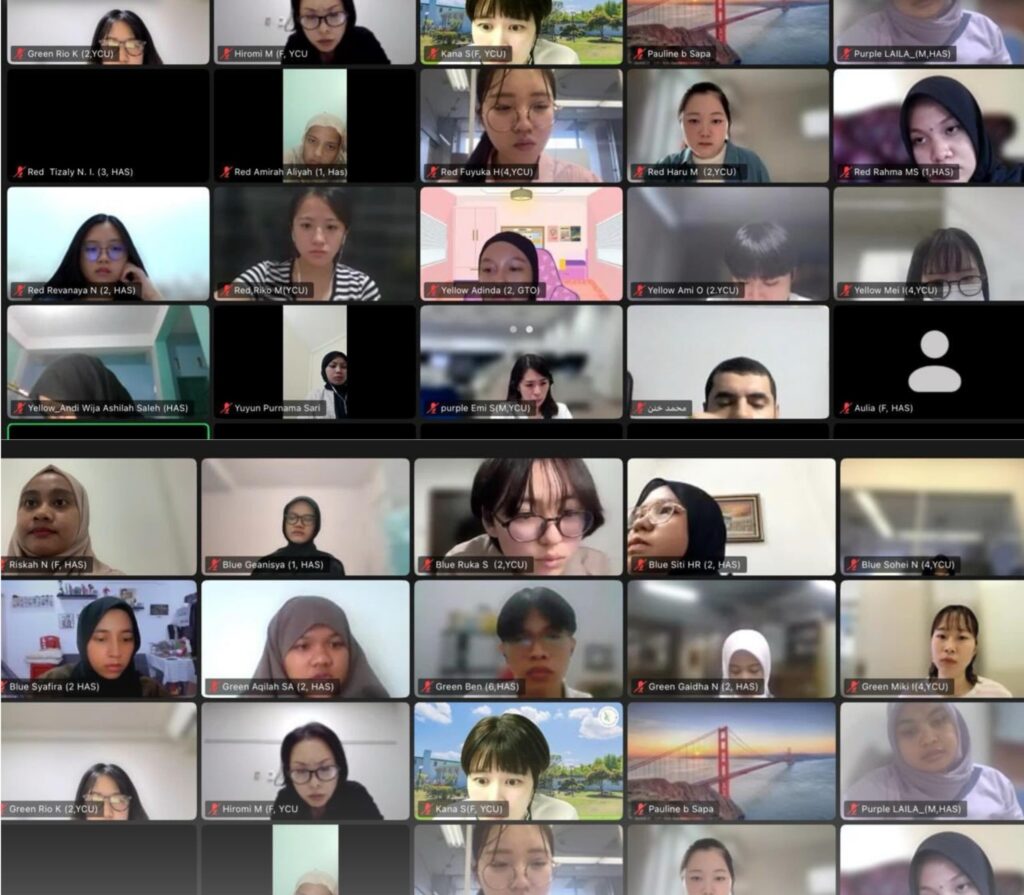
The program was attended by 20 students from the Faculty of Nursing, Universitas Hasanuddin and 12 students from YCU, who actively participated in presentations, interactive discussions, and a mini lecture delivered by Saldy Yusuf, S.Kep., Ns., MHS., Ph.D., alongside Prof. Hideto Muta. These academic sessions created valuable opportunities for participants to exchange ideas, compare healthcare perspectives, and develop a deeper appreciation of global nursing practices. The activity was also attended by PEDNRG lecturers, including Nur Fadilah, S.Kep., Ns., MN., who accompanied and supported the students throughout the program. Among the student participants were Muti Sahida. UM, S.Kep., Ns., Cristian Somalinggi, S.Kep., Ns., Ninda Regita Cahyani, S.Kep., Ns., and many other students who actively contributed to the learning sessions.
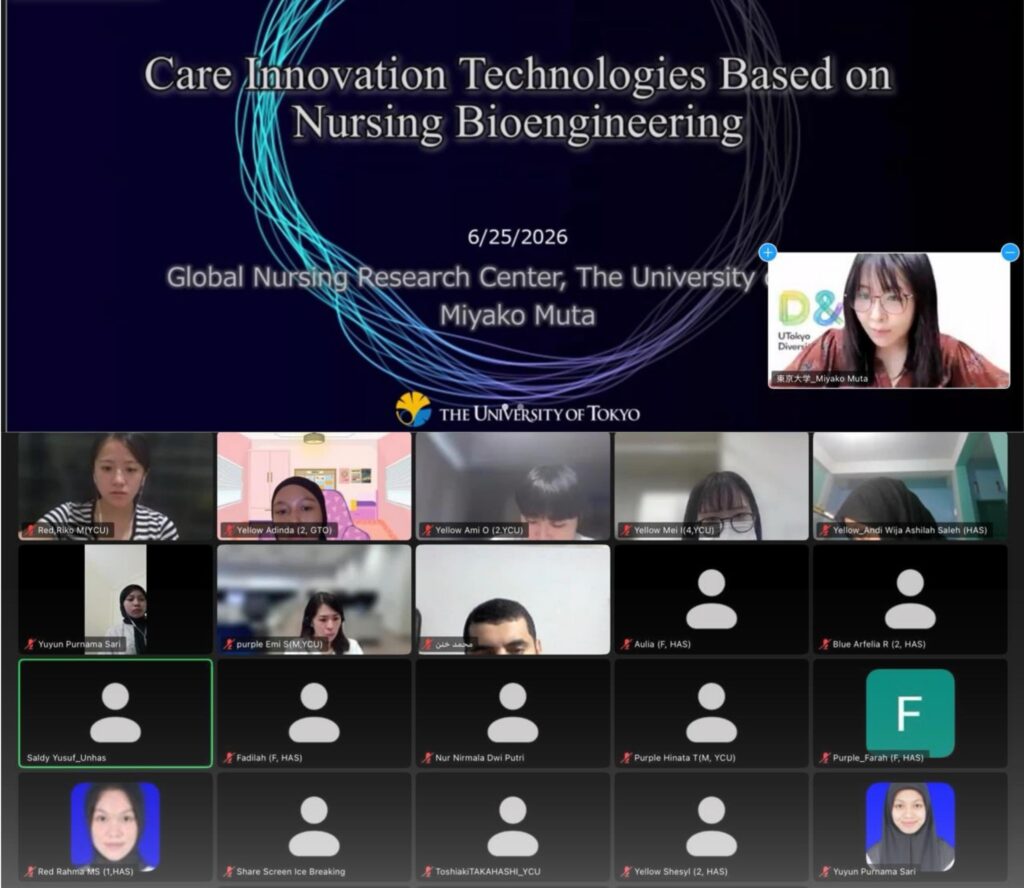
A highlight of the program was the distinguished lecture delivered by Prof. Hideto Muta (Bioengineering and Healthcare Innovation Technology, The University of Tokyo, Japan), who presented an inspiring session entitled “Care Innovation Technologies Based on Nursing Bioengineering.” Her presentation introduced participants to the latest developments in nursing bioengineering, demonstrating how advanced technologies and AI-driven innovations can contribute to more effective, efficient, and patient-centered healthcare services. The lecture stimulated engaging discussions regarding the future role of nurses in integrating technological innovations into clinical practice while maintaining compassionate, human-centered care.
This international academic collaboration reflects the Faculty of Nursing’s continuous efforts to cultivate globally competent nursing graduates who are equipped with scientific knowledge, intercultural communication skills, and technological literacy. By connecting students with international experts and encouraging collaborative learning, the program provides meaningful experiences that prepare future nurses to contribute effectively within an increasingly interconnected global healthcare environment.
Furthermore, this activity strongly supports SDGs 3 (Good Health and Well-being) through the dissemination of innovations that have the potential to enhance healthcare quality and patient outcomes. In addition, it advances SDGs 4 (Quality Education) by providing inclusive, internationally oriented educational opportunities that strengthen students’ competencies and global perspectives. Finally, the collaboration exemplifies SDGs 17 (Partnerships for the Goals), highlighting the importance of sustained international cooperation between higher education institutions in advancing nursing education, research, innovation, and healthcare development worldwide.