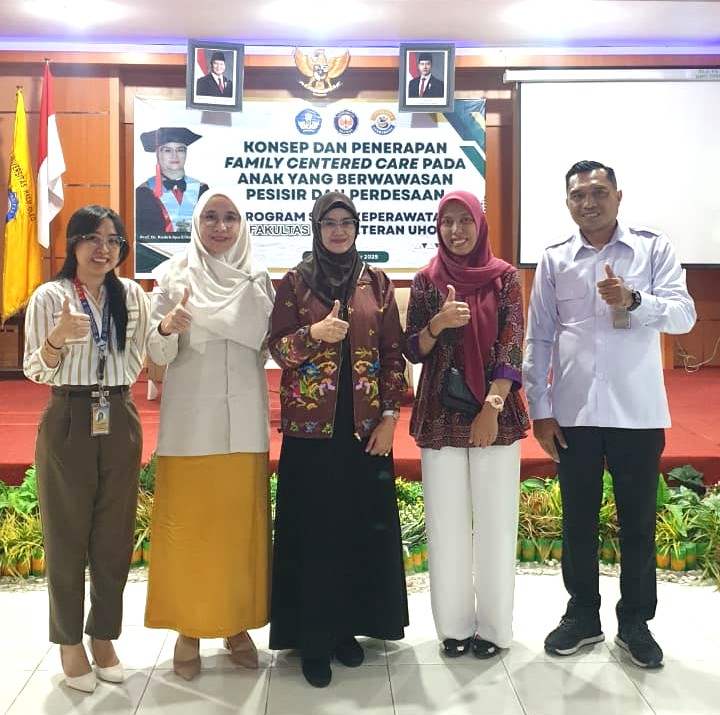

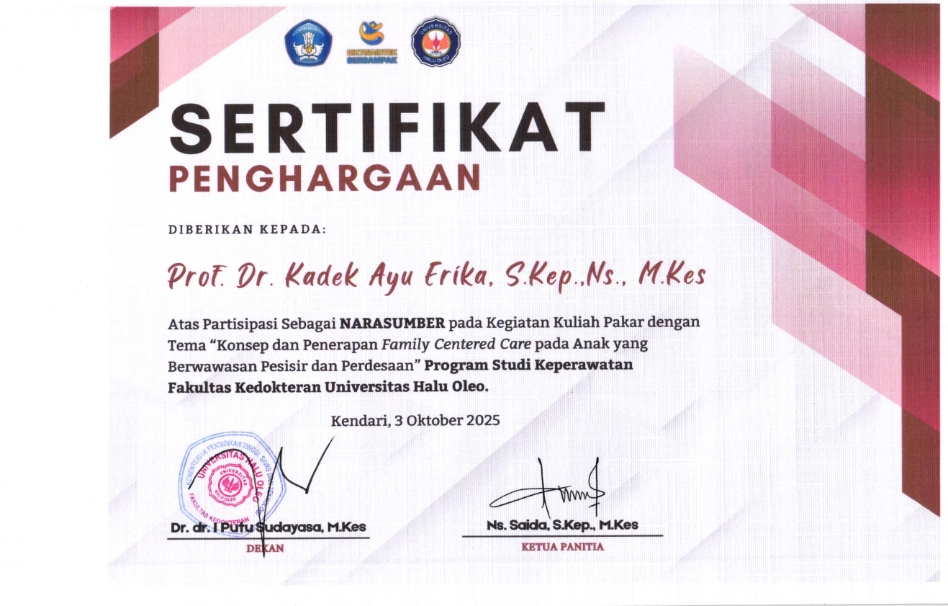
MAKASSAR, Indonesia May 13, 2026 — Efforts to improve child healthcare services in Indonesia continue to emphasize inclusive, family-oriented, and community-based approaches, particularly for children living in coastal and rural regions where access to healthcare facilities remains limited. In response to these challenges, an academic expert lecture entitled “Family Centered Care for Children with Coastal and Rural Perspectives” was conducted as part of a collaborative educational initiative aimed at strengthening nursing knowledge and practical competencies in pediatric healthcare. The activity was held at Aula Hipocrates, Faculty of Medicine, Universitas Halu Oleo, and successfully gathered 100 participants consisting of students, lecturers, healthcare practitioners, and academic stakeholders.
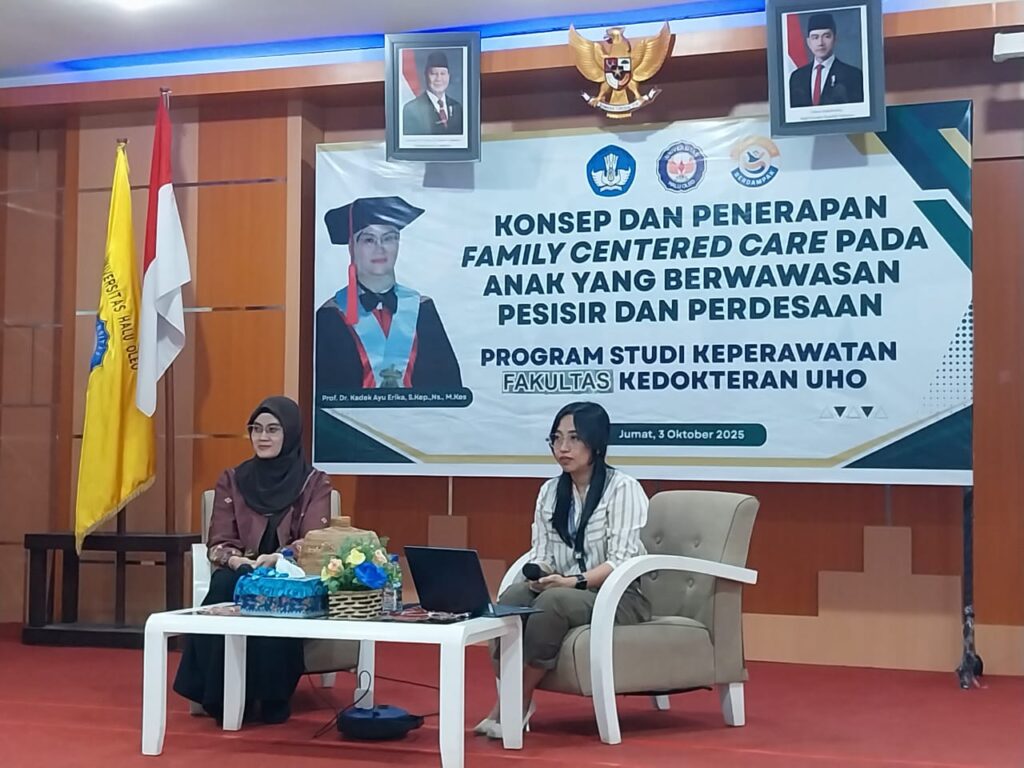
The program took place on Friday, 03 October 2025, at 14.00 WITA until completion, featuring by Prof. Dr. Kadek Ayu Erika, S.Kep., Ns., M.Kes., as the Leader of PEDNRG, as the invited speaker who delivered comprehensive insights regarding the implementation of Family Centered Care (FCC) for children living in underserved communities. FCC emphasizes active family participation in every stage of child healthcare, recognizing parents and caregivers as essential partners in children’s recovery and wellbeing. In coastal and rural settings, this approach is particularly important due to geographical barriers, limited healthcare resources, and cultural diversity influencing health-seeking behaviors.
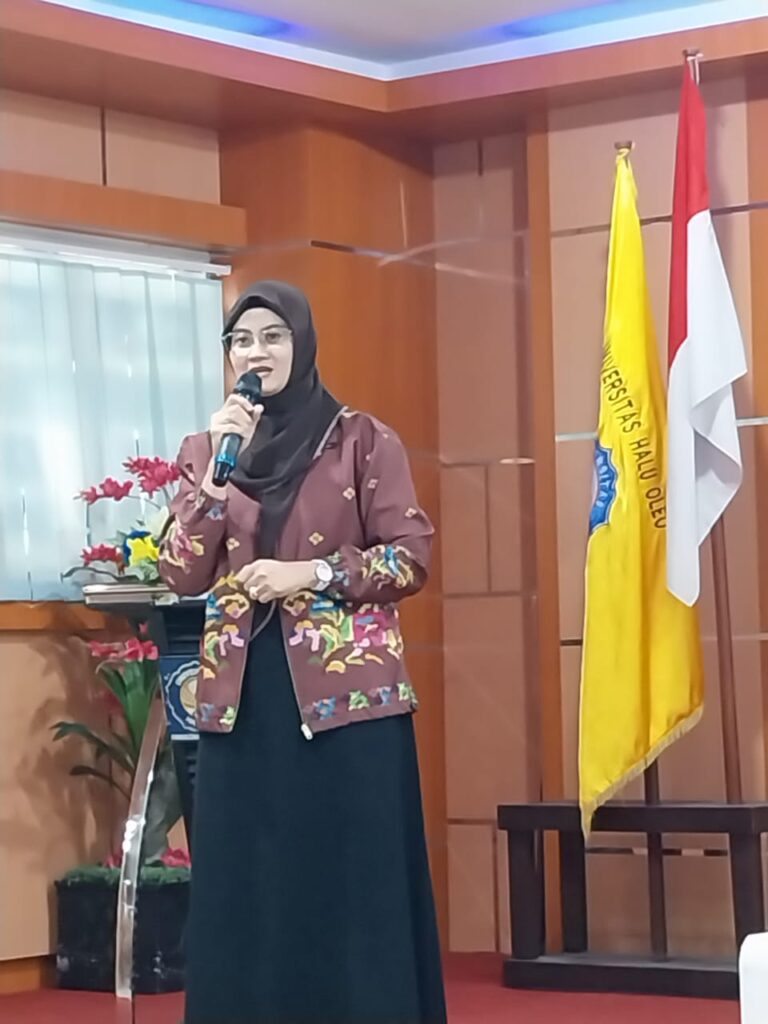
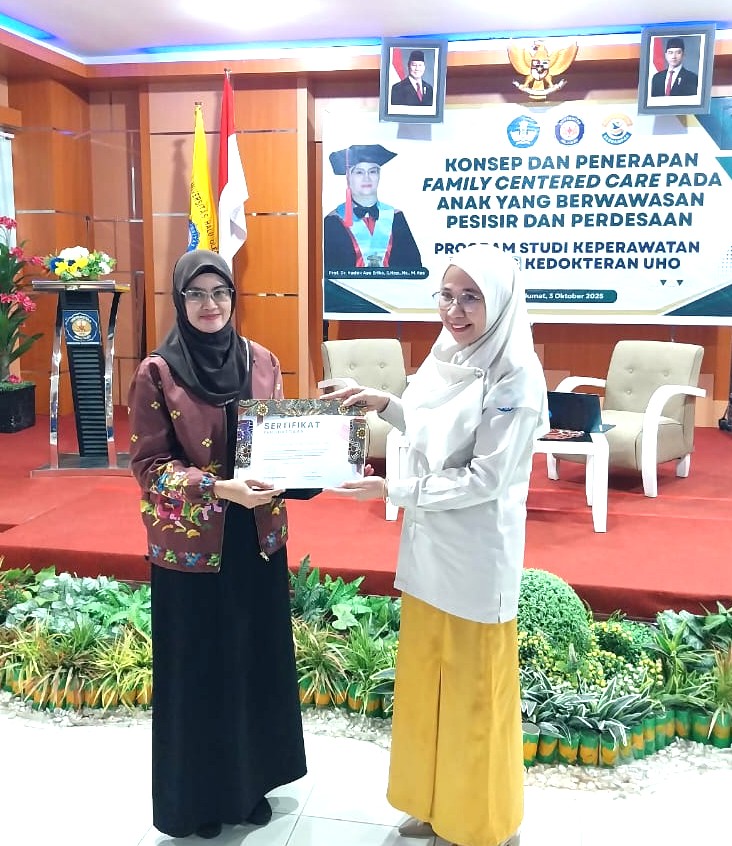
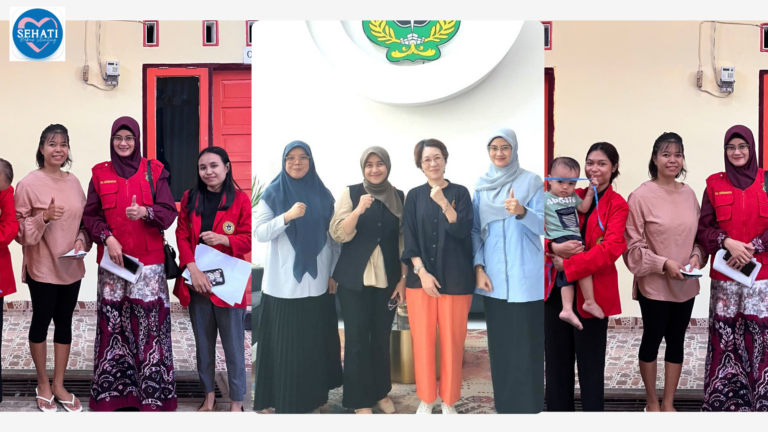
Session Focus: Family Centered Care, roles as nurses, and SEHATI application for parents in remote and coastal areas
During the session, participants explored how nurses play strategic roles as educators, facilitators, and advocates for families. The discussion highlighted the importance of respecting local cultural values while strengthening communication between healthcare providers and communities through digital innovation. One of the featured innovations was the utilization of the SEHATI application, which supports communication and health education for parents in remote and coastal areas. Through digital connectivity, families are able to access healthcare information, communicate with providers, and actively participate in child health management despite limitations in distance and healthcare accessibility.
Strengthening Education, Equity, and Collaboration
This academic forum encouraged knowledge exchange, strengthened professional collaboration, and promoted equitable pediatric healthcare education to support sustainable community health development in coastal and rural areas.
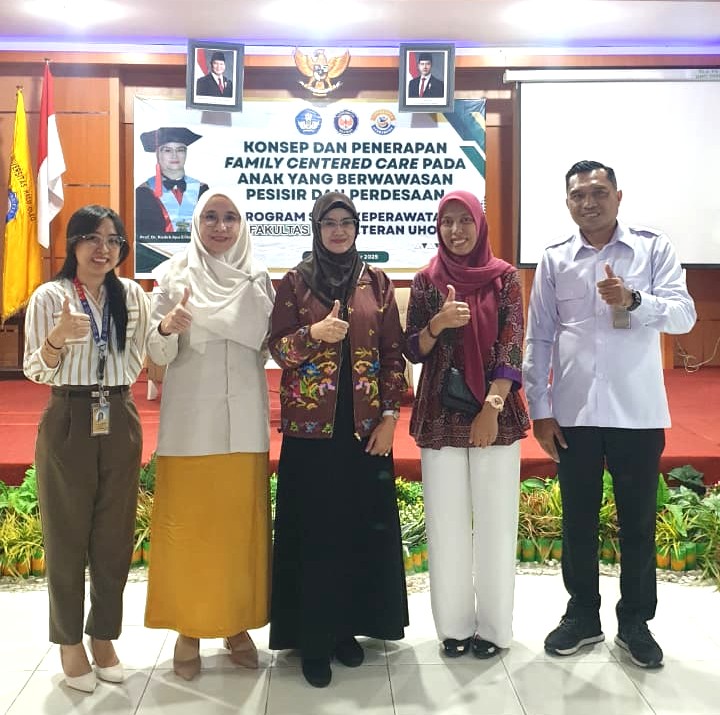
Appreciation
Appreciation is extended to Universitas Halu Oleo, participants, and collaborating institutions for supporting pediatric healthcare education and collaboration initiatives.
The activity reflected a strong commitment to achieving SDGs 3 (Good Health and Well-Being) through the promotion of Family Centered Care and digital health innovation for children in coastal and rural communities; SDGs 1 (No Poverty) by improving access to child health education and reducing healthcare inequalities; SDGs 4 (Quality Education) through knowledge sharing and competency development for healthcare professionals; and SDGs 17 (Partnerships for the Goals) by strengthening collaboration between academic institutions and healthcare stakeholders to support sustainable child healthcare services in Indonesia.
In future, the expert lecture strengthened participants’ understanding of Family Centered Care for children in coastal and rural areas while promoting collaborative, culturally sensitive, and technology-supported pediatric healthcare in Indonesia.