
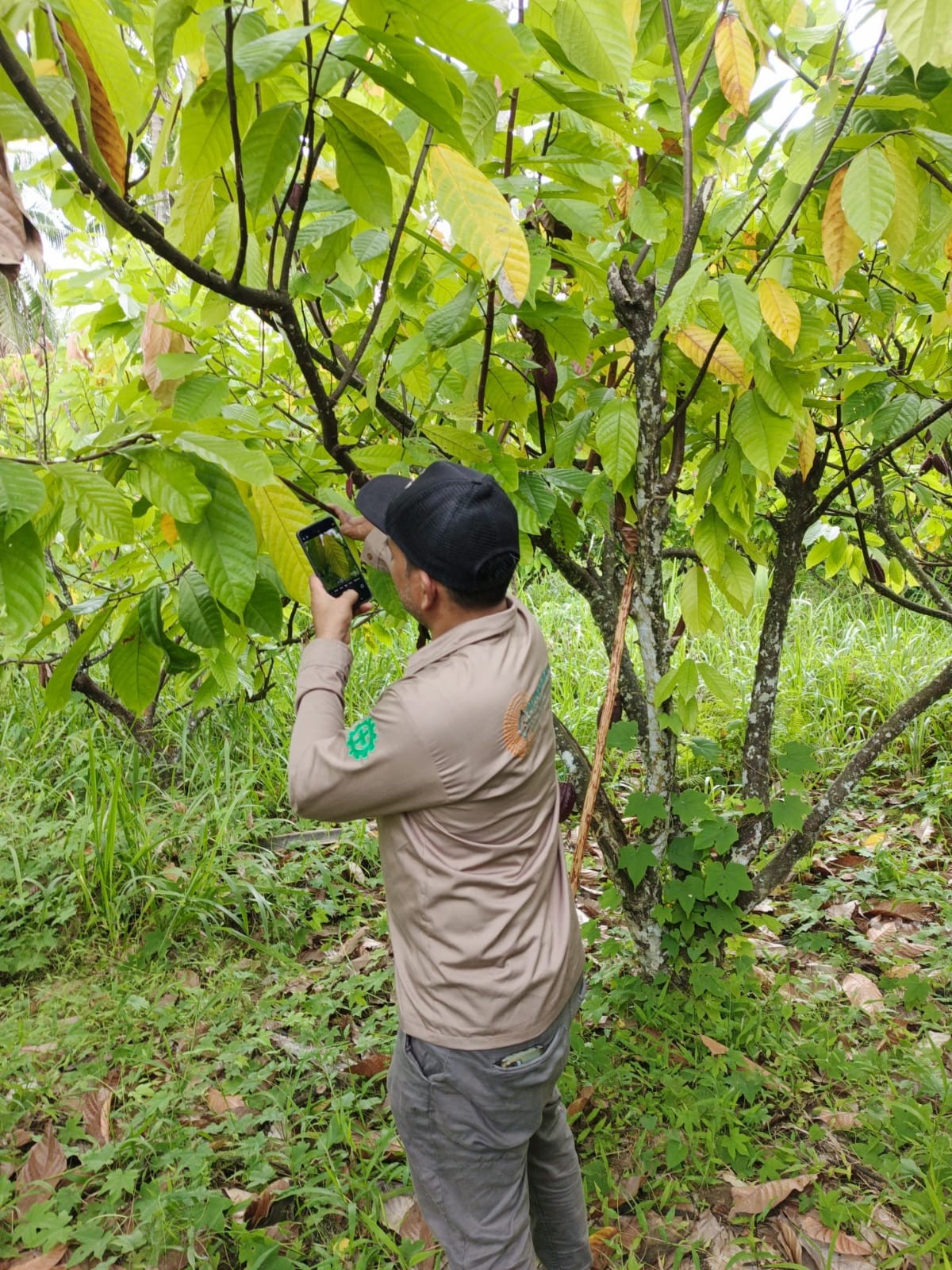

Addressing plant disease outbreaks in tropical agricultural systems requires rapid, accurate, and scalable approaches. In response to this challenge, a field activity titled “Field Activity in Kolaka: Computer Vision Aids Early Detection of Phytophthora” was conducted in Desa Bende, Kolaka. This initiative highlights the integration of digital technology with field-based plant pathology to improve early detection and management of destructive diseases caused by Phytophthora species.
The activity took place on September 27, 2025, involving 6 participants consisting of researchers and field assistants. The fieldwork focused on utilizing image-based screening methods powered by computer vision to identify early symptoms of disease on cocoa plants. In humid tropical environments such as Kolaka, plant diseases tend to spread rapidly due to favorable climatic conditions. Therefore, early detection becomes critical to prevent severe yield losses and widespread infection.
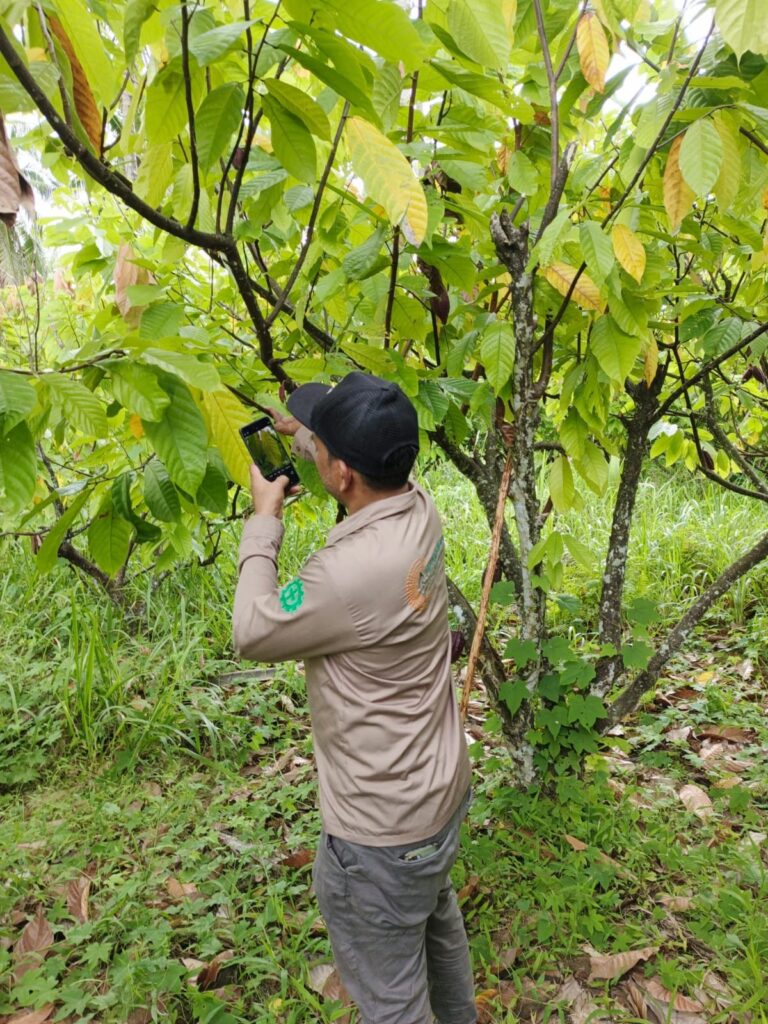
Through this activity, participants applied low-cost imaging techniques using mobile devices to capture visual symptoms directly from the field. These images were then analyzed using computer vision approaches, allowing for quick identification of suspected infections. This method enables researchers and agricultural extension teams to flag potential disease cases earlier, prioritize samples for laboratory confirmation, and implement targeted management strategies. Compared to conventional methods, this approach significantly reduces time and cost while improving response efficiency in the field.
Beyond its technical contributions, the activity also served as a platform for experiential learning and knowledge exchange. Participants engaged directly with real-world agricultural conditions, enhancing their understanding of disease epidemiology, environmental interactions, and digital diagnostic tools. This hands-on experience is essential in building the capacity of young researchers to address future agricultural challenges using interdisciplinary approaches.
From a sustainable development perspective, this initiative aligns closely with several key Sustainable Development Goals (SDGs). It directly contributes to SDG 1: No Poverty by supporting improved crop productivity and reducing economic losses for farmers affected by plant diseases. Additionally, it supports SDG 4: Quality Education through practical, field-based learning experiences that strengthen technical and analytical skills among participants. Furthermore, the collaborative nature of this activity reflects the principles of SDG 17: Partnerships for the Goals, as it encourages cooperation between researchers, local communities, and agricultural stakeholders in addressing shared challenges.
In the long term, the implementation of computer vision for plant disease detection holds significant potential for scaling up agricultural monitoring systems. By combining technological innovation with field-based validation, this approach can contribute to the development of precision agriculture practices that are both efficient and sustainable. The Kolaka field activity represents an important step toward transforming traditional plant disease management into a more proactive, data-driven system.
Ultimately, this initiative demonstrates how science and technology can be effectively applied at the grassroots level to enhance agricultural resilience. By empowering researchers with modern tools and practical experience, it lays the groundwork for more responsive and sustainable plant health management strategies in tropical regions.


