
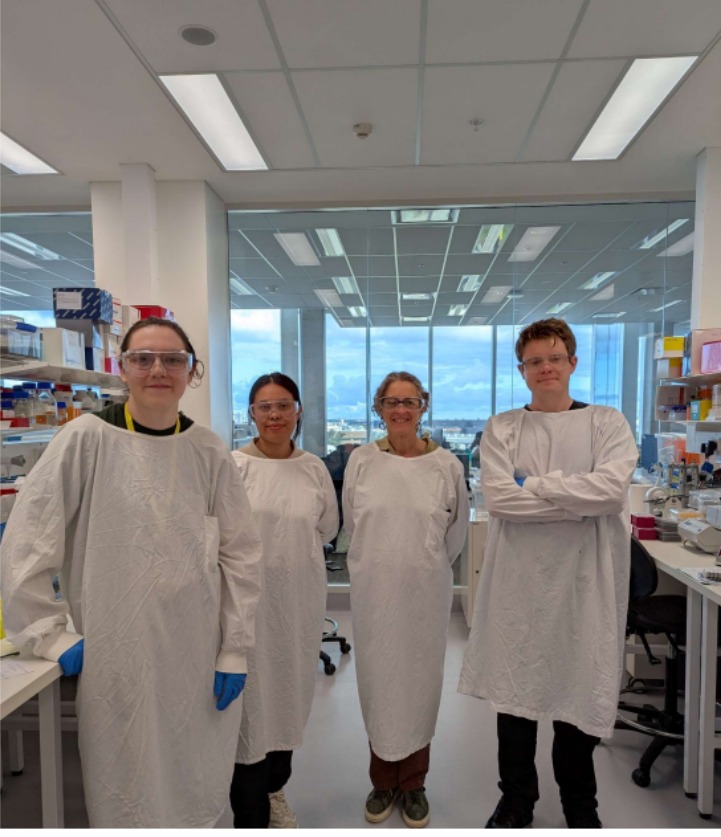

Strengthening global research networks has become increasingly important in addressing complex agricultural challenges, particularly those affecting key commodities such as cocoa. In this context, Hasanuddin University (Unhas) initiated an international collaboration with the University of Sydney focused on advancing research in cocoa diseases, especially those caused by major phytopathogens. This partnership represents a strategic effort to integrate scientific expertise, technological innovation, and capacity building in order to enhance sustainable agricultural practices.
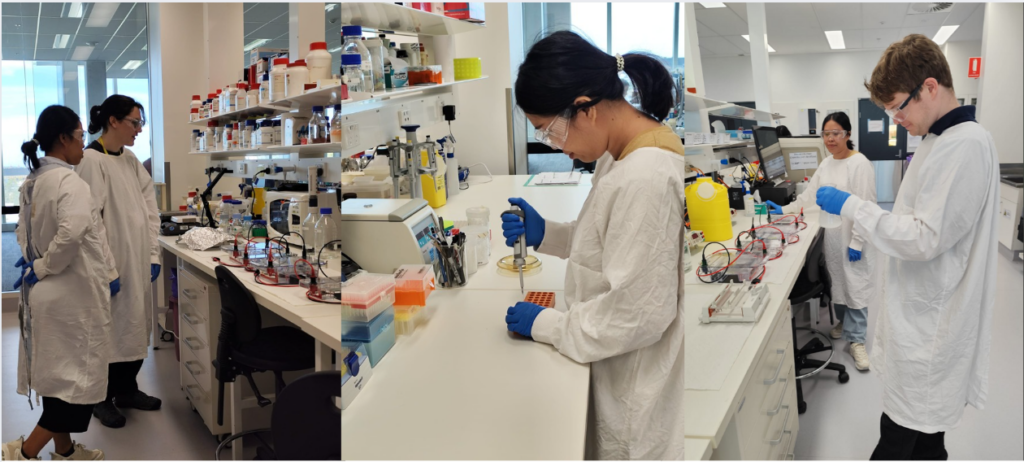
The activity was conducted on August 11, 2025, at the University of Sydney, involving a focused group of 6 participants from Unhas. This limited number of participants allowed for intensive, hands-on engagement and personalized mentorship. A central highlight of this collaboration was the opportunity for young Unhas lecturers to gain direct exposure to advanced laboratory techniques, disease diagnostics, and experimental methodologies under the guidance of leading international experts. The program was further strengthened through the involvement of Dr. Peri Tobias and Dr. Jacob Dawn as key international collaborators, whose expertise significantly contributed to the depth and quality of the training sessions.
In addition, the participation of Eirene Brugman, S.P., M.Sc. as a contributing academic provided valuable support in bridging theoretical knowledge with practical applications. The collaborative environment fostered not only knowledge transfer but also critical discussions on emerging challenges in cocoa disease management, including pathogen variability, climate-driven disease dynamics, and the integration of digital technologies such as AI-based monitoring systems.
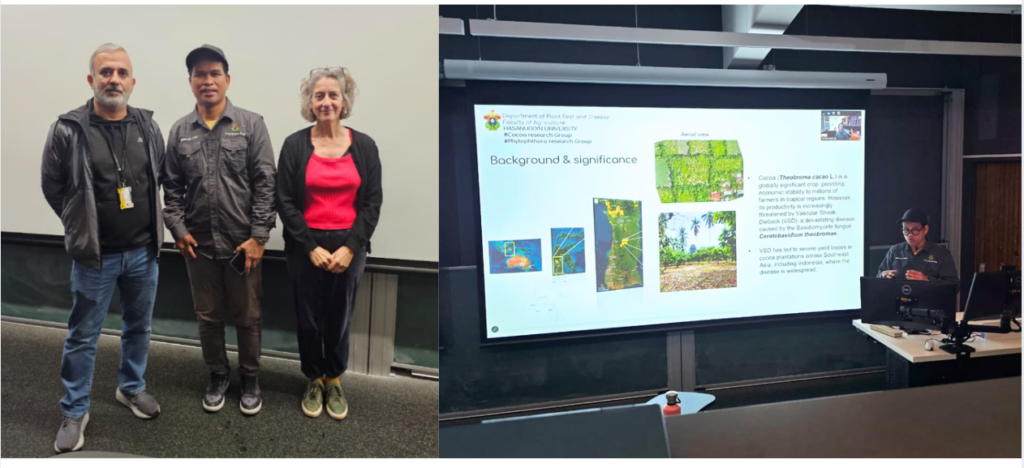
From a broader perspective, this activity strongly aligns with several Sustainable Development Goals (SDGs), particularly SDG 1: No Poverty, SDG 4: Quality Education, and SDG 17: Partnerships for the Goals. By enhancing the capacity of researchers and lecturers, this initiative contributes to improving agricultural productivity and resilience, which in turn supports farmers’ livelihoods and poverty reduction (SDG 1). The emphasis on hands-on training and international academic exchange directly promotes inclusive and high-quality education (SDG 4). Moreover, the collaboration itself exemplifies the importance of global partnerships in addressing shared challenges, reinforcing the role of international cooperation in achieving sustainable development (SDG 17).
Ultimately, this collaboration is expected to generate long-term impacts, including the development of innovative research outputs, joint publications, and scalable solutions for cocoa disease management. It also lays a strong foundation for future partnerships, enabling continuous exchange of knowledge and resources between institutions. Through such initiatives, Unhas reaffirms its commitment to contributing to global scientific advancement while addressing local agricultural challenges in a sustainable and impactful manner.


