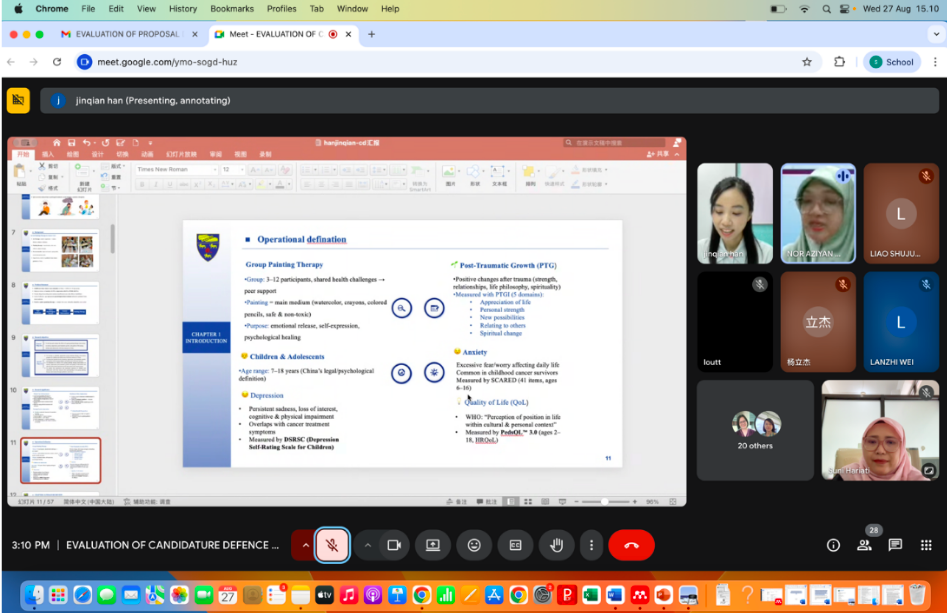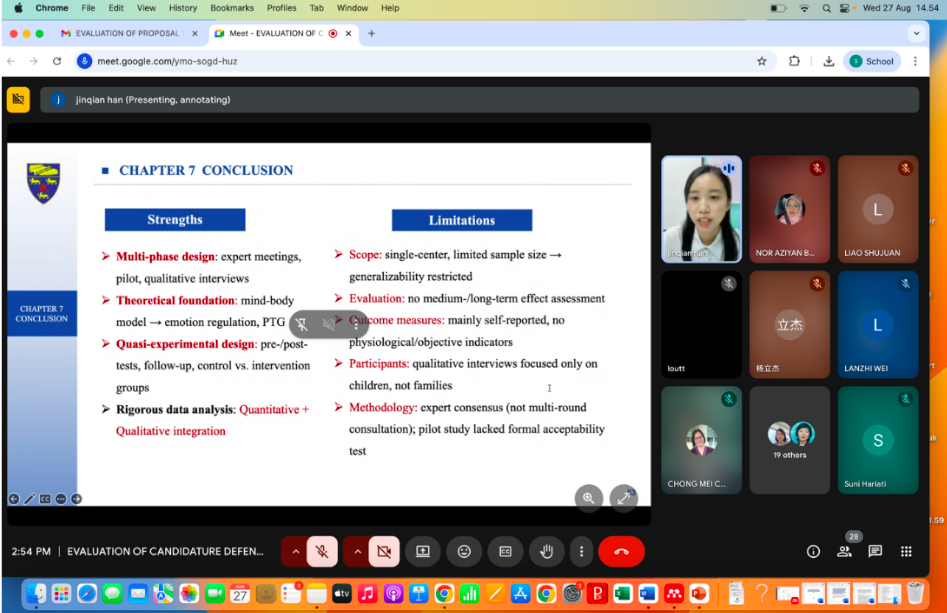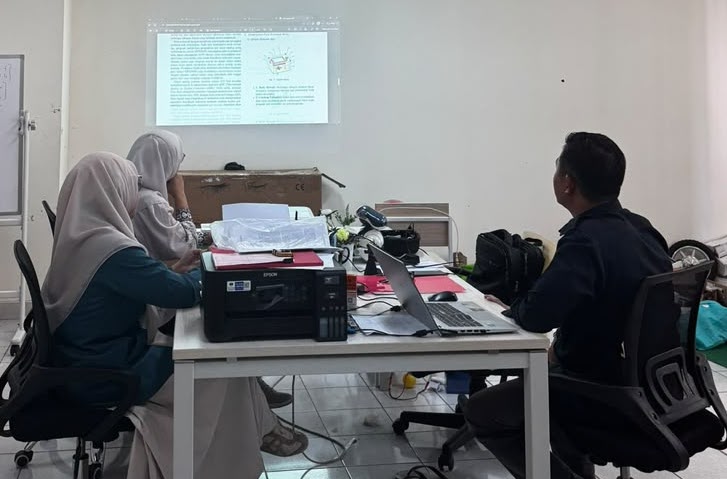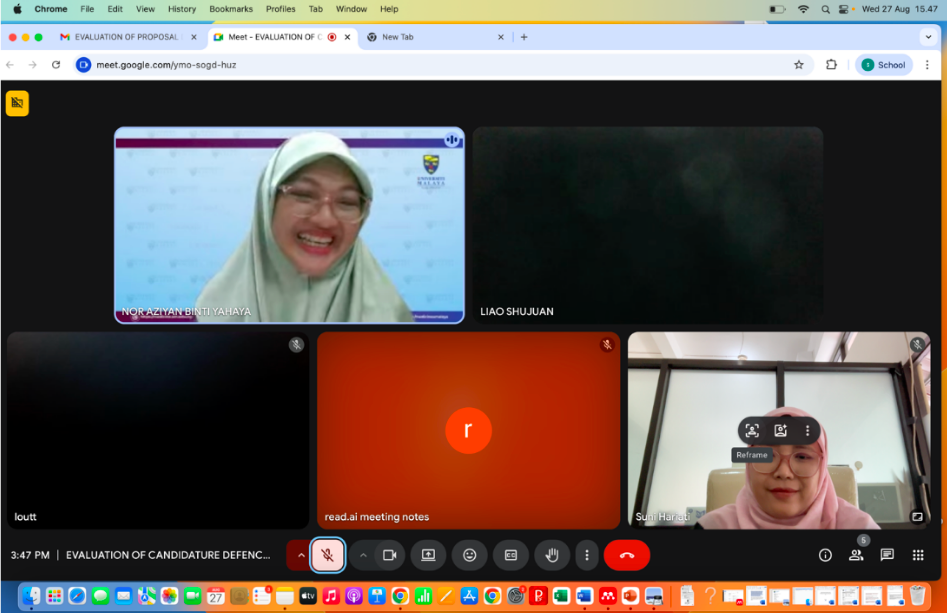

The Leader of Neonatal Nursing Reasearch Group, Dr. Suni Hariati, was appointed as a panel assessor in an Evaluation of Candidature for PhD Candidate, providing an academic platform to assess the progress, scientific direction, and readiness of a doctoral research project. The evaluation focused on a study entitled “The Effects of Group Painting Therapy on Anxiety, Depression, Post-Traumatic Growth and Quality of Life among Children and Adolescents with Bone Tumors in China.”
The evaluation was conducted virtually via Zoom on 25 June 2026, with 26 participants consisting of academic experts, researchers, and postgraduate participants. The activity featured international academic collaboration with Dr. Nor Aziyan Yahaya and Associate Prof. Dr. Liao Shujuan from Universiti Malaya, who contributed their expertise to the academic evaluation and discussion. The doctoral candidate, Han Jinqian, presented the progress and scientific foundations of the proposed research.
The candidature evaluation provided an opportunity for the candidate to explain the rationale, objectives, methodological approach, and expected contributions of the research. Particular attention was given to the potential role of group painting therapy as a non-pharmacological and creative approach to supporting the psychosocial well-being of children and adolescents living with bone tumors.
Cancer and its treatment can affect young patients in multiple dimensions of life, extending beyond physical health. Anxiety, depression, changes in daily activities, emotional distress, and concerns about the future may influence their overall quality of life. At the same time, some young patients may develop positive psychological changes while adapting to challenging experiences. The research therefore explores several interconnected outcomes, including anxiety, depression, post-traumatic growth, and quality of life.
During the evaluation, the research was discussed from both academic and practical perspectives. The academic discussion provided an opportunity to examine the coherence between the research problem, objectives, intervention, outcome measures, and methodological design. Feedback from the evaluators and international experts was intended to help strengthen the scientific rigor and feasibility of the study while ensuring that the proposed intervention is appropriately aligned with the needs of its target population.
The activity also demonstrated the value of international academic exchange in strengthening doctoral education and research quality. Collaboration between scholars from different institutions creates opportunities to share methodological perspectives, critically examine research ideas, and develop research that can contribute to broader healthcare knowledge.
The evaluation contributes to SDG 3: Good Health and Well-Being by supporting research aimed at improving the psychological well-being and quality of life of children and adolescents affected by serious illness. It also supports SDG 4: Quality Education by strengthening doctoral-level research capacity and promoting rigorous academic learning. In addition, the involvement of international academic experts reflects SDG 17: Partnerships for the Goals, highlighting the importance of cross-institutional collaboration in advancing education and health research.
The evaluation concluded with academic feedback and recommendations to support the continued development of the doctoral research. The activity represents an important step in ensuring that the study is scientifically robust, ethically appropriate, and potentially meaningful for improving psychosocial support for children and adolescents living with bone tumors.