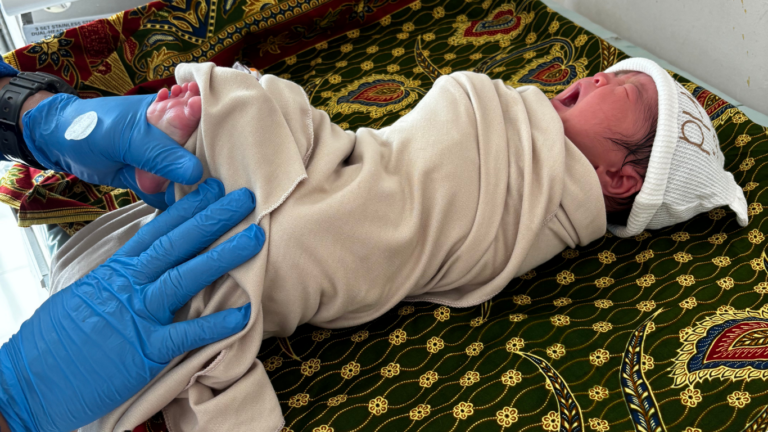
MAKASSAR, Indonesia, 24 July 2026/NNRG – Imagine a child in a hospital who cannot clearly explain what hurts, what they feel, or what has changed in their condition. For nurses, every detail matters. A small change in breathing, appetite, behavior, or pain may provide an important clue about a child’s health. This is why accurate nursing documentation is much more than paperwork—it can be an essential part of safe patient care.
This issue is explored in the article “Implementation of pediatric nursing documentation quality audit: a mixed method study”, written by Neneng Sundari, Suni Hariati, and Rini Rachmawaty. The study was published in the Pediomaternal Nursing Journal, Volume 12, Issue 2, July 2026, pages 83–92. The journal is published by Universitas Airlangga, and the article was officially published on 24 July 2026.
Why is documentation particularly important in pediatric nursing? Children may have limited ability to communicate their symptoms. As a result, incomplete or inaccurate records can make it more difficult for healthcare professionals to understand what has happened and what care a child needs.
The researchers used a mixed-method approach to examine how quality audits of pediatric nursing documentation were implemented in three hospitals. A total of 260 medical records were reviewed using the D-Catch instrument. The researchers also explored the experiences and perspectives of auditors through interviews.
The findings reveal an important challenge: none of the three hospitals had a specific hospital policy supporting the implementation of nursing documentation quality audits. Documentation accuracy also differed substantially among the hospitals. In one hospital, most records were categorized as complete, while other hospitals showed much lower levels of completeness.
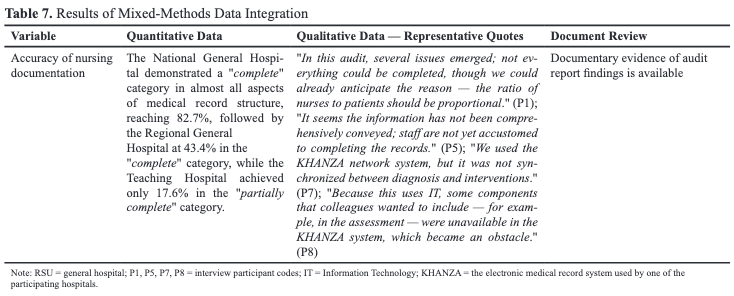
The interviews identified six key areas that influence the audit process: auditors’ perceptions, audit planning, audit implementation, evaluation of audit results, control of findings, and improvement following the audit. These findings suggest that checking documentation is not enough. Healthcare organizations also need a structured system for learning from problems and improving practice.
A quality audit can therefore be viewed as a safety tool rather than a punishment tool. Its purpose is to identify gaps, understand why they occur, and help nurses and hospitals develop better systems. When documentation improves, communication between healthcare professionals can also become clearer and more reliable.
This directly supports Sustainable Development Goal 3 (SDG 3): Good Health and Well-being, which promotes healthy lives and well-being for all. For children, improving the quality of nursing documentation can contribute to safer, more coordinated, and higher-quality healthcare.
Ultimately, every nursing note tells part of a child’s story. When that story is complete, accurate, and carefully recorded, it can help the healthcare team make better decisions—and that can make a real difference to a child’s safety.
Reference:
DOI: https://doi.org/10.20473/pmnj.v12i2.75365
Contact:
Suni Hariati
+6281387192990
sunihariati@unhas.ac.id