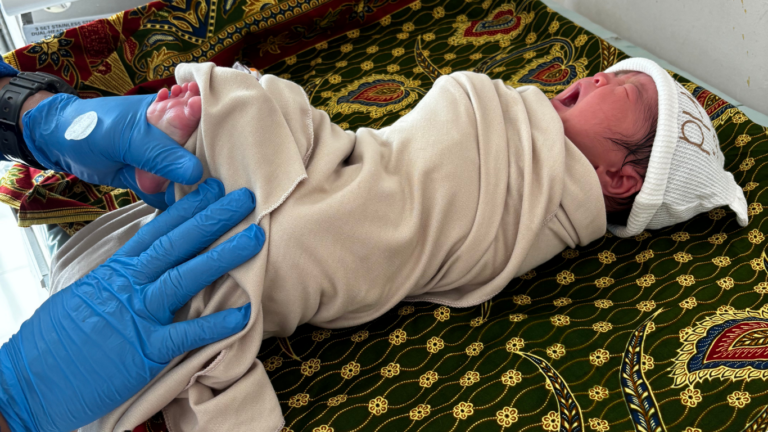

MAKASSAR, Indonesia, 27 Mei 2026/NNRG – For a newborn baby, even a routine medical procedure can be painful. A heel prick, blood sampling, suctioning, or the insertion of a feeding or breathing tube may seem minor to adults, but newborns are fully capable of experiencing pain. Repeated pain that is not properly managed may affect their immediate physiological stability and could also influence stress regulation and neurodevelopment later in life. This makes effective pain management an essential part of safe and compassionate neonatal care.
This important issue is explored in the scientific article “Bridging Evidence and Practice: Multi-Level Implementation Patterns in Non-Pharmacological Neonatal Pain Management: A Scoping Review,”written by Irmayanti, Suni Hariati, and Erfina. The article was published in the Journal of Neonatal Nursing by Elsevier and became available online on 27 May 2026. Rather than simply asking which pain-relief method works best, the researchers examined a more practical question: how are proven non-pharmacological methods actually implemented in hospitals?
The researchers reviewed studies published between 2014 and 2024 and ultimately included 30 studies in their analysis. Their findings show that newborn pain can be reduced through surprisingly gentle approaches. These include breastfeeding or sweet solutions, facilitated tucking and swaddling, skin-to-skin or kangaroo care, gentle touch, maternal voice, music, and combinations of several methods. Many of these approaches do not depend on sophisticated medicines. Instead, they use feeding, positioning, sensory comfort, and human connection to help babies cope with painful procedures.
A key contribution of the review is its three-level framework. At the individual level, nurses can use feeding-based methods, positioning, sound, and touch directly with the baby. At the interpersonal level, parents and healthcare professionals work together through approaches such as skin-to-skin care and multimodal interventions. At the organisational level, hospitals need technology, protocols, clinical pathways, and supportive systems to make these practices consistent and sustainable.
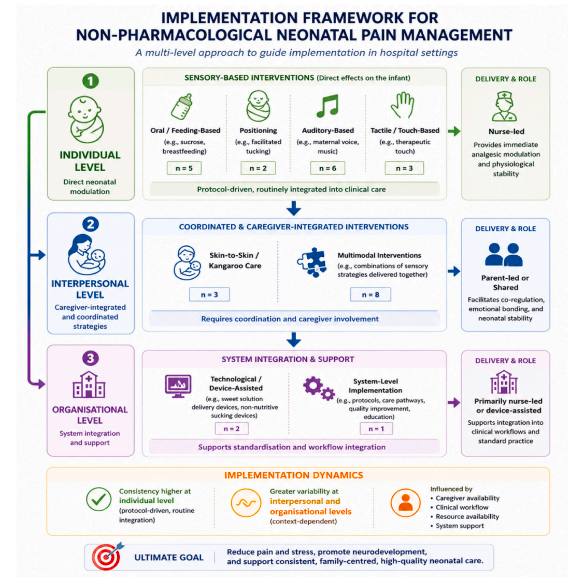
The challenge, therefore, is not simply a lack of effective methods. The review found that many interventions remain concentrated around short-term procedures and are not consistently integrated into everyday clinical workflows. Caregiver availability, resources, coordination, and institutional systems can determine whether an effective intervention becomes routine practice.
These findings strongly support Sustainable Development Goal 3 (SDG 3): Good Health and Well-being, particularly its commitment to improving health and reducing preventable newborn deaths. Better neonatal care means paying attention not only to survival, but also to comfort, development, and quality of care. By turning scientific evidence into routine, coordinated, family-centred practice, hospitals can make neonatal care more humane and responsive.
The message is simple but powerful: we already know many gentle ways to reduce newborn pain. The next challenge is ensuring that every baby can consistently benefit from them.
Reference:
DOI: https://doi.org/10.1016/j.heliyon.2024.e28317
Contact:
Suni Hariati
+6281387192990
sunihariati@unhas.ac.id