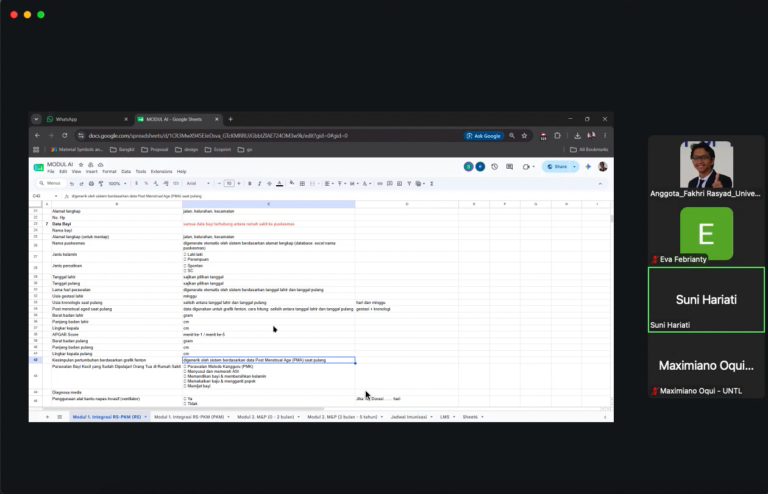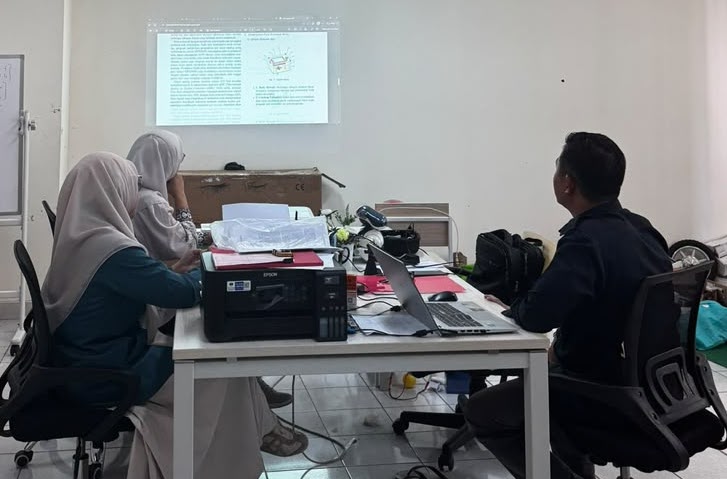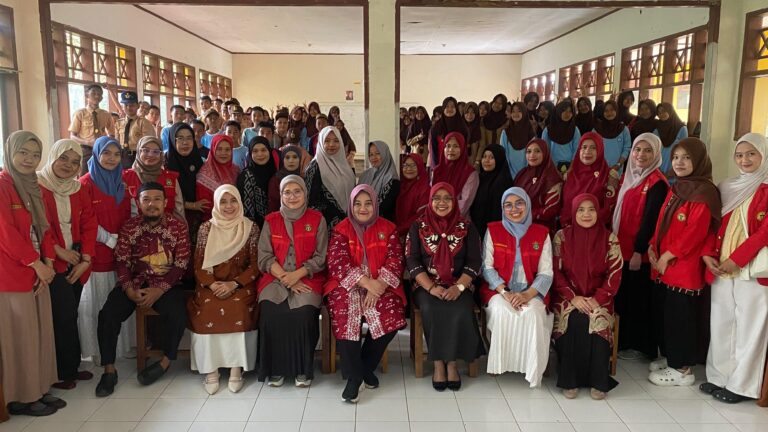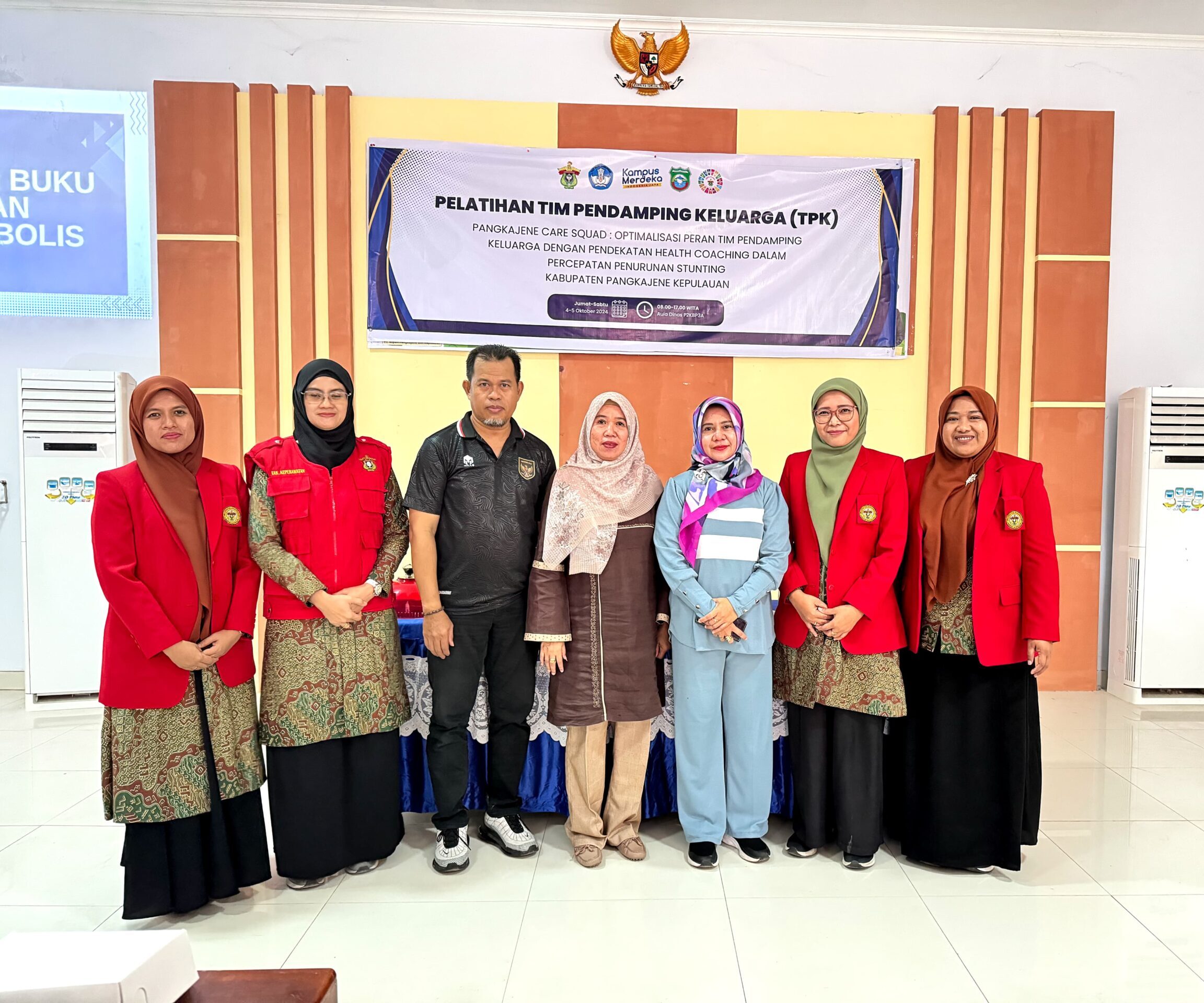

Training and Mentoring in Health Education Using a Health Coaching Approach was conducted for the Family Assistance Team (Tim Pendamping Keluarga—TPK) in Labakkang District, Pangkajene and Kepulauan Regency, South Sulawesi, Indonesia. The program was held on 3-4 October 2024 at Hall of the P2KBP3A Office, with 39 participants, comprising midwives, Family Welfare Empowerment (PKK) cadres, family planning cadres (Kader KB), and health educators, including 9 TPK members from Bara Batu Village.
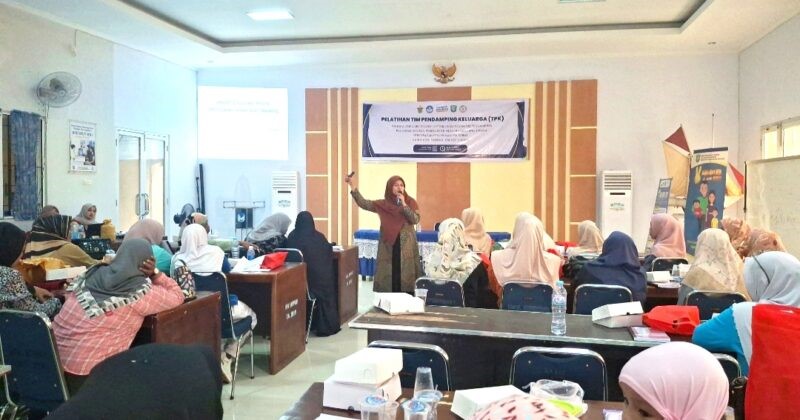
The program was designed to strengthen TPK members’ knowledge and practical competencies in delivering family-centered health education through a health coaching approach, particularly to support stunting prevention and reduction. This initiative responds to the continuing burden of stunting in Pangkajene and Kepulauan Regency. Data from the Pangkajene and Kepulauan District Health Office in February 2024 showed that among 23,576 measured children under five, 2,046 were identified as stunted. Furthermore, 19 villages and one urban ward have been designated as stunting loci under Pangkep Regent Decree No. 253 of 2021, with prevalence ranging from 20.54% to 35.71%. A 2023 study involving infants aged 0–12 months across four priority-area primary healthcare centers—Ma’rang, Labakkang, Kota Pangkajene, and Bowong Cindea—also reported a stunting prevalence of approximately 45.2%.
The training was implemented through an integrated combination of theoretical learning, practical exercises, and community-based mentoring.
On October 3, 2024, participants received comprehensive education on stunting prevention across the life course, from the pre-marriage period through pregnancy and toddlerhood. This was followed by interactive discussions introducing the stages, methods, communication strategies, and practical application of health coaching as an approach to accelerating stunting reduction.
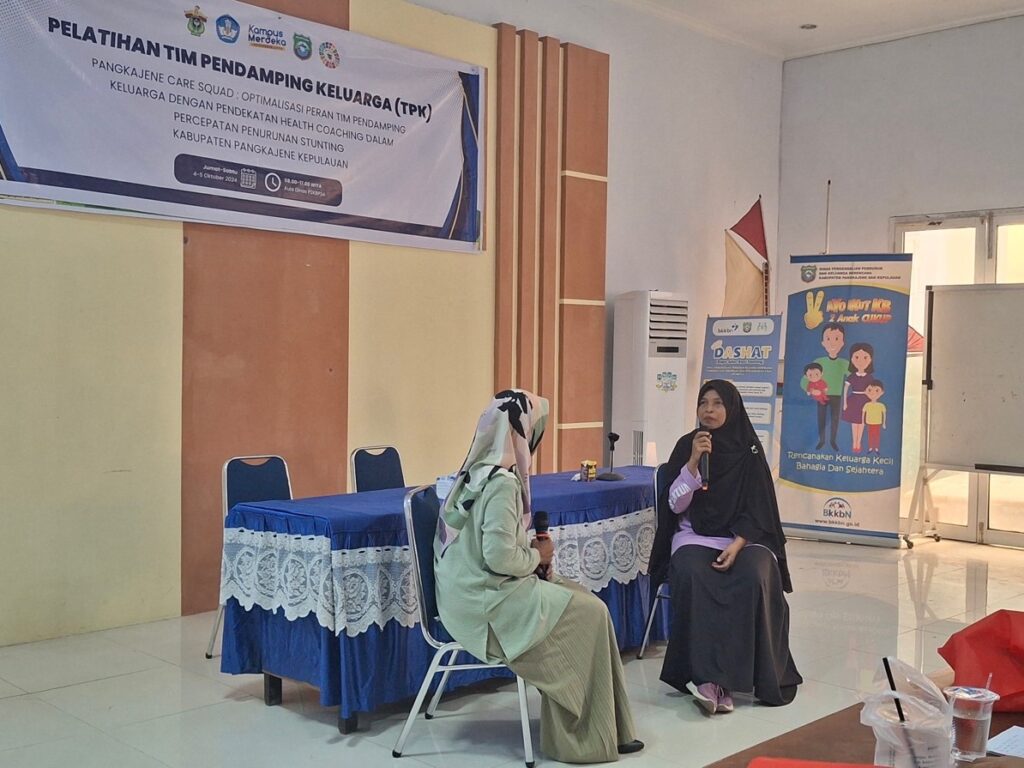
On October 4, 2024, the program continued with a review of the previous session and hands-on health coaching practice. Mothers of children experiencing stunting participated directly, enabling TPK members to practice communication, identify family needs and barriers, establish realistic health goals, and encourage families to actively participate in decisions concerning their children’s health and nutrition.
From October 5–7, 2024, mentoring continued through home visits. TPK members followed up with families and applied health coaching techniques in real-life settings, strengthening continuity between health education, family assistance, and community-based stunting interventions.
This initiative contributes explicitly to the Sustainable Development Goals (SDGs). It supports SDG 1: No Poverty by strengthening preventive interventions that may reduce the long-term socioeconomic burden associated with childhood malnutrition. It advances SDG 3: Good Health and Well-Being by promoting early prevention and family-centered management of stunting. The program also supports SDG 4: Quality Education by improving the knowledge and competencies of community health workers through structured and practice-based learning. Finally, it contributes to SDG 17: Partnerships for the Goals by strengthening collaboration among health professionals, community cadres, families, and local stakeholders.
Through training, practical coaching, and home-based mentoring, this program demonstrates how empowering frontline Family Assistance Teams can strengthen family engagement and support sustainable community efforts to accelerate stunting reduction.