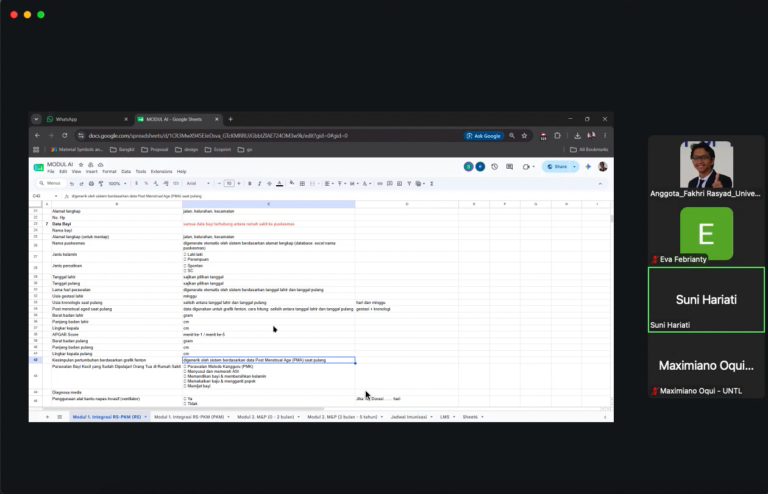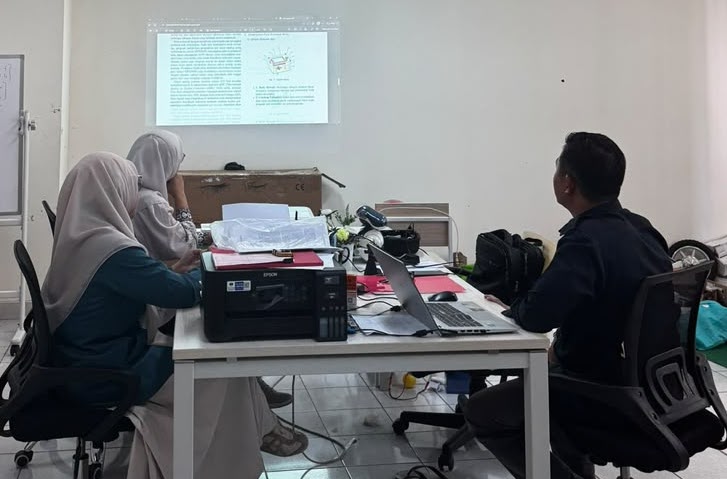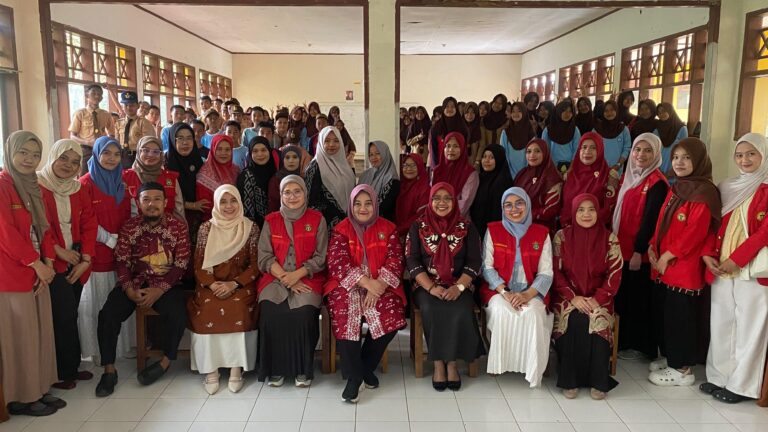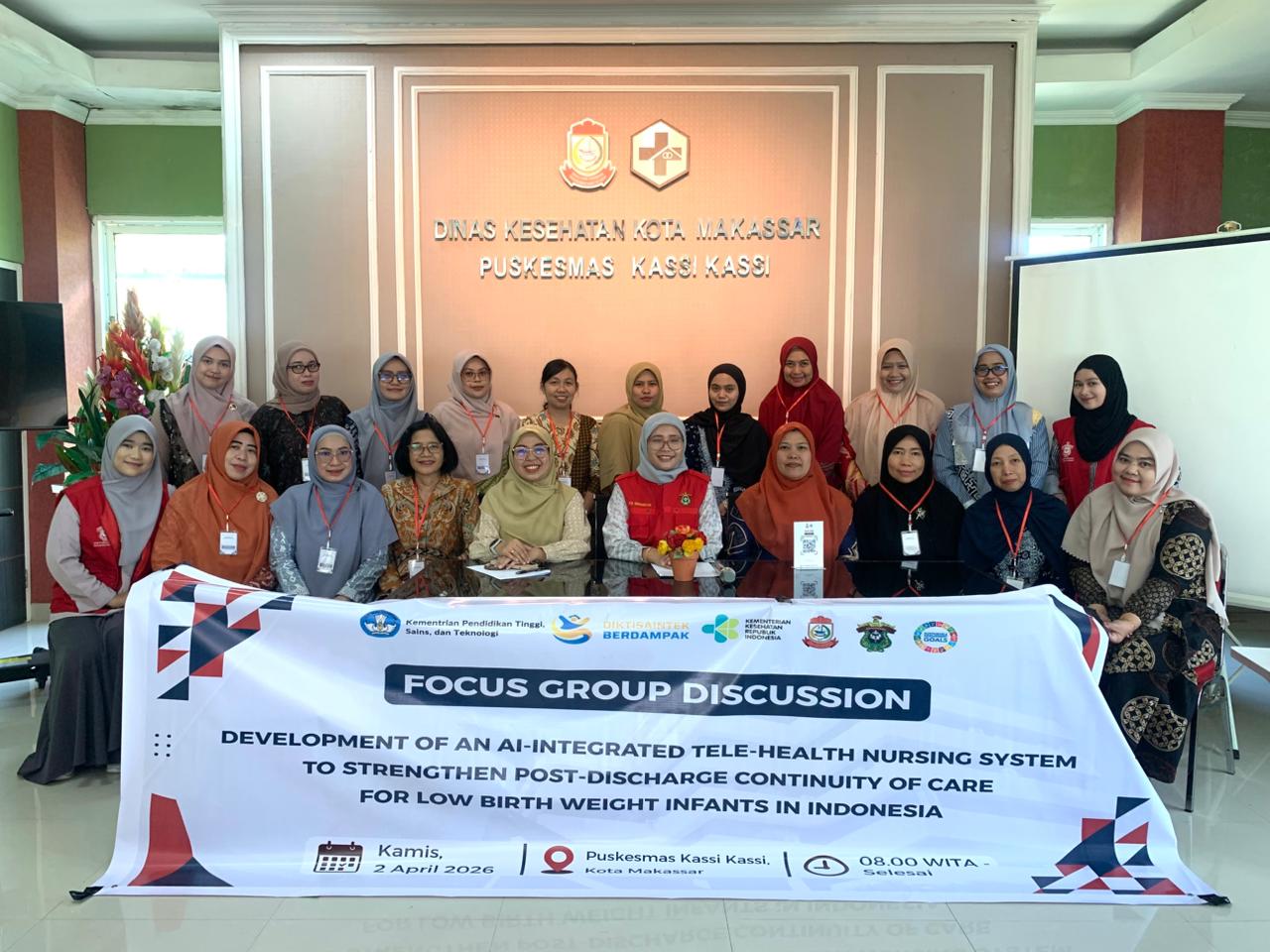

Ensuring continuous and quality care for low birth weight (LBW) infants remains a significant challenge in many healthcare systems, particularly in developing countries. Addressing this issue, a Focus Group Discussion (FGD) titled “Focus Group Discussion: Development of an AI-Integrated Tele-Health Nursing System to Strengthen Post-Discharge Continuity of Care for Low Weight Birth Infants in Indonesia” was successfully conducted on 2 April 2026 at Puskesmas Kassi Kassi, Kota Makassar, involving 20 participants from various healthcare and academic backgrounds.
The activity aimed to create a collaborative platform for discussing innovative solutions to improve the continuity of care for LBW infants after hospital discharge. Participants explored existing follow-up programs and identified key challenges in optimizing infant growth and development. Several critical issues emerged during the discussion, including limited access to post-discharge monitoring, fragmented communication between healthcare providers, and barriers faced by families in accessing consistent care.
The discussion also highlighted the growing potential of telehealth as a solution to bridge these gaps. By integrating artificial intelligence (AI) into telehealth systems, healthcare providers can monitor infant conditions remotely, provide timely interventions, and ensure continuous support for families. Participants emphasized that such a system should not only connect hospitals and primary health care centers (PHCs) but also actively involve families as key partners in the care process.
In addition to identifying challenges, the FGD served as a platform for generating practical recommendations. Participants proposed the development of a user-friendly, integrated telehealth nursing system that enables real-time communication, data sharing, and early detection of health risks. The system is expected to strengthen coordination among healthcare providers and improve decision-making processes, ultimately enhancing the quality of care for LBW infants.
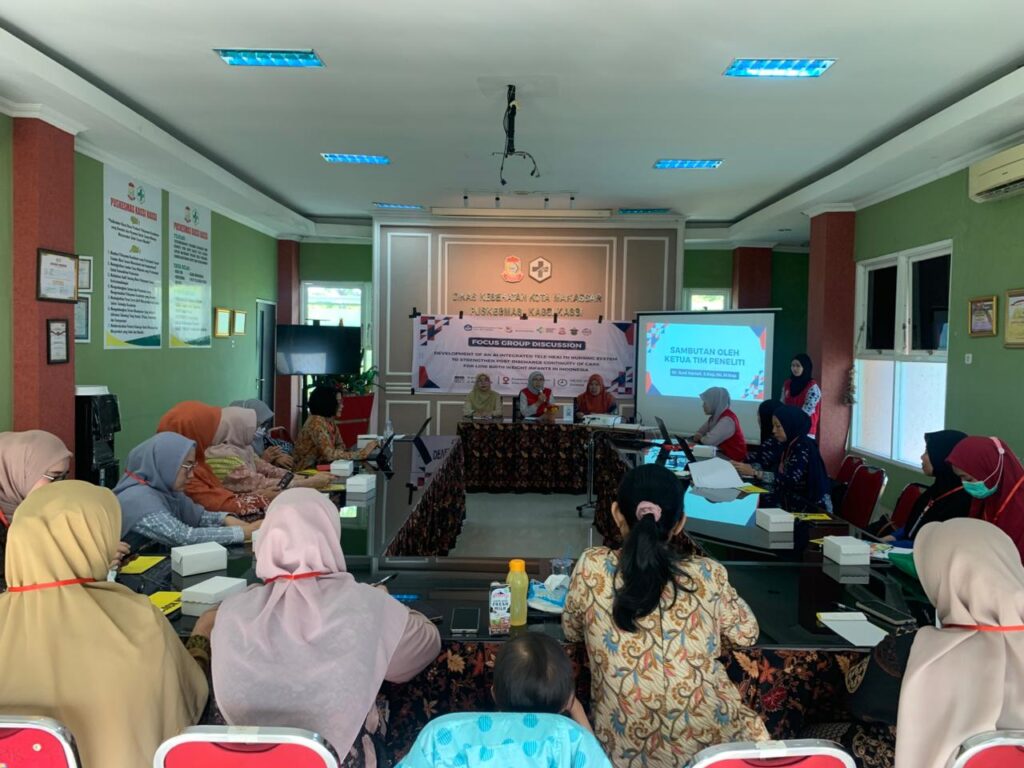
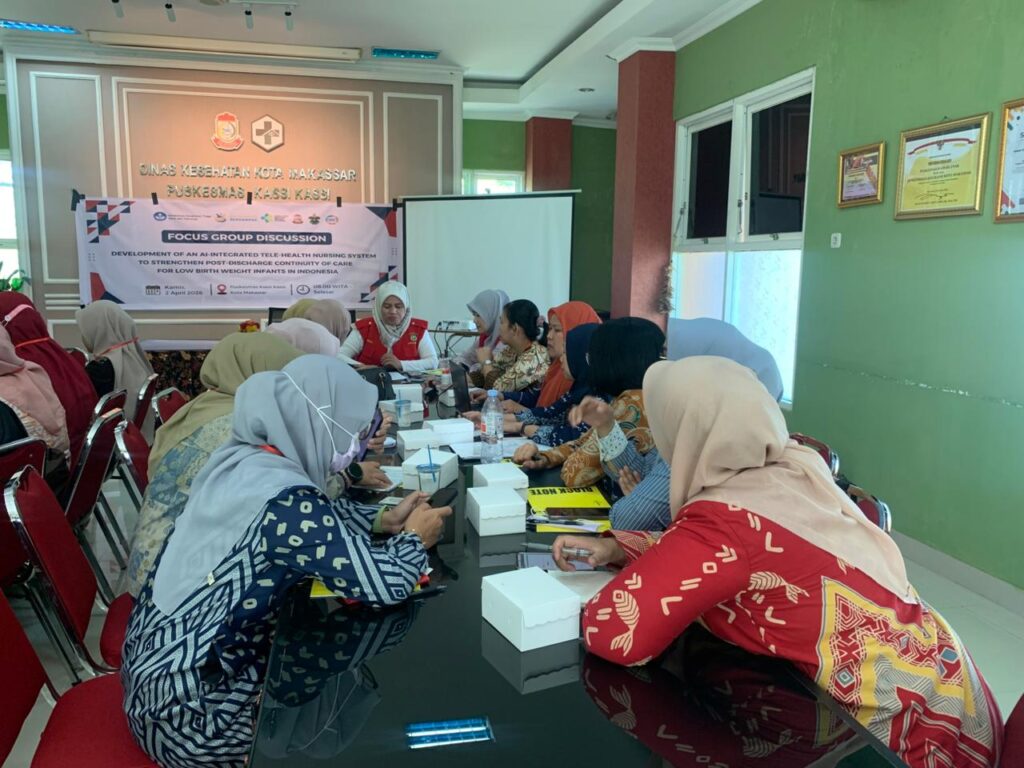
This activity is strongly aligned with several Sustainable Development Goals (SDGs), particularly SDG 3: Good Health and Well-being, SDG 4: Quality Education, SDG 1: No Poverty, and SDG 17: Partnerships for the Goals. By focusing on improving post-discharge care and health outcomes for vulnerable infants, the initiative directly contributes to SDG 3. The knowledge exchange and capacity-building aspects of the discussion reflect SDG 4, as participants gained new insights into digital health innovation. Furthermore, improving access to healthcare services for vulnerable populations supports SDG 1, as healthier children reduce long-term economic burdens on families. The collaborative nature of the FGD, involving multiple stakeholders, embodies the spirit of SDG 17, highlighting the importance of partnerships in addressing complex health challenges.
Beyond its immediate outcomes, the FGD fostered a shared vision among participants to embrace digital transformation in healthcare. It encouraged stakeholders to think beyond conventional care models and explore sustainable, technology-driven solutions. The integration of AI and telehealth is not merely a technological advancement but a strategic approach to ensuring that no child is left behind in receiving quality healthcare.
In conclusion, this focus group discussion represents a meaningful step toward strengthening healthcare systems in Indonesia. By combining innovation, collaboration, and evidence-based insights, the initiative paves the way for a more integrated and responsive approach to caring for LBW infants, ultimately contributing to healthier communities and a more sustainable future.