

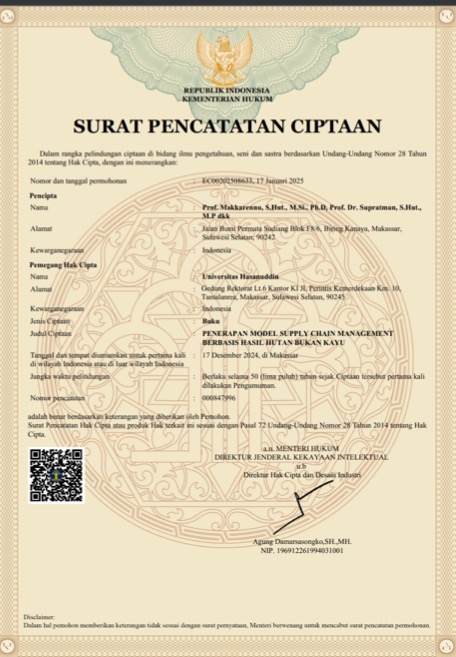
APPLICATION OF A SUPPLY CHAIN MANAGEMENT MODEL BASED ON NON-TIMBER FOREST PRODUCTS
A book titled \"Application of a Supply Chain Management Model Based on Non-Timber Forest Products.\" This book delves deeper into how non-timber forest products play a crucial role in today\'s global supply chain networks.
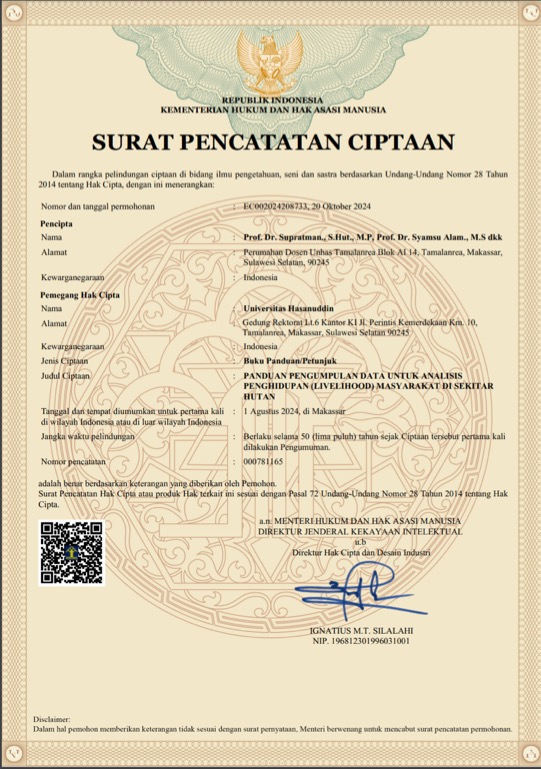
Guidelines for Data Collection for Livelihood Analysis of Communities Around Forests (Panduan Pengumpulan Data untuk Analisis Penghidupan (Livelihood) Masyarakat di Sekitar Hutan)
This data collection guide is an instrument that can be used for livelihood analysis of communities around forests. The guide consists of: I. Respondent Identity; II. Respondent Livelihood Characteristics; III. Respondent Livelihood Conditions; IV. Seasonal Calendar; Vulnerability Mapping (Issues, Causal Factors, Impacts/Consequences); Institutional Mapping; Strategy Formulation and Risk Management
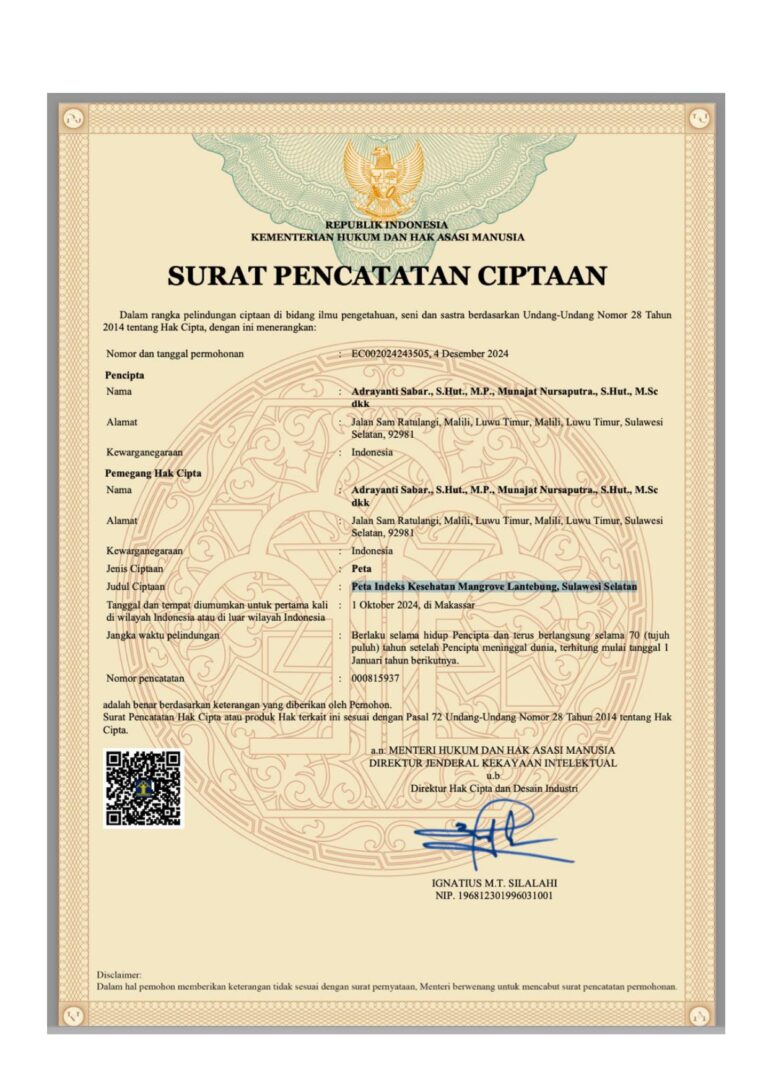
The Mangrove Health Index Map of Lantebung, South Sulawesi
Mangrove Health Index (MHI) aims to assess the health of mangrove ecosystems by considering various parameters. Based on the Mangrove Health Index (MHI) calculations, which include NBR, GCI, SIPI, and ARVI, the MHI values of mangroves in Bira Village for 2017, 2020, and 2023 are presented in Figure 1. In 2017, the highest recorded MHI value was 128.208, while the lowest was -17.4324. In 2020, there was a significant increase in the MHI values, with the highest reaching 370.32 and the lowest 7.25669. However, despite the increase in mangrove coverage, the MHI values in 2023 showed a decline, with the highest value at 148.604 and the lowest at 3.87402. The MHI map, developed using stand structure dimensions such as size, distribution, and coverage, provides a reliable measure of mangrove forest health. The integration of indices like NDVI from Landsat imagery plays a crucial role in mapping mangrove areas and monitoring their health status over time.
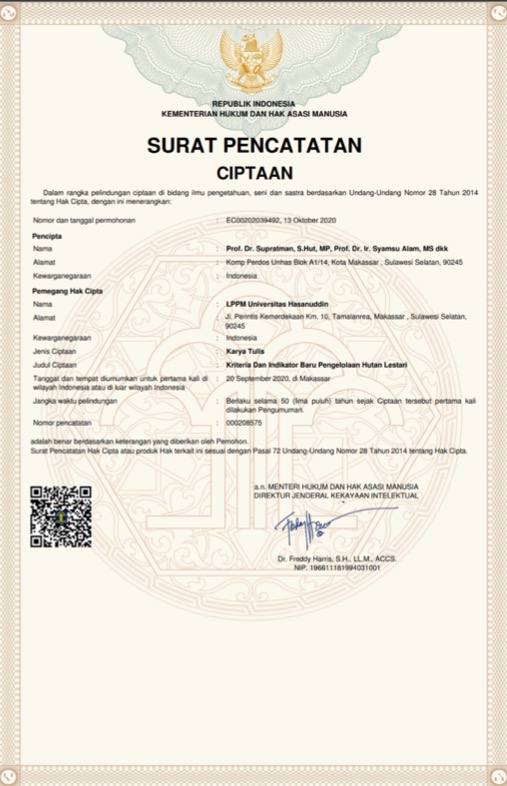
Criteria and Indicators for Sustainable Forest Management
This writing discusses the new criteria and indicators for sustainable forest management. It explores the updated standards and frameworks that aim to ensure forests are managed in a way that supports ecological health, social equity, and economic viability, fostering long-term sustainability and resilience. The writing provides insights into how these new criteria can be implemented to enhance forest management practices worldwide