

Learn More
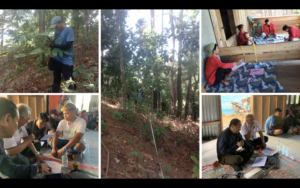
This research aims to develop a management prescription for multifunctional forest landscapes that enhances ecological, social, and economic benefits in Social Forestry areas, with a specific focus on the Abulo Sibatang Community Forest (HKm). The project seeks to improve the compatibility between ecological sustainability (landscape) and community well-being (lifescape), which is currently at a moderate level by restructuring the compatibility of landscape.
The transformation of monoculture pine plantations into multifunctional forests will be achieved through vegetation enrichment using non-timber forest product (NTFP) species, the application of physical conservation techniques, and adaptive management based on the physical and socio-economic characteristics of the area.
This project supports the implementation of Indonesia\'s Social Forestry policy (Ministerial Regulation No. 9/2021) and aligns with Hasanuddin University\'s research roadmap and the National Strategic Plan on poverty alleviation and sustainable development. The outcomes are expected to contribute to the development of multifunctional forest management science that integrates ecological goals with community prosperity, in support of Sustainable Development Goals (SDGs), particularly SDG 1 (No Poverty), SDG 13 (Climate Action), and SDG 15 (Life on Land

Learn More
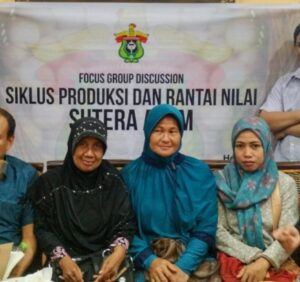
The development of the Forest Partnership scheme has become a solution to forest management conflicts between local communities and the Awota Production Forest Management Unit (KPHP) in Wajo Regency. This research aims to analyze the distribution of economic benefits and the potential economic efficiency created by implementing the Forest Partnership management model in the KPHP Awota area. Activity-Based Management (ABM), Value Chain Analysis (VCA), Cost of Product Life Cycle (CPLC), and Benefit-Cost Analysis (BCA) were conducted to achieve the research objectives. The findings reveal the activity cycle of the Forest Partnership scheme management in producing timber and natural silk products. The economic benefit distribution of natural silk management is reflected in the supply chain involving farmers, local market traders, traders in Sengkang City markets, thread traders from outside Wajo Regency, traditional weavers, and machine-assisted weavers. Several key factors determine the efficiency of natural silk management in Wajo Regency, including: The quality of silkworms, cocoons, and threads; Coordination in supply-demand planning among related organizational units; Market information on silk products; Development of secondary silk-based products (such as mulberry flour, mulberry tea, and mulberry leaf chips); Fine thread processing technology. The Forest Partnership scheme creates forest management efficiency through integrated resource and business unit management.
Learn More
The overlap of Community Plantation Forest (HTR) allocation areas with the Awota Production Forest Management Unit (KPHP) area may lead to forest management conflicts if the resources owned by the Awota Forest Management Unit (KPH) and those owned by individuals or farmer groups managing HTR are not synergized. This research aims to formulate a resource synergy model for HTR management within the Awota KPH area. Map analysis, resource analysis, and the Adaptive Decision-Making Process (ADMP) analysis were conducted to achieve the research objectives. The study developed a resource synergy model comprising the following components: Model Input: Policies, potentials, issues, strategic challenges, institutional frameworks, and stakeholders; Management Prescriptions: Site management and institutional synergy; Model Output: Forest timber products, mulberries, and food crops. The model requires further testing and evaluation to determine the potential economic efficiency created and the economic benefits gained by each stakeholder from its implementation.
Learn More
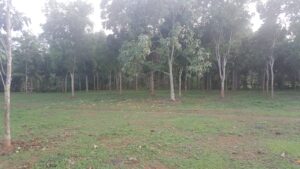
Yield Regulation of timber forest product at specific and traditional zones of national park is an important and urgent issues. Forest plantation that have been developing by the community forest dependent in both of zones has potential economic value if it’s cut down, however, it has the potential discomfiture of conservation of the national park system if it is cut down with improper yield regulation system. This study aims to analyze the inputs that should be taken and Yield Regulation System that can be implemented in the national park. Analysis of vegetation structure, growing stock, species diversity, slope, dependency of community and compatibility analysis were used to achieve the research aims. The result of research was found that the inputs that should be considered in the Yield Regulation in specific and traditional zones are slope, the space of land and zoning, standdensity, diameter distribution, growing stock, diversity of plant species, and community dependency of forest. The Yield Regulation that can be applied is combination of the Residual Growing Stock Method with The Growth Method by using a factor of \"FCoS\".