
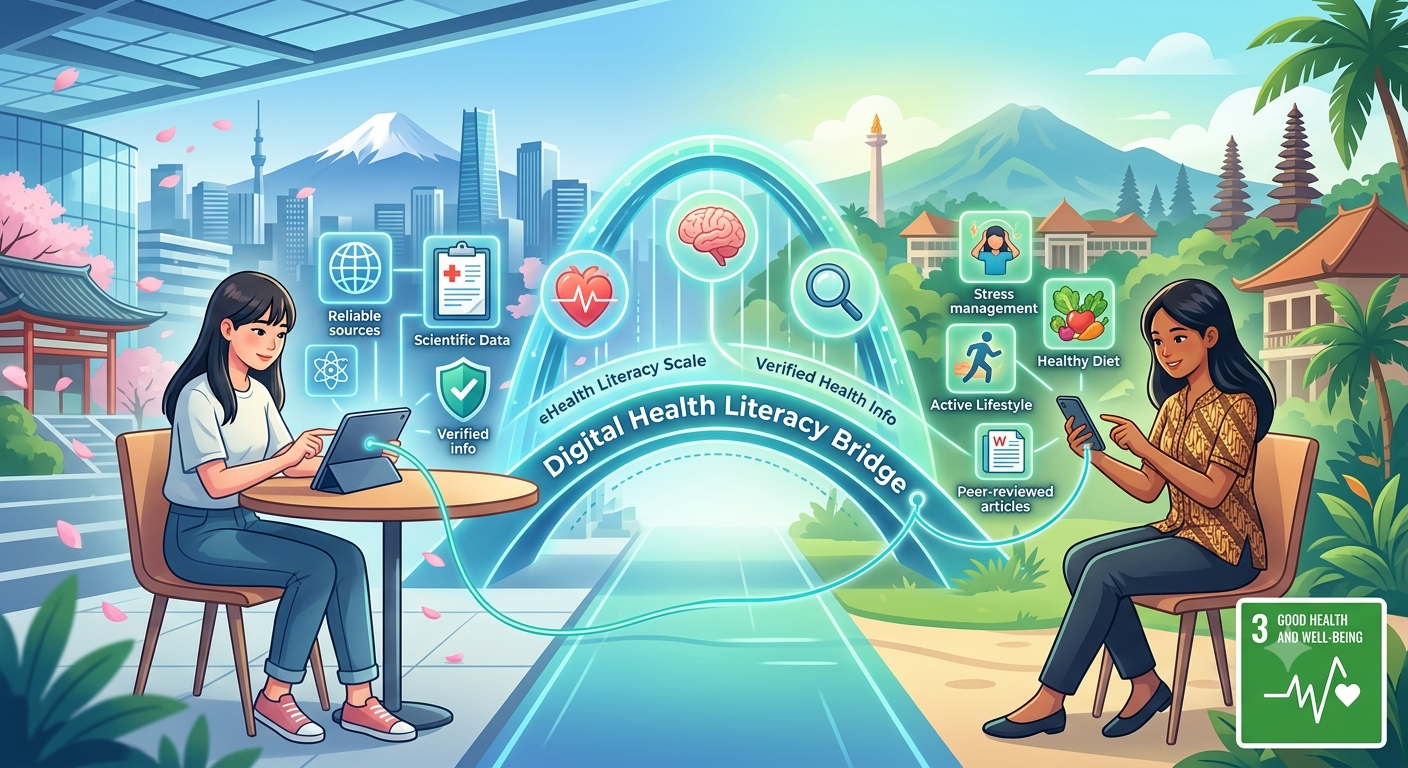

Makassar, Indonesia, September 08, 2026 /MHVP/ – In an era where health information is just a click away, finding reliable guidance can feel like searching for a needle in a digital haystack. From viral social media wellness trends to contradictory advice on search engines, young people are constantly bombarded with health claims. For university students transitioning into independent adulthood, the ability to evaluate and use online health information effectively—known as eHealth literacy—is essential for long-term health. However, assessing these digital skills requires accurate measurement tools that fit local cultures and languages.
To bridge this critical gap, researchers successfully developed and validated official Japanese and Indonesian versions of the electronic-Health Literacy Scale (eHEALS). This measurement framework allows educators, medical professionals, and public health practitioners to accurately assess how well university students navigate digital health platforms. By standardizing this tool across both nations, researchers can now pinpoint specific digital literacy gaps, combat online health misinformation, and design targeted digital health campaigns tailored for young adults.
This initiative directly aligns with Sustainable Development Goal 3 (SDG 3): Good Health and Well-Being, which aims to ensure healthy lives and promote well-being for all at all ages. Equipping young populations with verified digital health skills enables them to adopt proactive lifestyle choices, manage daily stress, and prevent chronic diseases before they begin. When students learn to distinguish credible medical advice from baseless trends, health systems benefit from a stronger foundation of community-wide preventive care.
The cross-cultural adaptation process revealed fascinating insights into how students interact with technology. While Japanese students showed high technical competence in accessing structured digital databases, Indonesian students demonstrated incredible engagement with social media platforms, though they frequently expressed a need for better tools to filter out unreliable medical claims. Adapting the eHEALS scale into both Japanese and Indonesian ensures that health interventions respect these distinct cultural environments while addressing shared digital challenges.
To maximize the impact of this breakthrough tool, public health strategies must move forward with three key actions:
- Implement Campus-Wide Digital Screenings: Use the adapted eHEALS tool during university orientation to identify students who need support in finding reliable health information.
- Develop Tailored Health Literacy Workshops: Create interactive digital modules that teach students how to verify online medical sources and recognize misleading health claims.
- Strengthen Cross-Border Health Communications: Collaborate across Asian academic institutions to share best practices for digital wellness campaigns aimed at youth.
Empowering students with verified digital health tools transforms passive internet users into informed health advocates. By standardizing eHealth literacy measurement across borders, we take a major step toward building healthier, more resilient future generations.
Reference
doi : https://doi.org/10.31662/jmaj.2024-0282
Contact:
ariyantisaleh@unhas.ac.id
+62 812-4138-7181
https://trg.unhas.ac.id/vnrg/


